January 2017 in “Journal of Antivirals & Antiretrovirals” Treatment strategies for breast cancer affect blood health, causing issues like anemia and require nutritional counseling.
November 2013 in “Journal of clinical & experimental dermatology research” The follicular unit extraction method for hair transplants is a technique with benefits and drawbacks.
January 2020 in “Brazilian Journal of Pharmaceutical Sciences” Finasteride worsens heart damage from nandrolone decanoate but protects against cell damage.
65 citations
,
March 2017 in “Experimental Dermatology” Curly hair is influenced by specific genetic variations.
3 citations
,
August 2023 in “Molecules” A compound from Sansevieria trifasciata shows strong antibacterial effects against E. coli and S. aureus.
 27 citations
,
March 2022 in “Forensic Toxicology”
27 citations
,
March 2022 in “Forensic Toxicology” Micro-segmental hair analysis helps detect drug use patterns and estimate drug consumption days.
 7 citations
,
January 1990 in “Eisei kagaku”
7 citations
,
January 1990 in “Eisei kagaku” Chemical analysis of hair products on human hair can help identify specific brands and link suspects to victims.
5 citations
,
January 2012 Infrared spectroscopy can analyze hair for forensic and medical insights.
 May 2026 in “Sudovo-medična ekspertiza”
 Thallium poisoning is highly toxic, causing severe health problems and can be fatal.
 April 2026 in “Science & Justice”
 Hair analysis can confirm drug use but can't accurately measure how much was taken.
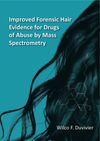
Forensic hair analysis for drugs is now more reliable and accurate.
 September 2003 in “Journal of the Royal Society of Medicine”
 The book is a comprehensive guide for forensic practitioners and exam candidates.
4 citations
,
September 1999 in “Journal of Clinical Forensic Medicine” Caffeine in hair might help identify people, but it's not always reliable.
November 2025 in “Wiley Interdisciplinary Reviews Forensic Science” Hair testing is a useful method for detecting past substance use and recent advancements improve its accuracy and reliability.
January 2014 in “The Journal of Dermatology” Korean adolescents with androgenetic alopecia often have a family history, milder symptoms than adults, and normal hormone levels.
A 5 cm hair sample can reveal blood type and keratin type for forensic use.
17 citations
,
February 2022 in “Microscopy Research and Technique” Scanning electron microscopy and elemental analysis can help identify animal species by their hair patterns and elements.
4 citations
,
June 1990 in “PubMed” Hair protein differences help identify species and individuals in forensic science.
1 citations
,
February 1989 in “PubMed” Electrophoresis can effectively analyze hair proteins for forensic use, even after cosmetic treatments and up to 2 years of weathering.
October 2025 in “Experimental & Molecular Medicine” Hair analysis is valuable for health and forensics but faces challenges like growth variability and contamination.
September 2001 in “Emergency Medicine News” Hair testing is effective for detecting long-term drug use.
February 1989 in “PubMed” A genetic hair protein variant is more common in Japanese people and is inherited.
9 citations
,
September 2010 in “Journal of Radioanalytical and Nuclear Chemistry” The woman likely died from acute arsenic poisoning, not chronic exposure.
3 citations
,
November 2024 in “Electrochimica Acta” A new, quick method accurately detects minoxidil in drugs and cosmetics.
2 citations
,
January 2014 in “Journal of the American Academy of Dermatology” Topical minoxidil effectively promotes hair regrowth in male pattern baldness.
95 citations
,
January 2007 in “Human biology” Human hair can be classified into eight types based on physical features, not ethnicity.
 63 citations
,
August 1996 in “Forensic Science International”
63 citations
,
August 1996 in “Forensic Science International” Cosmetic treatments like bleaching and perming can greatly reduce opiate levels in hair, possibly leading to false-negative drug tests.
 47 citations
,
June 1996 in “International Journal of Legal Medicine”
47 citations
,
June 1996 in “International Journal of Legal Medicine” Hair analysis for drugs needs a better understanding of how drugs enter hair, considering factors like hair structure and pigmentation.
 15 citations
,
January 1987 in “Electrophoresis”
15 citations
,
January 1987 in “Electrophoresis” Human head hair proteins can be typed into eight distinct patterns, useful for genetic and forensic investigations.
 14 citations
,
May 2020 in “Drug Testing and Analysis”
14 citations
,
May 2020 in “Drug Testing and Analysis” A new method was created to measure metformin in hair, showing potential for monitoring treatment and medical investigations.