January 2021 in “Asian Journal of Pharmaceutical and Clinical Research” FT-Raman spectroscopy is effective for identifying drug polymorphs, ensuring quality and stability.
 December 2022 in “Skin Pharmacology and Physiology”
 Special scalp and hair examination techniques can identify hair problems.
 18 citations
,
May 2013 in “Journal of The American Academy of Dermatology”
18 citations
,
May 2013 in “Journal of The American Academy of Dermatology” EVG staining is the most reliable method for diagnosing alopecia.
 10 citations
,
August 2014 in “PLoS ONE”
10 citations
,
August 2014 in “PLoS ONE” Hair follicles can help diagnose traumatic brain injury quickly and non-invasively.
109 citations
,
January 1980 in “Science of the total environment” Analyzing trace elements in human hair is complex and needs a standardized method.
 15 citations
,
February 2003 in “British Journal of Dermatology”
15 citations
,
February 2003 in “British Journal of Dermatology” The study suggests computer-assisted analysis of scalp biopsies could improve hair loss diagnosis but needs more validation.
2 citations
,
February 2018 Raman spectroscopy can help identify cancerous skin tissue during surgery.
 February 2024 in “Skin research and technology”
 The research suggests that immune cells and a specific type of cell death called ferroptosis are involved in Frontal fibrosis alopecia.
 17 citations
,
August 1979 in “Journal of The American Academy of Dermatology”
17 citations
,
August 1979 in “Journal of The American Academy of Dermatology” A new staining method helps tell growing from resting hairs to diagnose hair loss.
 20 citations
,
March 2022 in “The AMA Journal of Ethic”
20 citations
,
March 2022 in “The AMA Journal of Ethic” Educators and publishers should focus on teaching racism as the cause of health inequity and ensure fair use of race in materials.
5 citations
,
September 2006 in “Natural medicines/Journal of natural medicines” Microscopic hair features can identify different Cauda Cervi species.
6 citations
,
April 2001 in “The Anatomical Record” A new method using hair pores can help align skin grafts better, improving results.

Quickly fix tissue in formalin after excision to preserve it.
42 citations
,
January 2005 in “Applied spectroscopy” Hair from breast cancer patients shows changes in structure and composition, and a test using these changes detected cancer but also falsely identified some healthy samples as cancerous.
 July 2018 in “Journal of The American Academy of Dermatology”
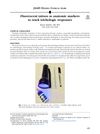
 Fluorescent tattoos are a good way to mark the scalp for hair treatments because they're accurate, invisible in normal light, and have low risk.
1 citations
,
November 2004 in “Hair transplant forum international” Hair restoration surgeons must understand the differences between CTE and FPHL for accurate diagnosis and treatment.
 January 2017 in “Bulletin of Pharmaceutical Research”
 Chemical fingerprints can distinguish Eclipta prostrata from Wedelia calendulacea to prevent confusion and adulteration.
6 citations
,
August 2022 in “Molecules” A hair test shows promise for early mood disorder diagnosis.

Observing someone's physical appearance can give hints about their health, hygiene, and potential medical conditions.
29 citations
,
August 2011 in “PubMed” Hair and nail proteins, mainly keratins, are crucial for structure and can indicate health issues.
6 citations
,
February 2022 in “European journal of endocrinology” The method can measure multiple hormones in women's hair and may help identify hormone-related health issues.
January 2020 in “Asian Journal of Chemistry” Raman spectroscopy can identify finasteride polymorphs in tablets.
 4 citations
,
November 2011 in “Archives of Dermatology”
4 citations
,
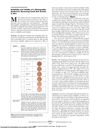
November 2011 in “Archives of Dermatology” The photographic method for measuring facial hair density is reliable and valid but needs further testing on different hair densities and skin colors.
 2 citations
,
September 2003 in “Annals of Plastic Surgery”
2 citations
,
September 2003 in “Annals of Plastic Surgery” The document concludes that hair from the forehead can be used to reconstruct eyebrows.
 31 citations
,
March 2011 in “Dermatologic Surgery”
31 citations
,
March 2011 in “Dermatologic Surgery” The new hairline classification and correction methods can improve the appearance of Asian women with wide or M-shaped foreheads.
49 citations
,
September 2004 in “Journal of the European Academy of Dermatology and Venereology” Careful light microscopy is crucial for detecting mild cases of pili annulati, which weakens hair and varies widely in expression.
April 2025 in “Pediatric Dermatology” Scalp biopsies are essential for diagnosing congenital alopecia areata.
Histopathological confirmation is crucial for accurately diagnosing challenging alopecia areata cases.
2 citations
,
January 2010  October 2017 in “Iranian Journal of Dermatology”
 Clinical exams are good for diagnosing some women's hair loss, but lab tests aren't always needed.