January 2024 in “Metabolites” Standardized procedures are crucial for collecting and preparing biological samples to ensure accurate clinical metabolomics results.
 December 2023 in “The journal of physical chemistry. B (1997 : Online)”
 Human hair keratin might be good for filtering out harmful substances from water.
18 citations
,
October 2020 in “Journal of Pharmacology and Experimental Therapeutics” KATP channel openers may cause peripheral edema by reducing lymphatic contractions and flow.
9 citations
,
August 2024 in “Frontiers in Pharmacology” Natural products may be safer and effective alternatives for managing heart attacks.
 7 citations
,
January 2023 in “Journal of Hematology & Oncology”
7 citations
,
January 2023 in “Journal of Hematology & Oncology” Using protein degradation to fight cancer drug resistance shows promise but needs more precise targeting and fewer side effects.
 5 citations
,
February 2022 in “Acta Biomaterialia”
5 citations
,
February 2022 in “Acta Biomaterialia” Nanomaterials can improve hair care products and treatments, including hair loss and alopecia, by enhancing stability and safety, and allowing controlled release of compounds, but their safety in cosmetics needs more understanding.
2 citations
,
September 2025 in “Frontiers in Nutrition” Aloe vera is effective for healing, skin, and health due to its beneficial compounds.
1 citations
,
February 2024 in “Cosmetics” Cannabidiol shows promise as an effective treatment for acne.
 1 citations
,
July 2023 in “Foods”
1 citations
,
July 2023 in “Foods” Mushrooms offer benefits for food, energy, and water security, and have potential uses in health and environmental applications.
1 citations
,
June 2009 in “Integrated Environmental Assessment and Management” Selenium is essential in small amounts but toxic in excess, requiring careful management.
 March 2026 in “International Ayurvedic Medical Journal”
 Gunja has potential for hair growth, fertility control, immune support, and more, but needs careful handling due to toxicity.
 February 2026 in “Chromatographia”
 A reliable method was developed to detect hair growth compounds in products, ensuring safety and compliance.
 January 2025 in “Scientific Reports”
 Hair analysis can show changes in vitamin D levels over time.
 January 2025 in “Revista Vitae”
 A new method reliably detects minoxidil in hair products, revealing some non-compliance with regulations.
 January 2024 in “Biotechnology advances”
 Bioassays help find useful compounds in nature for making medicines, supplements, and cosmetics.
November 2023 in “Cosmetics” Rice derivatives in conditioners protect and improve hair health.
89 citations
,
April 2023 in “Forensic Science International Genetics” Forensic DNA Phenotyping can now better predict appearance, ancestry, and age from DNA, but more research is needed for precise police use.
 27 citations
,
April 2011 in “International journal of legal medicine”
27 citations
,
April 2011 in “International journal of legal medicine” In situ DNA labeling in hair can help predict forensic DNA analysis success.
 11 citations
,
February 2019 in “Research and reports in forensic medical science”
11 citations
,
February 2019 in “Research and reports in forensic medical science” DNA phenotyping helps predict physical traits from DNA with varying accuracy and requires careful ethical and legal handling.
 9 citations
,
February 2018 in “Forensic Science International”
9 citations
,
February 2018 in “Forensic Science International” The study could not confirm if Victor Vinnetou was Mbuyisa Makhubu and suggested more evidence, like DNA tests, is needed.
8 citations
,
May 2025 in “Biomolecules” Forensic genetics can now predict physical traits and lifestyle habits, with future advancements expected from new technologies.
 7 citations
,
January 1990 in “Eisei kagaku”
7 citations
,
January 1990 in “Eisei kagaku” Chemical analysis of hair products on human hair can help identify specific brands and link suspects to victims.
 5 citations
,
September 2016 in “Security science and technology”
5 citations
,
September 2016 in “Security science and technology” DNA can predict physical traits like eye and hair color accurately, especially in Europeans, but predicting other traits and in diverse populations needs more research.
5 citations
,
January 2012 Infrared spectroscopy can analyze hair for forensic and medical insights.
4 citations
,
March 2024 in “Forensic Sciences Research” Forensic DNA phenotyping faces challenges like inconsistent terms and limited genetic knowledge.
 2 citations
,
March 2023 in “Research Square (Research Square)”
2 citations
,
March 2023 in “Research Square (Research Square)” Forensic DNA phenotyping faces challenges due to inconsistent terminology, limited genetic understanding, and debates over technology and models.
 1 citations
,
August 2016 in “Journal of Buffalo Science”
1 citations
,
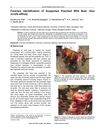
August 2016 in “Journal of Buffalo Science” The animal was likely a wild boar.
 April 2026 in “Science & Justice”
 Hair analysis can confirm drug use but can't accurately measure how much was taken.
Accurate prediction of eye, hair, and skin color in Latin American populations requires region-specific models and ethical guidelines.
November 2024 in “Forensic Sciences” Understanding the Y chromosome is key to male health, aging, and developing diagnostic tools.