2 citations
,
April 2025 in “Pediatric Dermatology” Macular alopecia is a distinct, non-scarring hair loss pattern that mostly affects young Hispanic/Latinx females and often resolves on its own.
 2 citations
,
September 2016 in “Symbiosis online journal of veterinary sciences”
2 citations
,
September 2016 in “Symbiosis online journal of veterinary sciences” A cat in Brazil was found with a severe skin condition linked to feline AIDS.
Ongoing monitoring and treatment are crucial to manage sarcoptic mange in reintroduced red foxes.
12 citations
,
October 1988 in “Clinics in dermatology” The mouse model could be useful for baldness research and testing treatments like testosterone, cyproterone acetate, and minoxidil.
 1 citations
,
October 2023 in “Journal of the Pakistan Medical Association”
1 citations
,
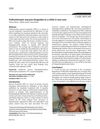
October 2023 in “Journal of the Pakistan Medical Association” Folliculotropic mycosis fungoides can occur in children and is diagnosed with specific tests, but often stays in early stages with treatment.
 1 citations
,
January 2018 in “Medical Science and Discovery”
1 citations
,
January 2018 in “Medical Science and Discovery” The document's conclusion cannot be provided as the content is not available for parsing.
 March 1998 in “Journal of Dermatological Science”
 Combining RU58841 and minoxidil significantly increases hair growth.
 8 citations
,
October 2019 in “International Journal of Dermatology”
8 citations
,
October 2019 in “International Journal of Dermatology” The study concluded that combination therapy with topical corticosteroids and hydroxychloroquine or finasteride is effective in treating Frontal fibrosing alopecia in Asians.
Finasteride reduces prostate size and DHT in male mastomys but not in females.
 May 2023 in “Frontiers in veterinary science”
 A young tapir with a rare skin condition improved after treatment with wound cleaning, cream, and oral medication.
 August 2021 in “Acta Haematologica Polonica”
 Folliculotropic mycosis fungoides has a worse prognosis than other types, with survival rates varying significantly based on subtype and organ involvement.
 1 citations
,
April 2021 in “Journal of The American Academy of Dermatology”
1 citations
,
April 2021 in “Journal of The American Academy of Dermatology” Some overweight or obese men with long-term frontal fibrosing alopecia may have abnormal sex hormone levels.
 14 citations
,
March 2002 in “The journal of investigative dermatology/Journal of investigative dermatology”
14 citations
,
March 2002 in “The journal of investigative dermatology/Journal of investigative dermatology” Patients with severe alopecia areata have higher levels of MIF, which decrease after successful treatment.
January 2023 in “Toxicological Research” January 2026 in “Dermatologic Therapy” Folliculotropic Mycosis Fungoides requires stage-based treatment, with early stages using skin therapies and advanced stages needing aggressive treatments.
 February 2025 in “Veterinary Clinical Pathology”
 The ferret had a malignant apocrine gland tumor and did not survive surgery.
 March 2023 in “Journal of clinical review & case reports”
 Frontal Fibrosing Alopecia mainly affects postmenopausal Mexican women, requiring early detection to prevent permanent hair loss.
1 citations
,
August 2024 in “Journal of Morphology” Mammary glands evolved from hair organs in Monodelphis domestica.
 March 2014 in “Human Physiology”
 DHEA improved brain function and behavior in old monkeys and had additional health benefits.
2 citations
,
July 2023 in “International Journal of Clinical and Experimental Medicine Research” Combining CAF regimen with fufangbanmao capsules improves thyroid cancer treatment outcomes and reduces side effects.
![Activity of 17β-(N-Alkyl/Arylformamido) and 17β-[(N-Alkyl/Aryl) Alkyl/Arylamido]-4-Methyl-4-Aza-5α-Androstan-3-Ones as 5α-Reductase Inhibitors in the Hamster Flank Organ and Ear](/images/assets/861159f1-7bd4-420c-a16b-4829458efe68/small/15592.jpg) 10 citations
,
August 1998 in “Journal of Investigative Dermatology”
10 citations
,
August 1998 in “Journal of Investigative Dermatology” The compounds tested could potentially treat hair loss and alopecia.
 6 citations
,
June 2019 in “International Journal of Dermatology”
6 citations
,
June 2019 in “International Journal of Dermatology” Frontal fibrosing alopecia has occurred in two related male families.
133 citations
,
August 1969 in “Science” Melatonin causes weasels to grow white fur and become reproductively inactive.
48 citations
,
July 1988 in “PubMed” Rhino mice show significant meibomian gland changes, making them a potential model for studying gland disorders.
4 citations
,
October 2023 in “Case Reports in Dermatology” Majocchi’s granuloma should be considered when rashes don't improve with typical treatments.
11 citations
,
March 2023 in “Marine Drugs” Compounds from Monascus purpureus showed mild antifungal effects.
4 citations
,
October 2001 in “Mycoses” A young cat had a rare fungal infection caused by Microsporum gypseum.
5 citations
,
September 2023 in “Journal of Cosmetic Dermatology” c-Maf positive macrophages help form hypertrophic scars by affecting fibroblasts and collagen production.
1 citations
,
January 2024 in “Journal of Feline Medicine and Surgery Open Reports” Fluralaner topical spot-on successfully treated a cat's hair shedding and scales caused by Demodex gatoi.
3 citations
,
October 2024 in “Veterinary Medicine and Science” Topical moxidectin effectively treats mange in wombats.