 32 citations
,
April 2016 in “Aaps Pharmscitech”
32 citations
,
April 2016 in “Aaps Pharmscitech” Nanostructured lipid carriers improve minoxidil delivery for hair loss treatment.
 August 2011 in “Faculty Opinions – Post-Publication Peer Review of the Biomedical Literature”
 5% minoxidil foam used once daily is as effective as 2% minoxidil solution used twice daily for hair loss in women, but with fewer side effects like itching and dandruff.
 63 citations
,
April 2003 in “Journal of The European Academy of Dermatology and Venereology”
63 citations
,
April 2003 in “Journal of The European Academy of Dermatology and Venereology” Minoxidil use increases facial hair growth in females, more in older users.
 27 citations
,
September 2018 in “Medicines”
27 citations
,
September 2018 in “Medicines” Oleic acid nanovesicles improve minoxidil absorption in hair follicles for alopecia treatment.
 95 citations
,
December 1980 in “The New England Journal of Medicine”
95 citations
,
December 1980 in “The New England Journal of Medicine” Minoxidil helped bald patient regrow hair.
 May 2024 in “Journal of biomaterials science. Polymer ed.”
 The three-layer microneedle system effectively delivers minoxidil into the skin, showing potential as a safe and efficient treatment for hair loss.
4 citations
,
January 1989 Allergic reactions to minoxidil may be due to the propylene glycol it is mixed with, not the minoxidil itself.
 December 2023 in “Azerbaijan Pharmaceutical and Pharmacotherapy J”
 The minoxidil gel could be a better treatment for hair loss than traditional forms.
 12 citations
,
January 2014 in “The Pan African medical journal”
12 citations
,
January 2014 in “The Pan African medical journal” Minoxidil caused unwanted hair growth in a child, but stopped after stopping treatment.
4 citations
,
March 1991 in “Dermatitis” Minoxidil can cause skin reactions, so testing is important for those with side effects.
January 2025 in “Open Science Framework” Different minoxidil formulations may vary in effectiveness for treating hair loss.
1 citations
,
September 2021 in “Frontiers in Endocrinology” Minoxidil can help transgender males grow facial hair before starting testosterone therapy.
 100 citations
,
March 1973 in “American Journal of Cardiology”
100 citations
,
March 1973 in “American Journal of Cardiology” Minoxidil effectively lowers blood pressure without major side effects.
181 citations
,
July 2004 in “Journal of controlled release” Smaller nanoparticles improve minoxidil absorption through hair follicles.
 June 2026 in “International Journal of Innovative Technologies in Social Science”
 Low-dose oral minoxidil is effective and safe for treating male pattern baldness.
 63 citations
,
September 1987 in “Journal of Biological Chemistry”
63 citations
,
September 1987 in “Journal of Biological Chemistry” Minoxidil slows fibroblast growth and collagen production, potentially treating keloids, hypertrophic scars, and connective tissue disorders.
1 citations
,
October 2022 in “JAAD case reports” Low-dose oral minoxidil can cause serious heart complications.
 66 citations
,
September 1982 in “Biochemical Pharmacology”
66 citations
,
September 1982 in “Biochemical Pharmacology” Liver enzyme helps minoxidil work better for blood vessel relaxation.
5% minoxidil is safe and effective for treating male hair loss.
 September 2025 in “IP Indian Journal of Clinical and Experimental Dermatology”
 Minoxidil effectively treats patterned hair loss in both males and females.
 September 2024 in “Journal of the American Academy of Dermatology”
 Oral minoxidil is easier to use and more satisfying for hair loss treatment but may cause more unwanted hair growth.
253 citations
,
June 2004 in “Journal of Controlled Release” Smaller nanoparticles improve minoxidil delivery through hair follicles.
Minoxidil can cause hair growth as a side effect.
2 citations
,
October 2012 in “Indian Journal of Dermatology, Venereology and Leprology” Minoxidil may help reduce early hair loss after a hair transplant.
 6 citations
,
May 2012 in “Clinical and experimental dermatology”
6 citations
,
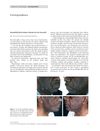
May 2012 in “Clinical and experimental dermatology” Oral minoxidil can cause inflamed, ingrown hairs in the beard area.
Minoxidil can treat female hair loss but may cause side effects.
 5 citations
,
August 2021 in “Journal of The European Academy of Dermatology and Venereology”
5 citations
,
August 2021 in “Journal of The European Academy of Dermatology and Venereology” Sublingual minoxidil safely promotes hair growth.
 February 2025 in “Journal of Pre-Clinical and Clinical Research”
 The combination of finasteride, dutasteride, and minoxidil is generally safe for treating male hair loss with minimal side effects.
July 2026 in “Anais Brasileiros de Dermatologia” Nanominoxidil shows promise for hair growth but needs more clinical trials to confirm its effectiveness and safety.