4 citations
,
March 2022 in “Pharmaceutics” Regenerative cellular therapies show promise for treating non-scarring hair loss but need more research.
4 citations
,
March 2019 in “IP Indian Journal of Clinical and Experimental Dermatology” Low iron levels may be linked to hair loss in non-menopausal women.
 4 citations
,
August 2017 in “The Nurse Practitioner”
4 citations
,
August 2017 in “The Nurse Practitioner” Secondary amenorrhea has many causes and requires thorough evaluation to treat and restore menstrual cycles.
3 citations
,
September 2023 in “Stem Cell Research & Therapy” Stem cells can be used to create long-lasting skin cells for treating pigment disorders.
2 citations
,
July 2023 in “Animals” FGF10 and non-coding RNAs are important for cashmere goat hair follicle development.
 2 citations
,
December 2021 in “Asian Journal of Beauty and Cosmetology”
2 citations
,
December 2021 in “Asian Journal of Beauty and Cosmetology” The optimal mix of Dendropanax, sea salt, and other extracts can help reduce hair loss.
 2 citations
,
November 2017 in “Elsevier eBooks”
2 citations
,
November 2017 in “Elsevier eBooks” Different substances that activate or block the androgen receptor can affect male development and treat conditions like prostate cancer.
 2 citations
,
August 2013 in “Journal of Investigative Dermatology”
2 citations
,
August 2013 in “Journal of Investigative Dermatology” Nuclear shape and chromatin changes affect gene expression in skin cell differentiation.
 1 citations
,
November 2025 in “Clinical and Experimental Medicine”
1 citations
,
November 2025 in “Clinical and Experimental Medicine” lncRNAs are important for understanding and treating skin diseases.
1 citations
,
January 2024 in “International journal of molecular sciences” MicroRNAs could be key biomarkers and therapeutic targets for PCOS.
1 citations
,
September 2021 in “Biomedical & Pharmacology Journal” Reticulocyte hemoglobin content is the best indicator of iron deficiency in women with diffuse non-scarring hair loss.
 1 citations
,
April 2018 in “Journal of Investigative Dermatology”
1 citations
,
April 2018 in “Journal of Investigative Dermatology” Fzd2 is important for skin and hair development through various signaling ways.
 1 citations
,
June 2017 in “The Journal of Clinical Endocrinology and Metabolism”
1 citations
,
June 2017 in “The Journal of Clinical Endocrinology and Metabolism” Finasteride use may cause sexual dysfunction; more research needed.
 1 citations
,
August 2012 in “Journal der Deutschen Dermatologischen Gesellschaft”
1 citations
,
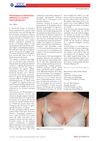
August 2012 in “Journal der Deutschen Dermatologischen Gesellschaft” A woman's hyperandrogenism was caused by a genetic mutation leading to non-classic adrenogenital syndrome.
 July 2026 in “Functional Foods in Health and Disease”
 Strawberry guava extract helps hair grow by improving blood flow and certain growth factors.

A high neutrophil-to-lymphocyte ratio may predict poor response to hair loss treatment.
November 2025 in “Journal of Investigative Dermatology” TEDAR is crucial for skin cell differentiation and barrier formation.
 February 2025 in “Stem Cell Research & Therapy”
 Hair follicle regeneration is advancing but still faces challenges in stability and clinical use.
February 2025 in “Skin Research and Technology” New non-invasive techniques can improve diagnosis and treatment of scalp and hair diseases.
 January 2025 in “Journal of Skin and Stem Cell”
 Gout can cause hair loss, but treatment can lead to hair regrowth.
 January 2025 in “Bright Sky Publications eBooks”
 Aesthetic medicine is rapidly advancing with new technologies for safer, personalized, and less invasive treatments.
 July 2024 in “Dermatology Practical & Conceptual”
 COVID-19-related hair loss may have unique features compared to hair loss from other causes.
July 2024 in “Journal of Investigative Dermatology” IL-13 protein is much higher in the skin of atopic dermatitis patients than in healthy skin.
 July 2024 in “International Journal of Dermatology Venereology and Leprosy Sciences”
 Surgical treatments for vitiligo are safe and effective for some patients.
 March 2024 in “Cytologia”
 LncRNA MTC boosts growth of goat skin cells, improving cashmere quality.
 March 2024 in “Research Square (Research Square)”
 Twist2 is essential for proper skin healing and hair growth in developing mice.
 January 2024 in “Journal der Deutschen Dermatologischen Gesellschaft”
 Non-biologic immunosuppressive drugs are crucial for treating autoimmune and chronic inflammatory skin diseases.
 December 2023 in “Frontiers in plant physiology”
 Root hairs are key for developing cereals that can fertilize themselves with nitrogen.
 July 2023 in “Frontiers in veterinary science”
 Certain long non-coding RNAs are important for controlling hair growth cycles in sheep.
 June 2023 in “Livestock studies”
 The article concludes that understanding the molecular processes in hair follicle development can improve the quality of fibers like Angora and cashmere.