 37 citations
,
April 2011 in “Journal of Biological Chemistry”
37 citations
,
April 2011 in “Journal of Biological Chemistry” LEF1 interacts with Vitamin D Receptor, affecting hair follicle regeneration and this could be linked to hair loss conditions.
 37 citations
,
April 2010 in “FEBS Letters”
37 citations
,
April 2010 in “FEBS Letters” The study concludes that the EDA2R gene is activated by p53 during chemotherapy but is not necessary for chemotherapy-induced hair loss.
34 citations
,
January 2022 in “Frontiers in Immunology” IL-25 helps heal diabetic wounds by improving blood vessel and skin cell functions.
 34 citations
,
October 1982 in “Journal of applied polymer science”
34 citations
,
October 1982 in “Journal of applied polymer science” Moisture content significantly affects how human hair breaks.
 33 citations
,
September 2017 in “Journal of clinical immunology”
33 citations
,
September 2017 in “Journal of clinical immunology” New treatments for immune disorders caused by FOXN1 deficiency are promising.
32 citations
,
February 2019 in “eLife” BMP signaling is essential for the development of touch domes.
 32 citations
,
March 2014 in “PLOS ONE”
32 citations
,
March 2014 in “PLOS ONE” Mice lacking fibromodulin have disrupted healing patterns, leading to abnormal skin repair and scarring.
 31 citations
,
December 2014 in “Advances in Clinical and Experimental Medicine”
31 citations
,
December 2014 in “Advances in Clinical and Experimental Medicine” Stem cells could improve plastic surgery but are not widely used due to cost and safety concerns.
 30 citations
,
June 2014 in “Seminars in Immunology”
30 citations
,
June 2014 in “Seminars in Immunology” Future research on ectodysplasin should explore its role in diseases, stem cells, and evolution, and continue developing treatments for genetic disorders like hypohidrotic ectodermal dysplasia.
 29 citations
,
March 2019 in “British Journal of Dermatology”
29 citations
,
March 2019 in “British Journal of Dermatology” Acne is significantly influenced by genetics, and understanding its genetic basis could lead to better, targeted treatments.
 28 citations
,
January 2011 in “Hearing Research”
28 citations
,
January 2011 in “Hearing Research” Gene therapy, especially using atoh1, shows promise for creating functional sensory hair cells in the inner ear, but dosing and side effects need to be managed for clinical application.
 27 citations
,
August 2015 in “Journal of Investigative Dermatology”
27 citations
,
August 2015 in “Journal of Investigative Dermatology” The document concludes that there is a significant lack of reporting on the sex and age of cells in skin research, which could affect clinical trials and treatments.
 25 citations
,
April 2021 in “The EMBO Journal”
25 citations
,
April 2021 in “The EMBO Journal” Hair follicle stem cells help maintain skin health and could improve skin replacement therapies.
 25 citations
,
October 2018 in “Journal of The American Academy of Dermatology”
25 citations
,
October 2018 in “Journal of The American Academy of Dermatology” Erosive pustular dermatosis of the scalp is a type of skin inflammation often confused with other conditions, requiring continuous treatment.
23 citations
,
May 2019 in “Stem cell research & therapy” iPSC-derived stem cells on a special membrane can help repair full-thickness skin defects.
22 citations
,
November 2023 in “Clinical Cosmetic and Investigational Dermatology” Stem cell-derived therapies can help rejuvenate skin by improving wrinkles, elasticity, and pigmentation.
 21 citations
,
June 2018 in “Current Opinion in Genetics & Development”
21 citations
,
June 2018 in “Current Opinion in Genetics & Development” Scientists have made progress in growing mini-organs and regenerating parts of the skin, with plans to treat hair loss in a future trial.
19 citations
,
December 2021 in “Stem Cell Research & Therapy” Muse cells from human bone marrow help reduce symptoms of atopic dermatitis in mice.
18 citations
,
November 2016 in “PeerJ” Human hair follicles can be used to create stem cells that might help clone hair for treating hair loss or helping burn patients.
 17 citations
,
June 2017 in “Gene”
17 citations
,
June 2017 in “Gene” A rare genetic mutation found in an Indian family can be detected through prenatal screening.
 16 citations
,
October 2014 in “Cell death and disease”
16 citations
,
October 2014 in “Cell death and disease” FoxN1 overexpression in young mice harms immune cell and skin development.
15 citations
,
September 2014 in “PloS one” The study found that analyzing certain cell signaling pathways is not a reliable method to tell apart two types of skin tumors.
15 citations
,
September 2009 in “European Journal of Histochemistry” CD90 is abundantly present on stem-like cells in dog hair follicles.
 14 citations
,
June 2016 in “Hypertension research”
14 citations
,
June 2016 in “Hypertension research” New method uses hair follicle cells to estimate human body clock phase, potentially improving sleep disorder diagnosis.
 14 citations
,
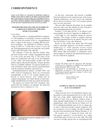
January 2005 in “Pediatric Dermatology”
14 citations
,
January 2005 in “Pediatric Dermatology” UVA1-light therapy successfully treated a child's skin condition, mycosis fungoides.
 13 citations
,
January 2016 in “Journal of cosmetology & trichology”
13 citations
,
January 2016 in “Journal of cosmetology & trichology” Alternative treatments show promise for hair growth beyond traditional methods.
 13 citations
,
March 2013 in “International Journal of Cosmetic Science”
13 citations
,
March 2013 in “International Journal of Cosmetic Science” AcSDKP may help prevent skin and hair aging and promote their growth.
12 citations
,
March 2021 in “Regenerative Engineering and Translational Medicine” Exosomes from stem cells might help treat hair loss.
 12 citations
,
November 2014 in “PLOS Computational Biology”
12 citations
,
November 2014 in “PLOS Computational Biology” The study concluded that hair growth in mice is regulated by a stable interaction between skin cell types, and disrupting this can cause hair loss.
 10 citations
,
January 2010 in “Veterinary pathology”
10 citations
,
January 2010 in “Veterinary pathology” A new mutation in the hairless gene causes hair loss and skin wrinkling in mice.