 January 2023 in “International journal of advances in scientific research and engineering”
 Anthocyanins from fruits and vegetables may help prevent and treat colorectal cancer safely.
 August 2022 in “International journal of research in pharmacy and chemistry”
 Teak is a durable, termite-resistant wood with medicinal benefits.
 December 2019 in “University of Malaya Students Repository”
 Mimosine from Leucaena leucocephala can enhance biodiesel stability.
 January 2018 in “Stem cell biology and regenerative medicine”
 The nucleus is key in controlling skin growth and repair by coordinating signals, gene regulators, and epigenetic changes.
 September 2016 in “Journal of Dermatological Science”
 A gene mutation worsens skin irritation in mice due to a lack of certain fats.
 June 2013 in “Revista cubana de plantas medicinales”
 Sida cordifolia is rich in saponins with antioxidant and antifungal properties.
 January 2012 in “Durham e-Theses (Durham University)”
 Keratin 15 affects cell behavior and characteristics in skin cells.
 October 1993 in “Proceedings of The Nutrition Society”
 Dietary choices, especially fat type, can influence health.
 January 2025 in “International Journal of Pharmaceutical Research and Applications”
 Hibiscus mucilage is an effective gelling agent for diclofenac diethylamine gel.
 February 1990 in “Journal of The American Academy of Dermatology”
 New skin treatments in 1987-1988 showed effectiveness for various conditions, but some had side effects or risks.
 December 2021 in “Research Square (Research Square)”
 Hair follicle sampling is a feasible method to measure FMRP and FMR1 mRNA levels in children.
 16 citations
,
September 2015 in “Journal of Ethnopharmacology”
16 citations
,
September 2015 in “Journal of Ethnopharmacology” The document concludes that "Dictamnus" has a rich cultural history and potential as a herbal medicine, warranting more research into its effects and safety.
 July 2025 in “Bioma Berkala Ilmiah Biologi”
 Wild boar skin from Timor Island has three layers with various structures like hair follicles and glands.
 1 citations
,
April 2017 in “Journal of Investigative Dermatology”
1 citations
,
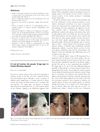
April 2017 in “Journal of Investigative Dermatology” D-OCT shows increased blood vessel growth in response to tissue damage in Frontal Fibrosing Alopecia and is useful for diagnosis and monitoring.
 39 citations
,
July 2015 in “British Journal of Dermatology”
39 citations
,
July 2015 in “British Journal of Dermatology” The pseudo 'fringe sign' can also appear in frontal fibrosing alopecia, not just in traction alopecia, showing that this condition may be more common than thought.
 11 citations
,
May 2023 in “Journal of Cutaneous Medicine and Surgery”
11 citations
,
May 2023 in “Journal of Cutaneous Medicine and Surgery” Plasma Rich in Growth Factors may help reduce hair loss in Frontal Fibrosing Alopecia.
 13 citations
,
January 2019 in “Skin appendage disorders”
13 citations
,
January 2019 in “Skin appendage disorders” FAPD is a possible diagnosis for hair loss in patients of color and requires multiple evaluations for accurate diagnosis.
 December 2022 in “Journal of neurodevelopmental disorders”
 Hair follicle sampling is a practical method for measuring biomarkers in children with and without Fragile X syndrome.
 February 2024 in “Skin research and technology”
 The research suggests that immune cells and a specific type of cell death called ferroptosis are involved in Frontal fibrosis alopecia.

Fructus Psoraleae may help treat hair loss by inhibiting 5-α reductase and affecting the Nrf2-Keap1 pathway.
 16 citations
,
February 2010 in “Journal of the European Academy of Dermatology and Venereology”
16 citations
,
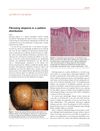
February 2010 in “Journal of the European Academy of Dermatology and Venereology” Fibrosing alopecia in a pattern distribution is a unique hair loss condition that may respond to antiandrogen therapy.
2 citations
,
July 2012 in “BMJ” FFA can be mistaken for rosacea, requiring specific treatment for accurate diagnosis and management.
 August 2021 in “Case Reports”
 A woman thought to have rosacea was actually suffering from Frontal Fibrosing Alopecia, a hair loss condition. Despite treatment, her condition didn't change, showing the importance of accurate early diagnosis.
2 citations
,
January 2016 in “Dermatology online journal” A 46-year-old man was diagnosed with frontal fibrosing alopecia, a condition usually seen in postmenopausal women.
 March 2026 in “Frontiers in Pharmacology”
 Exprecell™ is as effective as traditional methods but produces more f-PRF and is simpler to use.
 January 2026 in “Frontiers in Medicine”
 FFA and FAPD might be related or stages of the same disease.
 September 2021 in “CRC Press eBooks”
 Fibrosing alopecia in a pattern distribution is a type of hair loss that may often be overlooked, especially in men.
 1 citations
,
December 2017 in “Anais Brasileiros de Dermatologia”
1 citations
,
December 2017 in “Anais Brasileiros de Dermatologia” Frontal fibrosing alopecia can mimic traction alopecia but has distinct features like facial papules and eyebrow thinning.
 155 citations
,
September 2008 in “British journal of dermatology/British journal of dermatology, Supplement”
155 citations
,
September 2008 in “British journal of dermatology/British journal of dermatology, Supplement” FFA is more common in postmenopausal women, can affect younger women, and may stabilize over time.
 April 2012 in “Informa Healthcare eBooks”
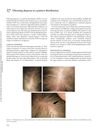
 Fibrosing alopecia in a pattern distribution is a unique hair loss condition with inflammation and scarring, resembling but distinct from common balding.