May 2026 in “Skin Appendage Disorders” Lasers and energy-based devices effectively and safely treat hair loss, especially when combined with other treatments.
 December 1997 in “Proceedings of SPIE, the International Society for Optical Engineering/Proceedings of SPIE”
 Low-energy laser therapy can improve scalp alopecia treatment when combined with classical methods.
June 2023 in “Journal of Face Aesthetics” PRF is promising for dental and aesthetic uses but needs more research.
6 citations
,
October 2023 in “Skin Research and Technology” Endolift laser treatment significantly tightens eyelids and raises eyebrows.
 February 2019 in “Case medical research”
 Using lasers to deliver minoxidil can potentially improve its effectiveness in treating male pattern hair loss.
Robotic FUE hair transplants are better for men because they are precise, safe, and look natural.
29 citations
,
September 2008 in “Dermatologic Therapy” Lasers and light sources are effective for removing unwanted hair.
Non-ablative Er:YAG-laser treatment helps improve life quality for menopausal women with hair loss.
3 citations
,
August 2024 in “Skin Research and Technology” LC-OCT can help identify lupus-related scarring hair loss by spotting unique features.
11 citations
,
October 2017 in “Dermatologic Surgery” Men need tailored laser and energy-based cosmetic treatments.
 May 2015 in “Journal of The American Academy of Dermatology”
 The Nd:YAG laser is a successful and safe way to treat ingrown and pincer nails.
 December 2024 in “Medical alphabet”
 Combining erbium laser, laser blood irradiation, and minoxidil is most effective for treating diffuse alopecia.

Lasers and energy-based devices effectively and safely improve hair growth in androgenetic alopecia, especially when combined with other treatments.
 7 citations
,
March 2016 in “Journal of Cosmetic and Laser Therapy”
7 citations
,
March 2016 in “Journal of Cosmetic and Laser Therapy” Home-use lasers and IPL devices are unlikely to directly cause paradoxical hair growth; it may be linked to inflammation or hormonal issues.
 14 citations
,
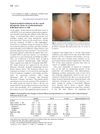
July 2012 in “Journal of the American Academy of Dermatology”
14 citations
,
July 2012 in “Journal of the American Academy of Dermatology” Topical tacalcitol ointment can help improve symptoms of EFFC.
3D models from confocal microscopy improve melanoma detection on sun-damaged skin.
 5 citations
,
January 2015 in “Evidence-based complementary and alternative medicine”
5 citations
,
January 2015 in “Evidence-based complementary and alternative medicine” Adding licorice gel to laser treatment is more effective for reducing facial hair than laser alone.
December 2018 in “Zenodo (CERN European Organization for Nuclear Research)” Low-level laser therapy may help hair growth, but more research is needed.
10 citations
,
August 2002 in “British Journal of Ophthalmology” Surgical excision is the best treatment for SCC, but intralesional cidofovir might be a good alternative.
April 2023 in “Journal of Investigative Dermatology” In-person laser treatments help hair growth in androgenetic alopecia.
21 citations
,
August 2002 in “British Journal of Ophthalmology” Intralesional cidofovir may be a viable alternative treatment for SCC.
 January 2018 in “Clinical approaches and procedures in cosmetic dermatology”
 Low-Level Laser Therapy might be an effective alternative hair loss treatment for some people.
 25 citations
,
December 2008 in “Journal of Dermatological Case Reports”
25 citations
,
December 2008 in “Journal of Dermatological Case Reports” In vivo reflectance confocal microscopy is useful for evaluating hair shaft diseases but needs improvement for deeper hair follicle issues.
Managing oxidative stress and inflammation is crucial for better hair transplant results.
 1 citations
,
April 2022 in “The Egyptian Journal of Hospital Medicine ”
1 citations
,
April 2022 in “The Egyptian Journal of Hospital Medicine ” Fractional laser therapy may help regrow hair in alopecia areata.
 41 citations
,
December 2017 in “Lasers in Medical Science”
41 citations
,
December 2017 in “Lasers in Medical Science” Low-Level Laser Therapy (LLLT) is a safe and effective treatment for common hair loss, but more research is needed to find the best power and wavelength for treatment.
Lasers and light therapy are effective for treating skin conditions like hair loss, vitiligo, psoriasis, and molluscum contagiosum.
14 citations
,
November 2009 in “Dermatologic Surgery” Laser hair removal can cause severe allergic reactions.
 2 citations
,
August 1994 in “The Journal of Dermatologic Surgery and Oncology”
2 citations
,
August 1994 in “The Journal of Dermatologic Surgery and Oncology” The article concludes that hair transplantation is advancing, but a reliable way to ensure complete tumor removal is still needed.
 December 2023 in “Lasers in Medical Science”
 Fractionated laser therapy, especially erbium-glass laser, effectively increases hair thickness in people with hair loss but doesn't increase the number of hairs.