 39 citations
,
July 2015 in “British Journal of Dermatology”
39 citations
,
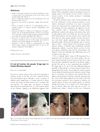
July 2015 in “British Journal of Dermatology” The pseudo 'fringe sign' can also appear in frontal fibrosing alopecia, not just in traction alopecia, showing that this condition may be more common than thought.
63 citations
,
April 2005 in “Mechanisms of development” Mice with too much Claudin-6 have skin barrier problems and abnormal hair growth.
20 citations
,
July 2005 in “Experimental dermatology” The fuzzy gene is crucial for controlling hair growth cycles.
 4 citations
,
January 2017 in “Annals of Dermatology”
4 citations
,
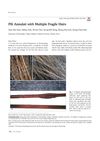
January 2017 in “Annals of Dermatology” Frequent hairdryer use may worsen hair fragility in people with Pili Annulati.
4 citations
,
October 2007 in “PubMed” Polyquaternium-70 shampoo is best for reducing frizz.
 August 2025 in “Journal of Applied Pharmaceutical Research”
 F4 and F6 hair gels showed promise for improving hair care but need more testing.
 1 citations
,
December 2017 in “Anais Brasileiros de Dermatologia”
1 citations
,
December 2017 in “Anais Brasileiros de Dermatologia” Frontal fibrosing alopecia can mimic traction alopecia but has distinct features like facial papules and eyebrow thinning.
 19 citations
,
October 1985 in “British Journal of Dermatology”
19 citations
,
October 1985 in “British Journal of Dermatology” The document concludes that unruly hair can be congenital or acquired, often lacks specific treatments, and can be managed with oils and short hairstyles.
60 citations
,
December 2003 in “Journal of Investigative Dermatology” K6hf is found in specific parts of hair follicles, nails, and tongue, and is linked to hair growth and structure.
28 citations
,
June 1995 in “The Journal of Dermatology” The flaky skin mouse mutation is a natural model for studying human psoriasis.
 January 2008 in “Journal of Clinical Dermatology”
 Integrin alpha-6 and p63 proteins may play a role in hair loss and are important for hair growth and maintenance.
 1 citations
,
September 2021 in “CRC Press eBooks”
1 citations
,
September 2021 in “CRC Press eBooks” Frontal Fibrosing Alopecia is a hair loss condition mainly affecting postmenopausal women, with unclear causes and various clinical patterns.
January 1999 in “Journal of Investigative Dermatology”  43 citations
,
September 2001 in “Scanning”
43 citations
,
September 2001 in “Scanning” Hair treatments like bleaching increase friction by exposing tiny pores on the hair surface.
11 citations
,
October 2007 in “Journal of Investigative Dermatology” Mutations in the Sgk3 gene cause fuzzy hair in mice.
2 citations
,
March 2024 in “Pediatric Dermatology” Two siblings have a rare hair condition caused by a new genetic variant.
September 2023 in “Journal of the American Academy of Dermatology” Sunscreen use is linked to frontal fibrosing alopecia, especially in males.
September 2025 in “International Journal of Cosmetic Science” Friction causes hair breakage during combing, and fragment count predicts hair strength.
 12 citations
,
November 1987 in “Pediatric dermatology”
12 citations
,
November 1987 in “Pediatric dermatology” Four children had unmanageable pale blond hair due to uncombable-hair syndrome.
1 citations
,
July 2015 in “Microscopy Research and Technique” Friedreich's ataxia causes thin, weak hair with surface damage and cavities.
 62 citations
,
January 2000 in “Developmental dynamics”
62 citations
,
January 2000 in “Developmental dynamics” Notch-related genes play a key role in the development and cycling of hair follicles.
2 citations
,
January 2016 in “Dermatology online journal” A 46-year-old man was diagnosed with frontal fibrosing alopecia, a condition usually seen in postmenopausal women.
 4 citations
,
January 2020 in “Skin appendage disorders”
4 citations
,
January 2020 in “Skin appendage disorders” A woman with an unusual pattern of hair loss was confirmed to have Frontal Fibrosing Alopecia and treated with specific medications.
 March 2005 in “International Journal of Cosmetic Science”
 A new method helps understand hair shine and various products improve hair care.
April 2019 in “Journal of Investigative Dermatology” Targeting immune pathways like JAK/STAT may help treat frontal fibrosing alopecia.
 28 citations
,
December 2010 in “Langmuir”
28 citations
,
December 2010 in “Langmuir” Hair fibers interact through classical forces, which are influenced by treatments and products, important for hair care and other applications.
 January 2006 in “Seibutsu Butsuri”
 Curly and straight hair differ in how their internal fibers are arranged.
 7 citations
,
August 2018 in “The American Journal of Dermatopathology”
7 citations
,
August 2018 in “The American Journal of Dermatopathology” Researchers found a new early sign of Frontal Fibrosing Alopecia that could help avoid misdiagnosis.
 4 citations
,
January 1992 in “The Tohoku Journal of Experimental Medicine”
4 citations
,
January 1992 in “The Tohoku Journal of Experimental Medicine” Zinc made mice's coarse hair turn into fine hair without affecting skin structure.