 13 citations
,
February 2015 in “Actas Dermo-Sifiliográficas”
13 citations
,
February 2015 in “Actas Dermo-Sifiliográficas” The document concludes that recognizing specific histological features of different nonscarring alopecias is crucial for accurate diagnosis and understanding hair loss progression.
 7 citations
,
January 2015 in “Current problems in dermatology”
7 citations
,
January 2015 in “Current problems in dermatology” Hair loss can be caused by stress, infections, drugs, and various diseases, with treatment depending on accurate diagnosis.
 5 citations
,
November 2008 in “Advances in Dermatology”
5 citations
,
November 2008 in “Advances in Dermatology” The review highlights the importance of stem cells in hair health and suggests new treatment strategies for hair loss conditions.
 1 citations
,
November 2002 in “Endocrine practice”
1 citations
,
November 2002 in “Endocrine practice” The patient's high testosterone was reduced by a medication that suppresses gonadotropin.
 1 citations
,
May 2002 in “British Journal of Dermatology”
1 citations
,
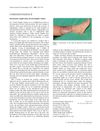
May 2002 in “British Journal of Dermatology” Hair loss caused by longer latent hair cycle and sudden miniaturization, not gradual follicle size reduction.

Female hair loss is often hereditary and can be treated with medication, hair transplants, and lasers.
 April 2012 in “Informa Healthcare eBooks”
 The document concludes that diagnosing hair loss requires evaluating multiple histological features, as no single feature is definitive on its own.
 May 2009 in “Endocrinologist”
 Women with thyroid disease are more likely to experience female pattern hair loss, especially if they've had thyroid disease for a long time.
 May 2002 in “British Journal of Dermatology”
 Hair loss caused by longer latent hair cycle and sudden miniaturization, not gradual follicle size reduction.
 3 citations
,
September 2010 in “International Society of Hair Restoration Surgery”
3 citations
,
September 2010 in “International Society of Hair Restoration Surgery” Balancing artistic design and precision improves hair transplant results.
 3 citations
,
January 2016 in “US endocrinology”
3 citations
,
January 2016 in “US endocrinology” Alopecia is not a significant predictor of thyroid disease when age and sex are considered.
 February 2021 in “Cureus”
 A woman's hair loss was initially misdiagnosed as scarring hair loss but was actually a treatable autoimmune hair loss.
 9 citations
,
January 2020 in “Postepy Dermatologii I Alergologii”
9 citations
,
January 2020 in “Postepy Dermatologii I Alergologii” Frontal fibrosing alopecia is a poorly understood condition with increasing cases and unclear treatment effectiveness.
 August 2021 in “Case Reports”
 A woman thought to have rosacea was actually suffering from Frontal Fibrosing Alopecia, a hair loss condition. Despite treatment, her condition didn't change, showing the importance of accurate early diagnosis.
 March 2024 in “Case Reports in Dermatology”
 A woman's hair loss was misdiagnosed as alopecia areata but was actually lichen planopilaris, needing immediate and ongoing treatment.
 4 citations
,
January 2020 in “Skin appendage disorders”
4 citations
,
January 2020 in “Skin appendage disorders” A woman with an unusual pattern of hair loss was confirmed to have Frontal Fibrosing Alopecia and treated with specific medications.
 August 2022 in “Our Dermatology Online”
 The conclusion is that examining the scalp closely and checking for iron levels and thyroid issues is key to understanding chronic hair loss in women.
August 2025 in “Cosmetics” Cosmeceuticals like sunscreens may trigger frontal fibrosing alopecia, but more research is needed.
 January 2025 in “Indian Journal of Dermatology”
 Frontal fibrosing alopecia is a challenging hair loss condition with no known cause or definitive treatment.
 8 citations
,
June 2012 in “Australasian Journal of Dermatology”
8 citations
,
June 2012 in “Australasian Journal of Dermatology” A rare form of alopecia causes hair thinning without bald spots and may be more common than thought, responding well to steroid treatment.
 3 citations
,
February 2022 in “Dermatology practical & conceptual”
3 citations
,
February 2022 in “Dermatology practical & conceptual” The study concludes that early diagnosis of Frontal Fibrosing Alopecia is important, as it is often found in postmenopausal women, may be related to Lichen Planopilaris, and eyebrow hair loss is a common sign.
 3 citations
,
October 2021 in “Journal of Cosmetic Dermatology”
3 citations
,
October 2021 in “Journal of Cosmetic Dermatology” Trichoscopy helps tell apart Frontal Fibrosing Alopecia and Lichen planopilaris by showing different hair and scalp features.

Technology expands design thinking possibilities, requiring a hybrid, reflective approach.
27 citations
,
January 2015 in “International Journal of Trichology” The supplement helps improve hair growth and reduce hair shedding.
 19 citations
,
January 2015 in “Journal of Clinical and Diagnostic Research”
19 citations
,
January 2015 in “Journal of Clinical and Diagnostic Research” The main causes of diffuse hair loss in women are telogen effluvium and androgenetic alopecia, often related to stress and iron deficiency.
 17 citations
,
December 2004 in “The Journal of Men's Health & Gender”
17 citations
,
December 2004 in “The Journal of Men's Health & Gender” Male pattern baldness involves hormone-related hair thinning, shorter hair, and inflammation.

Technology enhances human design thinking, creating new possibilities.
 32 citations
,
January 2019 in “American Journal of Clinical Dermatology”
32 citations
,
January 2019 in “American Journal of Clinical Dermatology” Minoxidil helps treat eyebrow thinning, monilethrix, early hair loss, and shortens chemo-related hair loss.
 17 citations
,
April 2006 in “Dermatologic Clinics”
17 citations
,
April 2006 in “Dermatologic Clinics” Older women face various skin issues like dryness and thinning, and treatments are available but can have side effects; proper skin care and legal health decisions are important.
 99 citations
,
June 2005 in “Journal of Cosmetic Dermatology”
99 citations
,
June 2005 in “Journal of Cosmetic Dermatology” Hair ages due to genetics and environmental factors, leading to graying and thinning, with treatments available for some conditions.