 61 citations
,
January 2019 in “American Journal of Clinical Dermatology”
61 citations
,
January 2019 in “American Journal of Clinical Dermatology” The cause of Frontal Fibrosing Alopecia is unclear, diagnosis involves clinical evaluation and various treatments exist, but their effectiveness is uncertain.
 33 citations
,
January 2010 in “Case reports in dermatology”
33 citations
,
January 2010 in “Case reports in dermatology” Dermoscopy helps diagnose frontal fibrosing alopecia by distinguishing it from other hair loss conditions.
 5 citations
,
April 2019 in “Journal of The American Academy of Dermatology”
5 citations
,
April 2019 in “Journal of The American Academy of Dermatology” Frontal Fibrosing Alopecia may be a complex condition linked to hormonal changes in women, not just a form of Lichen Planopilaris.
 2 citations
,
April 2017 in “Actas Dermo-Sifiliográficas”
2 citations
,
April 2017 in “Actas Dermo-Sifiliográficas” Best treatment for Frontal Fibrosing Alopecia is 5-alpha-reductase inhibitors and intralesional corticosteroids.
 26 citations
,
June 2018 in “Australasian Journal of Dermatology”
26 citations
,
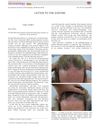
June 2018 in “Australasian Journal of Dermatology” Stopping sunscreen use on the forehead led to hair regrowth in a woman with frontal fibrosing alopecia.
 3 citations
,
February 1996 in “Dermatologic Surgery”
3 citations
,
February 1996 in “Dermatologic Surgery” Walter P. Unger suggests using advanced hair transplant techniques for broader coverage, as they provide natural results and use donor tissue efficiently, while also recommending personalized planning due to the unpredictable progression of baldness.
 January 2016 in “Georg Thieme Verlag eBooks”
 Hair transplantation in East Asians needs special techniques to ensure natural results and prevent complications due to their unique hair and scalp characteristics.
 July 2008 in “Expert Review of Dermatology”
 Proper planning for hair transplants is crucial for natural results, with careful patient selection and strategic graft placement being key factors.
 64 citations
,
June 2009 in “Journal of The American Academy of Dermatology”
64 citations
,
June 2009 in “Journal of The American Academy of Dermatology” Oral dutasteride can potentially treat frontal fibrosing alopecia in postmenopausal women, with some patients showing disease arrest and hair regrowth.
 17 citations
,
October 2017 in “Journal of Cutaneous Medicine and Surgery”
17 citations
,
October 2017 in “Journal of Cutaneous Medicine and Surgery” No treatment has been proven to effectively stop hair loss or regrow hair in Frontal Fibrosing Alopecia, and more research is needed.
 8 citations
,
September 2011 in “European Journal of Dermatology”
8 citations
,
September 2011 in “European Journal of Dermatology” Most treatments for Frontal Fibrosing Alopecia are ineffective, but early anti-inflammatory therapy may help and the condition may stabilize over time.
 July 2017 in “British Journal of Dermatology”
 The document concludes that scalp conditions have various causes and can present in many different ways.
 22 citations
,
January 2018 in “Experimental Dermatology”
22 citations
,
January 2018 in “Experimental Dermatology” The meeting focused on understanding, diagnosing, and finding treatments for irreversible hair loss diseases.
 58 citations
,
April 2009 in “Dermatologic Surgery”
58 citations
,
April 2009 in “Dermatologic Surgery” Most women have a widow's peak and specific hairline features useful for designing hair restoration surgery.

The hairline can reliably guide neurosurgical planning.
 39 citations
,
July 2015 in “British Journal of Dermatology”
39 citations
,
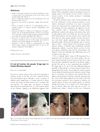
July 2015 in “British Journal of Dermatology” The pseudo 'fringe sign' can also appear in frontal fibrosing alopecia, not just in traction alopecia, showing that this condition may be more common than thought.
 8 citations
,
November 2018 in “Australasian Journal of Dermatology”
8 citations
,
November 2018 in “Australasian Journal of Dermatology” Frontal fibrosing alopecia in families shows similar signs to individual cases and may have a genetic link.
 1 citations
,
February 2023 in “Journal of the American Board of Family Medicine”
1 citations
,
February 2023 in “Journal of the American Board of Family Medicine” Primary care should recognize and treat hair loss in hijab-wearing individuals with cultural sensitivity.
 1 citations
,
January 1993 in “Facial Plastic Surgery”
1 citations
,
January 1993 in “Facial Plastic Surgery” Surgical hair restoration has improved since 1959, with new techniques like minigrafts, micrografts, and scalp reductions creating more natural hairlines and reducing bald skin, despite some risks and potential for scarring.
 March 2026 in “Dermatology Reports”
 FFA has higher long-term remission rates than LPP.
 1 citations
,
January 2019 in “Paediatrics and Child Health”
1 citations
,
January 2019 in “Paediatrics and Child Health” The document concludes that understanding hair biology and recognizing hair conditions are crucial for managing and treating hair loss in children.
 22 citations
,
August 2013 in “Facial Plastic Surgery Clinics of North America”
22 citations
,
August 2013 in “Facial Plastic Surgery Clinics of North America” A cosmetic procedure can lower the hairline by up to 10 cm, with high satisfaction but potential for temporary sensation loss and rare risks.
 35 citations
,
October 2012 in “Dermatologic Clinics”
35 citations
,
October 2012 in “Dermatologic Clinics” Autoimmune diseases can cause hair loss, and early treatment is important to prevent permanent damage.
2 citations
,
December 2018 Alopecia frontal fibrosante affects facial vellus hair and can be diagnosed with dermatoscopy.
 March 2022 in “Folia Medica Indonesiana”
 The lump on a woman's scalp was a rare, potentially cancerous tumor from the hair follicle, not a common cyst.
 30 citations
,
May 2014 in “American Journal of Clinical Dermatology”
30 citations
,
May 2014 in “American Journal of Clinical Dermatology” The conclusion is that better understanding and more research are needed to effectively manage follicular and scarring disorders in skin of color, with an emphasis on patient education and cultural awareness.
1 citations
,
August 2018 in “Journal of the American Academy of Dermatology” A young woman developed facial bumps before hair loss, which is unusual for her condition.
December 2018 in “International journal of women’s dermatology” FFA in young women is often missed, and no single treatment works best.

Frontal fibrosing alopecia in men is often misdiagnosed and needs better diagnostic criteria and treatments.
 February 2021 in “Cureus”
 A woman's hair loss was initially misdiagnosed as scarring hair loss but was actually a treatable autoimmune hair loss.