26 citations
,
October 2017 in “PubMed” Isotretinoin and acitretin may effectively stabilize the hairline in patients with frontal fibrosing alopecia.
 61 citations
,
January 2019 in “American Journal of Clinical Dermatology”
61 citations
,
January 2019 in “American Journal of Clinical Dermatology” The cause of Frontal Fibrosing Alopecia is unclear, diagnosis involves clinical evaluation and various treatments exist, but their effectiveness is uncertain.
 8 citations
,
September 2011 in “European Journal of Dermatology”
8 citations
,
September 2011 in “European Journal of Dermatology” Most treatments for Frontal Fibrosing Alopecia are ineffective, but early anti-inflammatory therapy may help and the condition may stabilize over time.
 2 citations
,
April 2017 in “Actas Dermo-Sifiliográficas”
2 citations
,
April 2017 in “Actas Dermo-Sifiliográficas” Best treatment for Frontal Fibrosing Alopecia is 5-alpha-reductase inhibitors and intralesional corticosteroids.
 26 citations
,
June 2018 in “Australasian Journal of Dermatology”
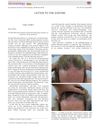
26 citations
,
June 2018 in “Australasian Journal of Dermatology” Stopping sunscreen use on the forehead led to hair regrowth in a woman with frontal fibrosing alopecia.

Microneedling may improve quality of life and reduce inflammation in frontal fibrosing alopecia.
 49 citations
,
January 2003 in “Clinical and Experimental Dermatology”
49 citations
,
January 2003 in “Clinical and Experimental Dermatology” The document concludes that post-menopausal frontal fibrosing alopecia is a poorly understood condition that does not respond well to common treatments.
 15 citations
,
August 2019 in “Dermatologic Therapy”
15 citations
,
August 2019 in “Dermatologic Therapy” Platelet-rich plasma (PRP) may help treat hair loss in patients with frontal fibrosing alopecia who don't respond to other treatments.

Lichen planopilaris and frontal fibrosing alopecia are likely the same disease with different clinical appearances.
 22 citations
,
January 2018 in “Experimental Dermatology”
22 citations
,
January 2018 in “Experimental Dermatology” The meeting focused on understanding, diagnosing, and finding treatments for irreversible hair loss diseases.
 June 2024 in “BioSCIENCE”
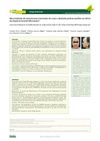
 Microinfusion of methotrexate can help treat frontal fibrosing alopecia.
 1 citations
,
January 1993 in “Facial Plastic Surgery”
1 citations
,
January 1993 in “Facial Plastic Surgery” Surgical hair restoration has improved since 1959, with new techniques like minigrafts, micrografts, and scalp reductions creating more natural hairlines and reducing bald skin, despite some risks and potential for scarring.
 July 2008 in “Expert Review of Dermatology”
 Proper planning for hair transplants is crucial for natural results, with careful patient selection and strategic graft placement being key factors.
 2 citations
,
August 2019 in “International Journal of Cosmetic Science”
2 citations
,
August 2019 in “International Journal of Cosmetic Science” Older age and certain lifestyles are linked to thinner, weaker hair, while how you see your hair relates to its thickness.
 2 citations
,
January 1985 in “Facial Plastic Surgery”
2 citations
,
January 1985 in “Facial Plastic Surgery” The paper concludes that for natural-looking hair restoration, it's important to create an irregular hairline, use appropriately sized and angled grafts, and ensure a snug fit between grafts and recipient sites.
 2 citations
,
July 2022 in “Frontiers in Medicine”
2 citations
,
July 2022 in “Frontiers in Medicine” The cause of Frontal fibrosing alopecia, a type of hair loss, is complex, likely involving immune responses and genetics, but is not fully understood.
 March 2024 in “Journal of cosmetic dermatology”
 Isotretinoin can effectively reduce symptoms of frontal fibrosing alopecia.
14 citations
,
January 2014 in “Indian Journal of Dermatology Venereology and Leprology” Frontal fibrosing alopecia can affect men's beards and leads to permanent hair loss.
 3 citations
,
February 2024 in “Journal of the American Academy of Dermatology”
3 citations
,
February 2024 in “Journal of the American Academy of Dermatology” Topical tofacitinib cream may help treat certain hair loss conditions with fewer risks.
 February 2021 in “Cureus”
 A woman's hair loss was initially misdiagnosed as scarring hair loss but was actually a treatable autoimmune hair loss.
 August 2022 in “IntechOpen eBooks”
 The best treatment for Frontal Fibrosing Alopecia and Lichen Planopilaris combines oral and topical medications to reduce symptoms and stop hair loss.
 139 citations
,
June 2003 in “Journal of Investigative Dermatology Symposium Proceedings”
139 citations
,
June 2003 in “Journal of Investigative Dermatology Symposium Proceedings” Androgenetic alopecia in women needs more research and better management strategies.
6 citations
,
May 2024 in “JAAD Case Reports” Topical ruxolitinib cream may help treat frontal fibrosing alopecia.
 4 citations
,
May 2002 in “Dermatologic Surgery”
4 citations
,
May 2002 in “Dermatologic Surgery” The method improves natural appearance in hair restoration by properly evaluating and treating the temporal peak region.
1 citations
,
July 2024 in “Journal of Plastic Reconstructive & Aesthetic Surgery” Estrogen therapy can help stabilize the hairline in transfeminine individuals.
August 2024 in “International Journal of Women’s Dermatology” Alopecia is common in severe cases of autosomal recessive congenital ichthyosis.
 May 2002 in “Dermatologic Surgery”
 The method improves natural appearance in hair restoration by properly evaluating and treating the temporal peak region.
December 2025 in “Journal of Pharmacy And Bioallied Sciences” Trichoscopy effectively shows early positive effects of minoxidil in male pattern hair loss, improving patient satisfaction.
January 2016 in “Indian dermatology online journal” The patient has frontal fibrosing alopecia (FFA).
 March 2024 in “Journal of clinical medicine”
 Trichoscopy shows hair diameter variability, vellus hairs, and the peripilar sign are key indicators for diagnosing Androgenetic Alopecia.