 3 citations
,
February 1996 in “Dermatologic Surgery”
3 citations
,
February 1996 in “Dermatologic Surgery” Walter P. Unger suggests using advanced hair transplant techniques for broader coverage, as they provide natural results and use donor tissue efficiently, while also recommending personalized planning due to the unpredictable progression of baldness.
April 2025 in “International Journal of Dermatology” Renaming frontal fibrosing alopecia to a syndrome could improve diagnosis and treatment.
 July 2026 in “Pakistan Armed Forces Medical Journal”
 Men with androgenic alopecia have lower hair density than those without.
 July 2008 in “Expert Review of Dermatology”
 Proper planning for hair transplants is crucial for natural results, with careful patient selection and strategic graft placement being key factors.
research Hair
May 2024 in “Australasian Journal of Dermatology” Alopecia areata causes significant emotional and social challenges, especially with more hair loss.
 23 citations
,
April 2021 in “Journal of Clinical Medicine”
23 citations
,
April 2021 in “Journal of Clinical Medicine” Frontal Fibrosing Alopecia's cause is unclear, affects mainly postmenopausal women, and current treatments focus on stopping hair loss rather than regrowth.
7 citations
,
June 1978 in “Archives of Dermatology” Hair loss was likely caused by gymnastics activities on a balance beam.
 1 citations
,
June 2021 in “Curēus”
1 citations
,
June 2021 in “Curēus” A woman with hair loss had a benign sweat duct tumor found during a scalp biopsy.
January 2016 in “Indian dermatology online journal” The patient has frontal fibrosing alopecia (FFA).
April 2024 in “International Journal of Women’s Dermatology” Lichen planopilaris should be considered in diagnosing scarring hair loss in Black women.
 May 2024 in “Research Square (Research Square)”
 Pediatric androgenetic alopecia is linked to obesity, family history, hormonal imbalances, and requires personalized treatment including managing comorbidities.
 August 2025 in “Arabixiv (OSF Preprints)”
 Male pattern baldness is mainly caused by brain heat stress, not DHT.
March 2021 in “Berkala Ilmu Kesehatan Kulit dan Kelamin” The best treatment for male pattern baldness is a combination of topical minoxidil and oral finasteride.
December 2025 in “Journal of Pharmacy And Bioallied Sciences” Personalized Ayurvedic treatment can effectively regrow hair in androgenetic alopecia.

Male androgenetic alopecia (MAA) is a common, hereditary hair loss condition in men, linked to heart disease, and can be treated with minoxidil, finasteride, or hair transplantation.
 7 citations
,
October 2017 in “Urologic Oncology: Seminars and Original Investigations”
7 citations
,
October 2017 in “Urologic Oncology: Seminars and Original Investigations” Men with male pattern baldness have a higher risk of aggressive prostate cancer and benign prostatic hyperplasia.
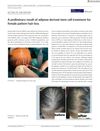 April 2021 in “Journal of Cosmetic Dermatology”
 Stem cell treatment improved hair density in female hair loss patient.
 35 citations
,
February 2012 in “Journal of The American Academy of Dermatology”
35 citations
,
February 2012 in “Journal of The American Academy of Dermatology” Finasteride significantly improves hair growth but may cause sexual side effects.
 23 citations
,
January 2013 in “Indian Journal of Dermatology, Venereology and Leprology”
23 citations
,
January 2013 in “Indian Journal of Dermatology, Venereology and Leprology” FPHL causes hair loss in women due to genetics and hormones; minoxidil and anti-androgens are treatments, and early intervention is advised.
 16 citations
,
June 2008 in “Springer eBooks”
16 citations
,
June 2008 in “Springer eBooks” Over 50% of women over 50 experience hair loss, with minoxidil being the only proven effective treatment.
 29 citations
,
April 2004 in “British Journal of Dermatology”
29 citations
,
April 2004 in “British Journal of Dermatology” Women with female pattern hair loss often underestimate how severe it is.
 21 citations
,
February 2017 in “International Journal of Women's Dermatology”
21 citations
,
February 2017 in “International Journal of Women's Dermatology” Hormonal therapies help treat female hair loss, but results are slow and vary.
 20 citations
,
August 2009 in “Journal of The European Academy of Dermatology and Venereology”
20 citations
,
August 2009 in “Journal of The European Academy of Dermatology and Venereology” Occipital scalp affects female hair loss; terminal/vellus ratio helps diagnose androgenetic alopecia.
 5 citations
,
January 2020 in “Journal of Dermatology”
5 citations
,
January 2020 in “Journal of Dermatology” Temporal hair loss relates to overall scalp hair loss in women.

Female pattern hair loss, common in women, can be treated with various methods like minoxidil, anti-androgen treatments, and light therapy, but early intervention and realistic expectations are crucial.
 2 citations
,
January 2020 in “International Journal of Medical Sciences”
2 citations
,
January 2020 in “International Journal of Medical Sciences” Avoid alcohol, ponytails, and oily scalp, and get good sleep to prevent severe hair loss.
 179 citations
,
March 2005 in “British Journal of Dermatology”
179 citations
,
March 2005 in “British Journal of Dermatology” Oral antiandrogens effectively treat female hair loss, with better results in higher hair loss grades.
 58 citations
,
September 2012 in “Dermatologic Clinics”
58 citations
,
September 2012 in “Dermatologic Clinics” Male pattern hair loss caused by follicular miniaturization; early diagnosis and treatment can reduce psychological burden.
 49 citations
,
February 2019 in “The Journal of Clinical Endocrinology and Metabolism”
49 citations
,
February 2019 in “The Journal of Clinical Endocrinology and Metabolism” Use "female pattern hair loss" term, assess androgen excess, treat with minoxidil and other medications if needed.
 38 citations
,
June 2003 in “Journal of Investigative Dermatology Symposium Proceedings”
38 citations
,
June 2003 in “Journal of Investigative Dermatology Symposium Proceedings” Finasteride effectively improves hair growth and slows hair loss in men with male pattern baldness.