 13 citations
,
September 2017 in “Skin appendage disorders”
13 citations
,
September 2017 in “Skin appendage disorders” Some women with Frontal Fibrosing Alopecia also have Lichen Planopilaris, which can lead to more symptoms and affect hair outside the scalp.
 2 citations
,
January 2019 in “Skin appendage disorders”
2 citations
,
January 2019 in “Skin appendage disorders” Higher social status is linked to earlier diagnosis and better treatment results for Frontal Fibrosing Alopecia in women.
 1 citations
,
May 2014 in “European Journal of Inflammation”
1 citations
,
May 2014 in “European Journal of Inflammation” A lotion with minoxidil, hydrocortisone butyrate, and 17a-estradiol can improve or stabilize Frontal Fibrosing Alopecia in some cases, but there's no universally-accepted treatment yet.
 October 2023 in “Dermatology practical & conceptual”
 Folliculitis Decalvans and Frontal Fibrosing Alopecia can coexist in people with darker skin, showing features of both conditions.
 September 2017 in “Journal of Dermatology & Cosmetology”
 Hepatitis C treatment may cause frontal fibrosing alopecia.
 126 citations
,
April 2006 in “International Journal of Dermatology”
126 citations
,
April 2006 in “International Journal of Dermatology” The conclusion is that FFA and LPP have similar scalp biopsy features, making them hard to distinguish histologically, and FFA may be a specific kind of scarring hair loss.
 7 citations
,
August 2018 in “The American Journal of Dermatopathology”
7 citations
,
August 2018 in “The American Journal of Dermatopathology” Researchers found a new early sign of Frontal Fibrosing Alopecia that could help avoid misdiagnosis.
 2 citations
,
July 2020 in “Giornale italiano di dermatologia e venereologia”
2 citations
,
July 2020 in “Giornale italiano di dermatologia e venereologia” A woman with frontal fibrosing alopecia experienced unusual hair growth after using a specific topical lotion.
 40 citations
,
January 2013 in “International journal of trichology”
40 citations
,
January 2013 in “International journal of trichology” Perifollicular erythema can indicate active frontal fibrosing alopecia.
 37 citations
,
April 2019 in “Journal of The American Academy of Dermatology”
37 citations
,
April 2019 in “Journal of The American Academy of Dermatology” Some treatments like intralesional steroids and 5α-reductase inhibitors are effective for frontal fibrosing alopecia, but more research is needed.
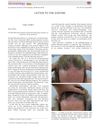 26 citations
,
June 2018 in “Australasian Journal of Dermatology”
26 citations
,
June 2018 in “Australasian Journal of Dermatology” Stopping sunscreen use on the forehead led to hair regrowth in a woman with frontal fibrosing alopecia.
 17 citations
,
November 2018 in “Dermatology”
17 citations
,
November 2018 in “Dermatology” Most patients with frontal fibrosing alopecia had facial bumps, with Hispanic/Latino and premenopausal women being more affected, suggesting a more severe condition.
 15 citations
,
August 2019 in “Dermatologic Therapy”
15 citations
,
August 2019 in “Dermatologic Therapy” Platelet-rich plasma (PRP) may help treat hair loss in patients with frontal fibrosing alopecia who don't respond to other treatments.
 15 citations
,
December 2017 in “Journal of The European Academy of Dermatology and Venereology”
15 citations
,
December 2017 in “Journal of The European Academy of Dermatology and Venereology” Frontal fibrosing alopecia and androgenetic alopecia may be related, with a possible shared cause.
 14 citations
,
April 2019 in “International Journal of Women's Health”
14 citations
,
April 2019 in “International Journal of Women's Health” Some treatments can stabilize Frontal Fibrosing Alopecia, but more research is needed to find effective treatments, and hair transplants often fail.
 12 citations
,
January 2017 in “Skin appendage disorders”
12 citations
,
January 2017 in “Skin appendage disorders” Two patients with skin lupus were mistakenly thought to have a different scalp condition but improved with lupus treatment.
 11 citations
,
May 2023 in “Journal of Cutaneous Medicine and Surgery”
11 citations
,
May 2023 in “Journal of Cutaneous Medicine and Surgery” Plasma Rich in Growth Factors may help reduce hair loss in Frontal Fibrosing Alopecia.
 8 citations
,
October 2018 in “Journal of The American Academy of Dermatology”
8 citations
,
October 2018 in “Journal of The American Academy of Dermatology” The review suggests there's no agreed treatment for Frontal Fibrosing Alopecia, but hydroxychloroquine and 5a-reductase inhibitors are most effective. New treatments like platelet-rich plasma and LED light could help if standard treatments fail.
 7 citations
,
August 2019 in “Clinical and Experimental Dermatology”
7 citations
,
August 2019 in “Clinical and Experimental Dermatology” The Mona Lisa's high forehead and sparse eyebrows might be due to a hair loss condition or Renaissance fashion trends, but the actual reason is unknown.
 6 citations
,
January 2017 in “British Journal of Dermatology”
6 citations
,
January 2017 in “British Journal of Dermatology” Frontal fibrosing alopecia is a scarring hair loss condition mainly affecting older women, with no known cause and treatments that may help stabilize hair loss.
 6 citations
,
June 2016 in “Experimental Dermatology”
6 citations
,
June 2016 in “Experimental Dermatology” Frontal Fibrosing Alopecia is a poorly understood condition that is hard to treat and causes distressing hair loss.
 2 citations
,
April 2023 in “Cutis”
2 citations
,
April 2023 in “Cutis” More inclusive research is needed to effectively treat frontal fibrosing alopecia in Black patients.
 2 citations
,
April 2017 in “Actas Dermo-Sifiliográficas”
2 citations
,
April 2017 in “Actas Dermo-Sifiliográficas” Best treatment for Frontal Fibrosing Alopecia is 5-alpha-reductase inhibitors and intralesional corticosteroids.
 January 2026 in “Frontiers in Medicine”
 FFA and FAPD might be related or stages of the same disease.

The article suggests that patients with Frontal Fibrosing Alopecia may have more contact allergies, but it doesn't prove that allergies cause the condition.
 January 2024 in “Dermatology practical & conceptual”
 Lymecycline may help with Frontal Fibrosing Alopecia but needs more research.
 July 2018 in “Nasza Dermatologia Online”
 Frontal fibrosing alopecia and ulerythema ophryogenes may be related and can evolve from one to the other.
 November 2015 in “European journal of dermatology/EJD. European journal of dermatology”
 A 55-year-old woman with several health conditions did not see hair regrowth after a transplant.
Finasteride and low-level laser therapy are similarly effective for frontal pattern hair loss.
 March 2022 in “Más dermatología”
 Chronic lupus and frontal fibrosing alopecia can occur together, but their connection is unclear.