 6 citations
,
January 2019 in “The American Journal of Dermatopathology”
6 citations
,
January 2019 in “The American Journal of Dermatopathology” The conclusion is that fat tissue in the skin is a new finding in Frontal fibrosing alopecia and may contribute to hair follicle and muscle degeneration.
 12 citations
,
December 2018 in “Dermatologic Therapy”
12 citations
,
December 2018 in “Dermatologic Therapy” Small Botox dose effectively treats hair loss in Chinese men.
9 citations
,
June 2013 in “Journal of Cosmetic Dermatology” Lateral oblique forehead lines are caused by muscle movement, not sleep positions, and can be treated with botulinum toxin A.
 September 2023 in “Clinical anatomy”
 Forehead creases are formed by a tight connection between the skin and muscle through dense fibers, with changes in skin thickness and fewer skin appendages near the creases.
 10 citations
,
December 2008 in “Journal of Clinical Neuromuscular Disease”
10 citations
,
December 2008 in “Journal of Clinical Neuromuscular Disease” Finasteride can cause muscle pain and high creatine kinase levels, but stopping the medication may resolve symptoms.
 January 2024 in “Archives of pathology & laboratory medicine”
 New findings may help diagnose and understand scarring alopecia better.
December 1972 in “Archives of Dermatology” The girl has an inflammatory type of scarring hair loss.
1 citations
,
January 2000 in “Aesthetic Surgery Journal” Surgery involving blepharoplasty and an endoscopic forehead lift can rejuvenate the upper face.
41 citations
,
July 2018 in “Frontiers in Neurology” Myotonic dystrophy may be classified as a segmental progeroid disorder.
 March 2024 in “Cosmoderma”
 Botulinum toxin is used for neck, shoulder, calf, and ankle slimming, and hair loss treatment, but can cause muscle weakness and atrophy with regular use.
 9 citations
,
June 2014 in “British Journal of Dermatology”
9 citations
,
June 2014 in “British Journal of Dermatology” The study found that balding scalps have more thin hairs and larger oil glands, which might contribute to skin conditions related to hair loss.
 June 2024 in “Skin Research and Technology”
 Botulinum toxin treatment improves hair follicle width and length in androgenetic alopecia.

The man had myotonia, which caused delayed hand grip relaxation.
 April 2016 in “Journal of Clinical Research in Dermatology”
 A woman had skin and hair issues after a botulinum toxin injection.
 4 citations
,
February 2022 in “International Journal of Molecular Sciences”
4 citations
,
February 2022 in “International Journal of Molecular Sciences” Myotonic Dystrophy may age cells faster, and drugs that target aging could be potential treatments.
April 2026 in “Journal of Cutaneous Pathology” Alopecia can be caused by multicentric reticulohistiocytosis.
 November 2015 in “European journal of dermatology/EJD. European journal of dermatology”
 A 55-year-old woman with several health conditions did not see hair regrowth after a transplant.
 86 citations
,
July 2012 in “British journal of dermatology/British journal of dermatology, Supplement”
86 citations
,
July 2012 in “British journal of dermatology/British journal of dermatology, Supplement” There may be a connection between Frontal Fibrosing Alopecia and Lichen Planus Pigmentosus, and more research is needed to confirm this.
 12 citations
,
January 2016 in “Skin appendage disorders”
12 citations
,
January 2016 in “Skin appendage disorders” Repeated botulinum toxin injections for forehead wrinkles may cause hairline recession in some women.
 1 citations
,
December 2017 in “Anais Brasileiros de Dermatologia”
1 citations
,
December 2017 in “Anais Brasileiros de Dermatologia” Frontal fibrosing alopecia can mimic traction alopecia but has distinct features like facial papules and eyebrow thinning.
 July 2021 in “British Journal of Dermatology”
 A woman with systemic sclerosis developed a unique scarring hair loss combining features of systemic sclerosis and frontal fibrosing alopecia.
 July 2018 in “Nasza Dermatologia Online”
 Frontal fibrosing alopecia and ulerythema ophryogenes may be related and can evolve from one to the other.
 17 citations
,
May 2013 in “Oral and Maxillofacial Surgery Clinics of North America”
17 citations
,
May 2013 in “Oral and Maxillofacial Surgery Clinics of North America” The document concludes that careful surgical methods and choosing the right materials are key for successful scalp, skull, and frontal sinus reconstruction.
 14 citations
,
June 2021 in “British journal of dermatology/British journal of dermatology, Supplement”
14 citations
,
June 2021 in “British journal of dermatology/British journal of dermatology, Supplement” Experts agreed on guidelines to improve research on Frontal Fibrosing Alopecia.
 1 citations
,
June 2012 in “Revista Brasileira de Cirurgia Plástica”
1 citations
,
June 2012 in “Revista Brasileira de Cirurgia Plástica” The procedure is effective for reducing the forehead despite potential for visible scars.
 80 citations
,
April 2018 in “Trends in Molecular Medicine”
80 citations
,
April 2018 in “Trends in Molecular Medicine” Lichen Planopilaris and Frontal Fibrosing Alopecia may help us understand hair follicle stem cell disorders and suggest new treatments.
 68 citations
,
May 2016 in “Experimental dermatology”
68 citations
,
May 2016 in “Experimental dermatology” FFA's causes may include environmental triggers and genetic factors.
 49 citations
,
January 2003 in “Clinical and Experimental Dermatology”
49 citations
,
January 2003 in “Clinical and Experimental Dermatology” The document concludes that post-menopausal frontal fibrosing alopecia is a poorly understood condition that does not respond well to common treatments.
 36 citations
,
December 2017 in “Journal of the American Academy of Dermatology”
36 citations
,
December 2017 in “Journal of the American Academy of Dermatology” Most patients with frontal fibrosing alopecia stabilized with treatment, especially younger ones, using intralesional corticosteroids and tacrolimus.
 31 citations
,
April 2010 in “British journal of dermatology/British journal of dermatology, Supplement”
31 citations
,
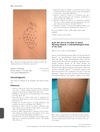
April 2010 in “British journal of dermatology/British journal of dermatology, Supplement” Frontal fibrosing alopecia can cause sudden hair loss on limbs, similar to scalp hair loss.