 3 citations
,
April 2021 in “Berkala ilmu kedokteran/Journal of the medical sciences”
3 citations
,
April 2021 in “Berkala ilmu kedokteran/Journal of the medical sciences” A fungus called Epidermophyton floccosum can cause scalp infections.
3 citations
,
November 2021 in “Frontiers in Medicine” Advanced male pattern baldness affects the back of the scalp, reducing hair follicles.
January 2020 in “Dermatology Online Journal” A young Caucasian man experienced a rare type of hair loss on the back of his head.
 19 citations
,
February 2008 in “Facial Plastic Surgery”
19 citations
,
February 2008 in “Facial Plastic Surgery” The article concludes that microvascular free flaps, especially the latissimus dorsi flap, are recommended for large scalp reconstructions, and hair transplantation offers high survival rates and excellent aesthetic results.
 January 2015 in “Hair transplant forum international”
 The document's conclusion cannot be provided because the content is not available.
 16 citations
,
April 2014 in “Dermatologic Clinics”
16 citations
,
April 2014 in “Dermatologic Clinics” Dermatoscopy helps diagnose hair and scalp disorders in people with Afro-textured hair, but more research is needed for better understanding and treatment.
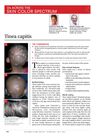 October 2022 in “The Journal of Family Practice”
 Tinea capitis is a scalp fungal infection in children that can cause hair loss, scaling, and other symptoms.

The conclusion is that common non-infectious scalp diseases often have similar symptoms, making diagnosis challenging.
22 citations
,
April 2012 in “Informa Healthcare eBooks” Frontal fibrosing alopecia is a type of hair loss that usually happens after menopause.
January 2024 in “Updates in clinical dermatology” Frontal fibrosing alopecia is a scarring hair loss condition mainly affecting postmenopausal women, with unclear causes.
 1 citations
,
May 2015 in “Journal of evolution of medical and dental sciences”
1 citations
,
May 2015 in “Journal of evolution of medical and dental sciences” Many patients at a dermatology clinic had scalp problems, often unrelated to why they visited, suggesting scalp checks should be regular.
 January 2011 in “Yearbook of Dermatology and Dermatologic Surgery”
 Moles on the scalp are more common in people with more body moles and atypical moles, but not linked to balding.
 February 2004 in “Dermatologic Surgery”
 Deep Plane Fixation in scalp surgeries allows for more tissue removal with less tension and minimal scarring.
2 citations
,
October 1985 in “Pediatrics in review” Scalp diseases change with age and can be hard to tell apart from hair disorders.
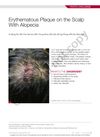
The woman has a scalp condition causing hair loss.
 14 citations
,
January 2006 in “Australasian journal of dermatology”
14 citations
,
January 2006 in “Australasian journal of dermatology” Alopecia areata can look like frontal fibrosing alopecia, making diagnosis hard.
October 2012 in “Indian Journal of Dermatology, Venereology and Leprology” 13 citations
,
August 2013 in “International Journal of Dermatology” Frontal fibrosing alopecia can affect African men and may be underdiagnosed.
 7 citations
,
November 2011 in “Skin Research and Technology”
7 citations
,
November 2011 in “Skin Research and Technology” The study found a specific pattern of uneven melanin distribution on balding scalps that could help understand skin diseases caused by light exposure.
1 citations
,
June 2024 in “Plastic & Reconstructive Surgery Global Open” A super thin DIEP flap can effectively reconstruct scalp defects with good skin coverage and contour.
 4 citations
,
May 2013 in “Annals of Plastic Surgery”
4 citations
,
May 2013 in “Annals of Plastic Surgery” Hair transplants onto a scalp reconstruction flap improved appearance successfully.
October 2023 in “Asian journal of pharmaceutical and clinical research” Standardized data is essential for diagnosing scalp and hair conditions in males.
 126 citations
,
April 2006 in “International Journal of Dermatology”
126 citations
,
April 2006 in “International Journal of Dermatology” The conclusion is that FFA and LPP have similar scalp biopsy features, making them hard to distinguish histologically, and FFA may be a specific kind of scarring hair loss.
15 citations
,
June 2015 in “Journal of Craniofacial Surgery” Early surgical removal of scalp hemangiomas leads to good scarring and hair growth.
Early diagnosis and treatment of frontal fibrosing alopecia are crucial to prevent permanent hair loss.
 46 citations
,
December 2003 in “Advances in neonatal care”
46 citations
,
December 2003 in “Advances in neonatal care” Assessing newborn scalp hair can reveal important health information.
December 2016 in “Anales del sistema sanitario de Navarra” Frontal fibrosing alopecia is increasing, especially in postmenopausal women, and treatment with finasteride can improve it.
 1 citations
,
February 2004 in “Dermatologic Surgery”
1 citations
,
February 2004 in “Dermatologic Surgery” Deep Plane Fixation in scalp surgeries allows for more tissue removal with less tension, leading to better healing and less scarring.
 6 citations
,
January 2017 in “British Journal of Dermatology”
6 citations
,
January 2017 in “British Journal of Dermatology” Frontal fibrosing alopecia is a scarring hair loss condition mainly affecting older women, with no known cause and treatments that may help stabilize hair loss.
 November 2023 in “The journal of investigative dermatology/Journal of investigative dermatology”
 Early treatment and multidisciplinary care are key to managing Frontal Fibrosing Alopecia and preventing further hair loss.