January 2024 in “Brazilian Journal of Hair Health” Hair science has grown significantly, focusing on conditions like alopecia and improving treatments and techniques.
 37 citations
,
April 2019 in “Journal of The American Academy of Dermatology”
37 citations
,
April 2019 in “Journal of The American Academy of Dermatology” Some treatments like intralesional steroids and 5α-reductase inhibitors are effective for frontal fibrosing alopecia, but more research is needed.
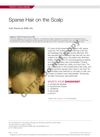
A 5-year-old girl has sparse, dry, and brittle hair but is otherwise healthy.
 11 citations
,
January 2018 in “Annals of Dermatology”
11 citations
,
January 2018 in “Annals of Dermatology” Some people experienced temporary hair loss after hair transplant surgery but recovered fully within 10 months.
 6 citations
,
June 2016 in “Experimental Dermatology”
6 citations
,
June 2016 in “Experimental Dermatology” Frontal Fibrosing Alopecia is a poorly understood condition that is hard to treat and causes distressing hair loss.
August 2023 in “Journal of Investigative Dermatology” Dutasteride may help treat frontal fibrosing alopecia.
 6 citations
,
January 2019 in “Medical Hypotheses”
6 citations
,
January 2019 in “Medical Hypotheses” Frontal Fibrosing Alopecia might be an autoimmune disease.
January 2021 in “Hair therapy & transplantation” Telogen effluvium causes temporary hair loss, but new hair still grows.
July 2024 in “Clinical Case Reports” Recognizing rare hair loss patterns in young females can improve understanding and treatment.
January 2006 in “DOAJ (DOAJ: Directory of Open Access Journals)” Loose anagen hair syndrome causes easily pulled, thin hair in kids but is harmless and temporary.
 May 2009 in “Medical and surgical dermatology/Medical & surgical dermatology”
 Hair and nail conditions can stabilize or improve over time, and new treatments show promise.
 January 2015 in “Springer eBooks”
 The pull test and wash test are cheap, easy methods to diagnose hair loss.
19 citations
,
July 2004 in “Australasian Journal of Dermatology” Her hair grew back normally after she stopped rubbing it.
 1 citations
,
February 2004 in “Medical Hypotheses”
1 citations
,
February 2004 in “Medical Hypotheses” Certain cultural hair practices might cause baldness by affecting natural hair oils and stem cell delivery to hair follicles.
 51 citations
,
November 2020 in “Journal of the European Academy of Dermatology and Venereology”
51 citations
,
November 2020 in “Journal of the European Academy of Dermatology and Venereology” COVID-19 infection may cause significant hair loss, but full hair recovery is likely without special treatment.
 1 citations
,
July 2020 in “Benha Journal of Applied Sciences”
1 citations
,
July 2020 in “Benha Journal of Applied Sciences” Trichoscopy is useful for diagnosing Frontal Fibrosing Alopecia.
 January 2018 in “Springer eBooks”
 Telogen effluvium is hair loss caused by disruption of the normal hair cycle.
 2 citations
,
April 2017 in “Actas Dermo-Sifiliográficas”
2 citations
,
April 2017 in “Actas Dermo-Sifiliográficas” Best treatment for Frontal Fibrosing Alopecia is 5-alpha-reductase inhibitors and intralesional corticosteroids.
 88 citations
,
June 2009 in “Cleveland Clinic Journal of Medicine”
88 citations
,
June 2009 in “Cleveland Clinic Journal of Medicine” To manage diffuse hair loss, identify the cause, improve nutrition, remove triggers, and use specific treatments like minoxidil or finasteride.
 1 citations
,
March 2020 in “Australasian Journal of Dermatology”
1 citations
,
March 2020 in “Australasian Journal of Dermatology” The paper concludes that recognizing bitemporal alopecia areata is important for early treatment and preventing its progression.
 April 2021 in “Journal of Investigative Dermatology”
 Leontopodium alpinum extract may help reduce hair shedding by keeping hair in the growth phase longer.
 November 1995 in “Journal of Pediatric Health Care”
 Most hair loss in kids and teens is due to common conditions, and hair usually grows back within 6 months.
 November 2025 in “International Journal of Recent Innovations in Medicine and Clinical Research”
 Understanding different types of hair loss helps in accurate diagnosis and treatment.
June 2011 in “European Journal of Pediatric Dermatology” An 11-year-old girl with hair thinning was diagnosed with monilethrix and early androgenetic alopecia.
July 1996 in “Hair transplant forum international”  August 2016 in “Journal of the Portuguese Society of Dermatology and Venereology”
 Two women with darker skin had both frontal hair thinning and skin discoloration.
 April 2024 in “Dermatovenerologiâ, kosmetologiâ”
 Telogen effluvium is a common hair loss condition that can be managed with proper treatment and addressing underlying issues.
July 2025 in “InnovAiT Education and inspiration for general practice”  1 citations
,
October 2023 in “Veterinary Dermatology”
1 citations
,
October 2023 in “Veterinary Dermatology” Transversal biopsy sections are better than longitudinal sections for diagnosing alopecia X.
 March 2018 in “Dermatología Argentina”
 The study found that the average age of women diagnosed with Frontal Fibrosing Alopecia in Argentina is higher than in other countries, but their symptoms are similar.