 September 2023 in “Journal of Cosmetic Dermatology”
 Finasteride was more effective than hydroxychloroquine in treating frontal fibrosing alopecia.
 1 citations
,
January 2023 in “Research Square (Research Square)”
1 citations
,
January 2023 in “Research Square (Research Square)” A woman's vitiligo improved with tofacitinib treatment, and her skin color remained even after stopping the medication, but there are concerns about cancer risk.
 January 2024 in “Journal of Crohn's and colitis”
 Janus Kinase inhibitors are effective and have an acceptable safety profile for treating moderate to severe Ulcerative Colitis.
2 citations
,
September 2018 in “JAAD case reports” A rare type of skin cancer with mucosal involvement was partially treated but eventually relapsed.
September 2020 in “bioRxiv (Cold Spring Harbor Laboratory)” Finasteride may help reduce opioid use.
 October 2024 in “International Journal of Research in Dermatology”
 Tofacitinib is a promising and safe treatment for moderate to severe alopecia areata.
FUE successfully restored hair growth in a patient with alopecia from Hansen's disease.
11 citations
,
January 1999 in “Dermatology” 3 citations
,
January 2025 in “International Journal of Biological Macromolecules” A new microneedle patch effectively promotes hair regrowth with less frequent dosing.
 16 citations
,
January 2017 in “Acta dermatovenerologica Alpina, Pannonica et Adriatica (Tiskana izd.)”
16 citations
,
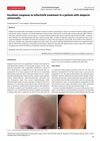
January 2017 in “Acta dermatovenerologica Alpina, Pannonica et Adriatica (Tiskana izd.)” A patient with complete hair loss regrew all her hair using tofacitinib.
 4 citations
,
May 2019 in “Sultan Qaboos University Medical Journal”
4 citations
,
May 2019 in “Sultan Qaboos University Medical Journal” Tofacitinib helped regrow hair in a patient with severe hair loss and improved their quality of life without side effects.
 5 citations
,
September 2022 in “Antioxidants”
5 citations
,
September 2022 in “Antioxidants” A substance from Caulerpa racemosa seaweed may protect against skin damage caused by air pollution by reducing oxidative stress and cell death.
 August 2018 in “Journal of the American Academy of Dermatology”
 Tofacitinib is a potential alternative treatment for alopecia totalis, especially in patients with a shorter duration of the condition and more preserved hair follicles, but the overall response rate is low.
 March 2022 in “International Journal of Trichology”
 Tofacitinib may be effective for treating hair loss caused by alopecia areata that doesn't respond to other treatments.
 May 2026 in “Scholars Journal of Medical Case Reports”
 Intralesional betamethasone and oral hydroxychloroquine improved hair loss in a woman with frontal fibrosing alopecia.
July 2022 in “Journal of Cosmetic Dermatology” Isotretinoin with tacrolimus may be more effective short-term for treating frontal fibrosing alopecia than finasteride with tacrolimus.
 July 2020 in “CRS 2020 Virtual Annual Meeting”
 Researchers developed a new skin patch that delivers more finasteride into the skin, potentially improving treatment for hair loss and prostate issues.
 1 citations
,
May 2017 in “Journal of the American Academy of Dermatology”
1 citations
,
May 2017 in “Journal of the American Academy of Dermatology” Oral tofacitinib may be an effective and tolerable treatment for some people with severe alopecia areata.
25 citations
,
July 2022 in “Pharmaceutics” Spanlastic nanovesicles can improve efinaconazole delivery through nails.
1 citations
,
January 2024 in “Arab Board Medical Journal” Tofacitinib effectively regrows hair in alopecia areata patients, especially in younger individuals, with manageable side effects.
 July 2025 in “Journal of the Pakistan Medical Association”
 Combining TCA with 5-FU is more effective and safer for treating keloids than TCA alone.
5 citations
,
January 1991 in “Drugs of The Future” 86 citations
,
November 2015 in “Journal of Gastroenterology” The NUDT15 R139C variant causes thiopurine-induced leukocytopenia through a different mechanism than previously thought in Japanese patients with inflammatory bowel disease.
April 2025 in “ALEXMED ePosters” Combining nanofat with FUE improves scar appearance and function better than FUE alone.
June 2026 in “Khyber Journal Of Medical Sciences” Tofacitinib works better than methotrexate for severe alopecia in the short term.
 May 2025 in “JEADV Clinical Practice”
 Tofacitinib and methotrexate successfully treated a woman's severe skin, joint, and hair loss issues.
April 2024 in “Biosaintifika Journal of Biology & Biology Education” A gel from stem cells can reduce baldness caused by fluconazole in rats.
 14 citations
,
November 2020 in “International Journal of Biological Macromolecules”
14 citations
,
November 2020 in “International Journal of Biological Macromolecules” Mushroom-based scaffolds help heal skin wounds and regrow hair.
March 2022 in “Oncology Times” Tebentafusp-tebn improves survival rates in uveal melanoma patients but has common side effects like rash and fatigue.
 139 citations
,
November 2016 in “Journal of the American Academy of Dermatology”
139 citations
,
November 2016 in “Journal of the American Academy of Dermatology” Tofacitinib helped regrow hair in most adolescents with alopecia areata, but more research is needed.