 August 2016 in “The journal of investigative dermatology/Journal of investigative dermatology”
 The hexosamine pathway helps protect skin cells from stress and may improve skin and hair health.
 1 citations
,
May 2023 in “European Journal of Human Genetics”
1 citations
,
May 2023 in “European Journal of Human Genetics” Rare ULBP3 gene changes may raise the risk of Alopecia areata, a certain FAS gene deletion could cause a dysfunctional protein in an immune disorder, and having one copy of a specific genetic deletion is okay, but two copies cause sickle cell disease.
37 citations
,
February 2005 in “Journal of Investigative Dermatology” Overexpression of SSAT causes hair loss and skin issues, but reducing putrescine can help.
63 citations
,
May 2015 in “PloS one” GALT5 and GALT2 are important for plant growth and development because they help with protein glycosylation.
 May 2024 in “Australasian journal of dermatology”
 A man with a type of skin lymphoma had unusual yellowish skin growths despite normal blood lipid levels, and treatment reduced some symptoms but not the growths.
 1 citations
,
August 2022 in “International Journal of Molecular Sciences”
1 citations
,
August 2022 in “International Journal of Molecular Sciences” FGF12 is important for hair growth and could be targeted for hair loss treatment.
 April 2018 in “Journal of Investigative Dermatology”
 Stabilizing HIF1A in hair follicles increases glycolysis, which may help reduce oxidative stress and support hair growth.
 July 2023 in “Indian Journal of Animal Health”
 FGF-5 promotes Cashmere goat hair growth by increasing keratin genes and reducing certain LncRNA and target genes.
Arabidopsis Formin 2 stabilizes actin filaments to aid cell-to-cell trafficking.
November 2025 in “Clinical and Translational Medicine” DNAJB9 cfRNA could help diagnose and treat female hair loss.
 2 citations
,
December 2025 in “Nature Communications”
2 citations
,
December 2025 in “Nature Communications” H2AK119ub helps keep hair follicle stem cells in a resting state, preventing early aging.
3 citations
,
March 2017 in “Pediatric Dermatology” FOXN1 duplication can cause excessive hair growth.
 April 2018 in “Journal of Investigative Dermatology”
 A new peptide, FOL-005, may help treat excessive hair growth by reducing a hair growth promoter, FGF7.
11 citations
,
October 2014 in “Gene” Researchers identified a new variant of the FGF5 gene in sheep that affects hair length.
1 citations
,
February 2023 in “Pharmaceutics” Cell proteomic footprinting enhances cancer vaccine quality by ensuring correct antigen composition.
 6 citations
,
January 2020 in “Czech Journal of Animal Science”
6 citations
,
January 2020 in “Czech Journal of Animal Science” The FAT1 gene and its variations can help improve wool quality in Chinese Merino sheep through selective breeding.

Mealworm protein helps fat cell development and may aid in metabolic health and hair growth.
10 citations
,
August 2023 in “The EMBO Journal” Kdm6b is crucial for skin cell differentiation.
 July 2018 in “European Medical Journal”
 Fumaric acid esters, especially dimethylfumarate, improve psoriasis treatment.
1 citations
,
September 2023 in “Portuguese Journal of Dermatology and Venereology” Trichoscopy can help diagnose and decide when to biopsy folliculotropic mycosis fungoides.
 1 citations
,
October 2023 in “Journal of the Pakistan Medical Association”
1 citations
,
October 2023 in “Journal of the Pakistan Medical Association” Folliculotropic mycosis fungoides can occur in children and is diagnosed with specific tests, but often stays in early stages with treatment.
1 citations
,
December 2012 in “Journal of Dermatological Science” FGF18 controls hair growth rest phase.
 May 2021 in “Experimental Cell Research”
 FOXC1 boosts SFRP1 in hair loss, suggesting new treatments.
 260 citations
,
July 2010 in “Cell”
260 citations
,
July 2010 in “Cell” Mutations in the SRD5A3 gene cause a new type of glycosylation disorder by blocking the production of a molecule necessary for protein glycosylation.
 1 citations
,
February 2017 in “The American journal of dermatopathology/American journal of dermatopathology”
1 citations
,
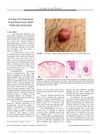
February 2017 in “The American journal of dermatopathology/American journal of dermatopathology” A man with a skin nodule was diagnosed with a rare skin condition called cutaneous focal mucinosis, which can be confused with other skin cancers.
1 citations
,
January 1984 62 citations
,
December 2007 in “Journal of biological chemistry/The Journal of biological chemistry” A specific chemical change in the S100A3 protein leads to the formation of a four-part structure important for hair formation.
 May 2024 in “JAMA Dermatology”
 Oral contraceptive use may increase the risk of frontal fibrosing alopecia in women with a specific CYP1B1 gene variant.
1 citations
,
April 2023 in “International journal of molecular sciences” Certain skin proteins can form anchoring structures without the protein AMACO.
1 citations
,
May 2020 in “bioRxiv (Cold Spring Harbor Laboratory)” The fer-ts mutation in plants prevents root hair growth at high temperatures.