 13 citations
,
March 2013 in “Dermatologic Surgery”
13 citations
,
March 2013 in “Dermatologic Surgery” The document concludes that hair restoration has advanced significantly, with FUE becoming more popular, and stresses the importance of physician training and ethical practices in the field.
 11 citations
,
October 2015 in “Journal of Cosmetic Dermatology”
11 citations
,
October 2015 in “Journal of Cosmetic Dermatology” Half of hair restoration surgeons experience body discomfort, especially after follicular unit extraction procedures, and using ergonomic equipment or robotic devices could reduce this discomfort.
 December 2023 in “International Journal of Medical Arts”
 Transplanted hair follicles show significant changes after FUE, needing more research.
 1 citations
,
April 2019 in “Aesthetic Plastic Surgery”
1 citations
,
April 2019 in “Aesthetic Plastic Surgery” Secondary hairline correction surgery can be effective and satisfying when customized to the patient's needs.
 153 citations
,
August 2002 in “Dermatologic Surgery”
153 citations
,
August 2002 in “Dermatologic Surgery” Follicular Unit Extraction (FUE) is a less invasive hair transplant method with minimal scarring, suitable for about 60% of patients, especially those needing fewer grafts and quicker recovery.
 13 citations
,
March 2015 in “Plastic and reconstructive surgery. Global open”
13 citations
,
March 2015 in “Plastic and reconstructive surgery. Global open” Leg hair can be used for eyelash transplants, resulting in fuller lashes with less maintenance.
 9 citations
,
January 2020 in “IEEE Access”
9 citations
,
January 2020 in “IEEE Access” The KEBOT system is a highly accurate AI tool for analyzing hair transplants.
 8 citations
,
July 2016 in “Hair transplant forum international”
8 citations
,
July 2016 in “Hair transplant forum international” FUT-MD hair transplants have higher follicle survival rates than FUE transplants.
 6 citations
,
March 2019 in “Dermatologic surgery”
6 citations
,
March 2019 in “Dermatologic surgery” Chilled ATPv-supplemented saline best preserves hair grafts' key genes.
 4 citations
,
August 2018 in “Journal of Cosmetic Dermatology”
4 citations
,
August 2018 in “Journal of Cosmetic Dermatology” Wound tension after hair transplant surgery increases with strip size and is higher on the sides, affecting scarring.

Surgeons should evaluate new technologies critically, offer a range of services including non-surgical options, and be aware of marketing influences to meet patient needs and maintain a successful practice.
Facial hair transplants now look very natural due to improved techniques.
January 2023 in “Hair transplant forum international” The "punching-out" technique effectively reduces the appearance of FUT scars.
 18 citations
,
May 2016 in “Aesthetic Surgery Journal”
18 citations
,
May 2016 in “Aesthetic Surgery Journal” Body hair transplantation is an effective method for restoring hair in people with severe baldness and limited scalp donor hair.
 10 citations
,
July 2017 in “Archives of Plastic Surgery”
10 citations
,
July 2017 in “Archives of Plastic Surgery” Hair thickness decreases from the upper to lower areas of the back of the head, affecting hair transplant results.
 4 citations
,
September 2019 in “Journal of Cosmetic Dermatology”
4 citations
,
September 2019 in “Journal of Cosmetic Dermatology” FUE megasession effectively treats severe hair loss with natural-looking results in one operation.
4 citations
,
January 2019 in “Archives of clinical and medical case reports” Combining FUE hair transplantation with PRP improves hair density and patient satisfaction in scarring alopecia.
 May 2026 in “International Journal of Drug Delivery Technology”
 Using a 45-degree angle for hair transplants improves efficiency and results.
 June 2025 in “Clinical Cosmetic and Investigational Dermatology”
 FUE hair transplantation is safe and effective for improving hair loss in children.
 April 2021 in “Advances in Cosmetic Surgery”
 Hair restoration can be achieved through non-surgical treatments like minoxidil, antiandrogens, phototherapy, and PRP procedures, or through surgical methods like hair transplantation. Continued treatment is needed to maintain results, and full results are visible after 12-18 months.
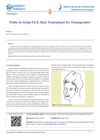
A hair transplant using hair from the back of the head and pubic area was successful in creating a feminine hairline for a male-to-female transgender person.
 13 citations
,
September 2015 in “Aesthetic Surgery Journal”
13 citations
,
September 2015 in “Aesthetic Surgery Journal” Transplanting hair from the nape and around the ear to the hairline and temples generally satisfies patients and looks natural.
 13 citations
,
January 2013 in “Dermatologic Surgery”
13 citations
,
January 2013 in “Dermatologic Surgery” Experienced hair transplant surgeons suggest a limited number of hair follicles can be used for transplants, and recommend conservative methods to avoid scarring and depletion.
 11 citations
,
April 2016 in “Dermatologic Surgery”
11 citations
,
April 2016 in “Dermatologic Surgery” Expert surgeons have a lower rate of hidden damage to hair during hair transplant procedures than beginners.
 9 citations
,
January 2018 in “Hair transplant forum international”
9 citations
,
January 2018 in “Hair transplant forum international” Researchers concluded that safe hair follicle extraction limits in FUE vary by individual characteristics and proposed a method to calculate these limits to maintain appearance.
 9 citations
,
February 2013 in “Plastic and Reconstructive Surgery”
9 citations
,
February 2013 in “Plastic and Reconstructive Surgery” The article explains how to rebuild parts of the head and face and how to transplant hair to cover scars, highlighting the need for careful planning and choosing the right method for each patient.
 8 citations
,
September 2020 in “Journal of Cosmetic Dermatology”
8 citations
,
September 2020 in “Journal of Cosmetic Dermatology” More people are searching for hair transplants online, preferring Follicular Unit Excision over Follicular Unit Transplant. There's also a rise in female patients and interest in beard, eyebrow transplants, and non-surgical treatments like platelet rich plasma.
 4 citations
,
June 2022 in “Clinical, cosmetic and investigational dermatology”
4 citations
,
June 2022 in “Clinical, cosmetic and investigational dermatology” The new SFS Scale predicts hair transplant difficulty using hair and skin types, with thick skin and coily hair being hardest to work with.
 4 citations
,
April 2020 in “Facial Plastic Surgery Clinics of North America”
4 citations
,
April 2020 in “Facial Plastic Surgery Clinics of North America” Hair loss in women is complex to diagnose and treat, and hair restoration should be done by experts. Using minoxidil before surgery can help manage post-surgery hair shock loss. The Follicular Unit Transplantation method is recommended for women due to its speed, no need for shaving, and better graft quality. Strategies like L, T, and reverse L patterns can help restore central hair density, and regenerative methods can improve graft survival in hair transplants.
 4 citations
,
May 2017 in “Hair transplant forum international”
4 citations
,
May 2017 in “Hair transplant forum international” Using implanters in hair transplants can improve outcomes and cause less damage to hair follicles.