 December 2025 in “International Journal of Pharmaceutical Sciences Review and Research”
 The herbal hair oil is safe and beneficial for scalp and hair health.
 April 2025 in “International Journal of Molecular Sciences”
 Iris-exosomes may help treat hair loss by activating hair growth pathways.
 December 2024 in “PLoS ONE”
 Hair growth serums A and C can affect hair growth genes and pathways, suggesting potential for personalized hair loss treatments.
 January 2021 in “Journal of clinical and cosmetic dermatology”
 Human skin responds to light with protective mechanisms, but more research is needed to understand these processes and their implications for health and therapy.
January 2020 in “Columbia Academic Commons (Columbia University)” Certain genetic changes in the STX17 and KRT82 genes contribute to hair loss in alopecia areata.
May 2019 in “Journal of Acupuncture Research” Sebalgukhwa-san (SGS) can help treat hair loss without liver toxicity.
 January 1997 in “Elsevier eBooks”
 The document explains how shampoos clean, rinses condition, one-step shampoos offer convenience, and hair growth promoters aim to prevent hair loss, emphasizing the importance of scientific evidence for their effectiveness.
126 citations
,
October 1998 in “Experimental Dermatology” The hr gene is crucial for skin and hair health, with mutations causing hair disorders.
 October 2023 in “IBRO neuroscience reports”
 Rat hair follicle stem cells have functional oxytocin receptors, useful for studying neuropsychiatric disorders.
3 citations
,
January 1991 in “Toxicology in Vitro” Hair follicle cultures are effective for studying cell communication and testing chemicals.
17 citations
,
February 2018 in “Journal of Investigative Dermatology” PPAR-γ signaling improves mitochondrial function in hair follicles, potentially affecting hair growth and aging.
 3 citations
,
January 2023 in “Materials horizons”
3 citations
,
January 2023 in “Materials horizons” The new biomaterial helps grow blood vessels and hair for skin repair.
194 citations
,
November 2006 in “Science” A genetic mutation in the LIPH gene causes hair loss and growth defects.
 80 citations
,
April 2006 in “Clinical Interventions in Aging”
80 citations
,
April 2006 in “Clinical Interventions in Aging” Minoxidil and Finasteride are effective for male baldness; more research is needed for hair aging treatments.
 17 citations
,
April 2016 in “Journal of Investigative Dermatology”
17 citations
,
April 2016 in “Journal of Investigative Dermatology” KB2115 (eprotirome) can safely extend the hair growth phase without damaging cells or changing hair color.
May 2026 in “Dermatologic Surgery” GLP-1RAs may cause hair loss but could also help regrow hair in some cases.
January 2025 in “Dermatologic Therapy” CO₂ laser therapy improves skin and hair growth in localized scleroderma without severe side effects.
 January 2024 in “Journal of Cosmetic Dermatology”
 The 1565 nm non-ablative fractional laser is more effective and satisfying than 5% minoxidil for treating hair loss.

Collagen VI is crucial for nerve function and affects wound-induced hair regrowth.
 8 citations
,
February 2005 in “British Journal of Haematology”
8 citations
,
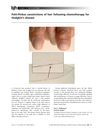
February 2005 in “British Journal of Haematology” Chemotherapy caused the patient's hair to have alternating thick and thin segments.
July 2026 in “Macromolecular Bioscience” Sulfated glycosaminoglycans from Acipenser baerii cartilage improve wound healing and fibroblast function.
28 citations
,
April 2021 in “Biomedicines” Creating fully functional in vitro hair follicles for alopecia treatment is still challenging.
38 citations
,
March 2019 in “International Wound Journal” A new skin treatment using a patient's own cells healed chronic wounds effectively and was preferred over traditional grafts.
 318 citations
,
January 2022 in “Signal Transduction and Targeted Therapy”
318 citations
,
January 2022 in “Signal Transduction and Targeted Therapy” The Wnt/β-catenin pathway is important for body functions and diseases, and targeting it may treat conditions like cancer, but with safety challenges.
133 citations
,
July 2020 in “Cells” Creating fully functional artificial skin for chronic wounds is still very challenging.
79 citations
,
October 1998 in “Genomics” Mouse keratin 6 genes evolved independently from human ones and are regulated differently.
 55 citations
,
December 2014 in “Dermatologica sinica/Zhōnghuá pífūkē yīxué zázhì”
55 citations
,
December 2014 in “Dermatologica sinica/Zhōnghuá pífūkē yīxué zázhì” Keratinocytes control how melanocytes work.
 40 citations
,
January 2016 in “Elsevier eBooks”
40 citations
,
January 2016 in “Elsevier eBooks” The skin is the largest organ, protecting the body, regulating temperature, and producing hormones.
37 citations
,
January 2010 in “Human Molecular Genetics” FTase and GGTase-I are essential for skin keratinocyte health.
26 citations
,
May 2016 in “Journal of biological chemistry/The Journal of biological chemistry” sPLA2-IIE is crucial for normal hair follicle structure and skin health.