August 2024 in “Food Bioscience” Bifidobacterium longum BB536 metabolites may help treat hair loss by repairing and promoting hair cell growth.
 April 2025 in “Vestnik dermatologii i venerologii”
 JAK inhibitors like tofacitinib are effective and safer for severe alopecia areata than glucocorticosteroids.
 5 citations
,
October 2014 in “Scottish medical journal”
5 citations
,
October 2014 in “Scottish medical journal” Nitrofurantoin may cause sub-acute cutaneous lupus erythematosus.
17 citations
,
June 2016 in “Archives de Pédiatrie” Frontal fibrosing alopecia can occur in children, not just postmenopausal women.
4 citations
,
September 2011 in “Journal of the American Academy of Dermatology” A man developed a skin cancer called folliculotropic mycosis fungoides after a kidney transplant.
 7 citations
,
April 2021 in “British Journal of Dermatology”
7 citations
,
April 2021 in “British Journal of Dermatology” Topical tofacitinib may effectively and safely regrow facial hair in some people with alopecia areata.
Flutamide helps with prostate cancer and some skin conditions but can harm the liver.
1.5% lactic acid improved mink growth and health best.
 3 citations
,
April 2016 in “Journal of Investigative Dermatology”
3 citations
,
April 2016 in “Journal of Investigative Dermatology” Tofacitinib, a JAK inhibitor, improved hair regrowth in most patients with severe alopecia areata and had minimal side effects.
 1 citations
,
August 2022 in “International journal of women’s dermatology”
1 citations
,
August 2022 in “International journal of women’s dermatology” Botox injections may be a safe and effective way to treat severe, itchy skin disease when other treatments fail.
 47 citations
,
November 2012 in “Expert Opinion on Therapeutic Patents”
47 citations
,
November 2012 in “Expert Opinion on Therapeutic Patents” The document concludes that research on sulfatase inhibitors should continue due to their potential in treating various diseases, despite some clinical trial failures.
 130 citations
,
February 2018 in “Journal of Investigative Dermatology”
130 citations
,
February 2018 in “Journal of Investigative Dermatology” Tofacitinib may help treat severe hair loss, but more research is needed.
January 2016 in “Elsevier eBooks” Dermatophycosis is a treatable fungal skin infection spread by contact with infected animals.
 10 citations
,
February 2019 in “BMC pediatrics”
10 citations
,
February 2019 in “BMC pediatrics” An infant with scalp fungus was cured after extended treatment with antifungal medication.
87 citations
,
March 2013 in “Expert Review of Anticancer Therapy” Afatinib often causes skin problems that need proactive management.
42 citations
,
August 1987 in “Archives of Dermatology” Squaric acid dibutylester led to complete hair regrowth in 28.5% of patients with alopecia areata.
![Influence of FHIT on Benzo[a]pyrene-Induced Tumors and Alopecia in Mice: Chemoprevention by Budesonide and N-Acetylcysteine](/images/assets/f8f56777-f891-4879-8c45-c87d6aa82563/small/35499.jpg) 24 citations
,
May 2006 in “Proceedings of the National Academy of Sciences of the United States of America”
24 citations
,
May 2006 in “Proceedings of the National Academy of Sciences of the United States of America” Budesonide and N-acetylcysteine reduced tumors and alopecia in mice, regardless of FHIT gene status.
 49 citations
,
January 2003 in “Clinical and Experimental Dermatology”
49 citations
,
January 2003 in “Clinical and Experimental Dermatology” The document concludes that post-menopausal frontal fibrosing alopecia is a poorly understood condition that does not respond well to common treatments.
 22 citations
,
October 2001 in “Biochemical Pharmacology”
22 citations
,
October 2001 in “Biochemical Pharmacology” GI198745 is more potent and longer-lasting than finasteride, potentially better for treating hair loss.
 26 citations
,
June 2018 in “Australasian Journal of Dermatology”
26 citations
,
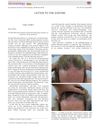
June 2018 in “Australasian Journal of Dermatology” Stopping sunscreen use on the forehead led to hair regrowth in a woman with frontal fibrosing alopecia.
 September 2024 in “Journal of the American Academy of Dermatology”
 The compounded topical solution is safe, stable, and effective for personalized alopecia treatment.
 16 citations
,
July 2017 in “Rheumatology and Therapy”
16 citations
,
July 2017 in “Rheumatology and Therapy” Tofacitinib, a medication for arthritis, showed potential for treating severe hair loss in a small Brazilian case series, but more research is needed.
April 2026 in “Clinical and Translational Science” Tofacitinib effectively treats severe alopecia areata, improving hair regrowth and patient satisfaction.
October 2024 in “International Journal of Pharmaceutics” The finasteride patch effectively treats hair loss by enhancing skin absorption.
March 2019 in “Reactions Weekly” December 2016 in “Indonesian Journal of Tropical and Infectious Disease/Indonesian Journal of Tropical an Infectious Disease” Double pulse dose terbinafine effectively treats kerion type of tinea capitis.
 January 2021 in “Our Dermatology Online”
 Oral tofacitinib successfully treated total body hair loss in one patient.
32 citations
,
August 1996 in “Journal of Investigative Dermatology” February 2026 in “UiTM Institutional Repositories (Universiti Teknologi MARA)” Cis-UCA can form new compounds without enzymes, and sulphide donors reduce its UVB-induced toxicity in skin cells.
 October 2018 in “Springer eBooks”
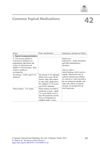
 The document concludes that various topical medications are effective for skin conditions but often cause skin irritation as a side effect.