Search
for
Sort by
Research
30-60 / 1000+ results
research Inducing hair follicle neogenesis with secreted proteins enriched in embryonic skin
Three specific proteins can turn adult skin cells into hair-growing cells, suggesting a new hair loss treatment.
research Lactobacillus paracasei HY7015 Promotes Hair Growth in a Telogenic Mouse Model
Lactobacillus paracasei HY7015 helps hair grow in mice.
research さまざまな臓器からの培養線維芽細胞による毛包誘導
Cells from skin and lung can help regenerate hair follicles.

research 26 Characterization of a murine model of aa induced by adoptive transfer of cultured lymph node cells
The study developed a mouse model for Alopecia Areata that responds to treatment, useful for future research.
research Depletion of S100A4+ stromal cells results in abnormal nipple development and nursing failure
Lack of certain cells causes abnormal nipple development and nursing failure.

research CD8-positive Lymphocytes in Graft-Versus-Host Disease of Humanized NOD.Cg-Prkdcscid Il2rgtm1Wjl/SzJ Mice
CD8+ T cells play a key role in graft-versus-host disease in certain mice models.
research Editorial: Growth and Tissue Regeneration with focus on Proteoglycans
Proteoglycans are vital for tissue growth and healing, with potential as treatment targets.
research IMMUNE-DRIVEN ACTIVATION OF HAIR FOLLICLE STEM CELLS AS A TRANSLATIONAL MODEL FOR FUTURE CELL-BASED THERAPY DEVELOPMENT
Immune activation of hair follicle stem cells can help develop new hair regeneration therapies.
research RSPO1, a potent inducer of pancreatic β cell neogenesis
RSPO1 could help create new diabetes treatments by increasing pancreatic β cells.
research A 5'-upstream region of a bovine keratin 6 gene confers tissue-specific expression and hyperproliferation-related induction in transgenic mice.
A specific gene region can control targeted and responsive gene expression in mice, useful for skin disorder treatments.
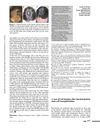
research A case of red lunulae after haematopoietic stem cell transplantation
Adjusting the medication tacrolimus resolved a boy's red nail beds after a stem cell transplant.
research Abstract 12: LGR6+ Epithelial Stem Cell Augmentation of Fracture Healing
LGR6+ stem cells may improve bone healing.
research Influence of prostaglandin F2α and its analogues on hair regrowth and follicular melanogenesis in a murine model
Prostaglandin F2alpha and related compounds can increase hair growth and darken hair in mice.
research Alopecia in IL-10-deficient mouse pups is c-kit-dependent and can be triggered by iron deficiency
Hair loss in certain young mice is linked to a specific gene and can be caused by lack of iron.
research 1380 PPAR-γ modulation as a novel therapeutic strategy for scarring alopecia
A new treatment using AGED to modulate PPAR-γ shows promise for treating scarring hair loss by protecting and repairing hair follicle cells.

research 2063-LB: Transgenic Erythropoietin Overexpression Inhibits Dermal Fat Formation and HIF1a in the Skin and Causes Telogen Effluvium in Mouse Pups during the First Hair Cycle
Erythropoietin overexpression disrupts hair growth and fat formation in mice.
research 0054 Treg-targeted therapies restrain disease in a murine model of alopecia areata
Enhancing Tregs can protect against alopecia areata.
research 1017 The prostaglandin F2α analog bimatoprost activates secondary hair germ cells to promote hair growth through two distinct signaling pathways
research Melanocytes from the outer root sheath of human hair and epidermal melanocytes display improved melanotic features in the niche provided by cGEL, oligomer-cross-linked gelatin-based hydrogel
cGEL hydrogel improves melanin production in skin cells, making it a promising option for skin treatments.

research Controllable Production of Transplantable Adult Human High-Passage Dermal Papilla Spheroids Using 3D Matrigel Culture
Researchers created hair-inducing human cell clusters using a 3D culture method.
research PPAR-γ Agonists and Their Role in Primary Cicatricial Alopecia
PPAR-γ helps control skin oil glands and inflammation, and its disruption can cause hair loss diseases.

research Safe Selection of Genetically Manipulated Human Primary Keratinocytes with Very High Growth Potential Using CD24
Researchers found a safe and effective way to pick genetically modified skin cells with high growth potential using CD24.
research M-CSF-stimulated myeloid cells can convert into epithelial cells to participate in re-epithelialization and hair follicle regeneration during dermal wound healing
M-CSF-stimulated myeloid cells can turn into skin cells and help heal wounds and regrow hair.
research Efficient In Vivo Targeting of Epidermal Stem Cells by Early Gestational Intraamniotic Injection of Lentiviral Vector Driven by the Keratin 5 Promoter
Injecting lentiviral vectors into early gestation mice effectively targets skin stem cells for potential gene therapy.
research Efficient expansion of human keratinocyte stem/progenitor cells carrying a transgene with lentiviral vector
A specific combination of chemicals effectively expands genetically modified skin cells for potential use in skin therapy.
research Towards cell-based therapy of alopecia areata: Autologous human Vδ2+ Foxp3+ γδTreg cells restore hair-follicle immune privilege and promote hair regrowth in human alopecia areata models ex vivo and in vivo
Special cells can help regrow hair in alopecia areata.
research CircRNA-1926 Promotes the Differentiation of Goat SHF Stem Cells into Hair Follicle Lineage by miR-148a/b-3p/CDK19 Axis
circRNA-1926 helps goat stem cells turn into hair follicles by affecting miR-148a/b-3p and CDK19.

research Human FOXN1-Deficiency Is Associated with αβ Double-Negative and FoxP3+ T-Cell Expansions That Are Distinctly Modulated upon Thymic Transplantation
Thymic transplantation normalized some T-cells but not others, maintaining immune function.