 61 citations
,
April 2012 in “British Journal of Dermatology”
61 citations
,
April 2012 in “British Journal of Dermatology” Caucasian women's hair appears thickest in their 20s, with perceived thinning after mid-30s due to both decreasing density and diameter.
November 2020 in “Дерматовенерология, косметология” The M-type is the most common form of male hair loss, and the BASP-classification is easy for different medical professionals to use.
 4 citations
,
November 2004 in “Clinical and Experimental Dermatology”
4 citations
,
November 2004 in “Clinical and Experimental Dermatology” Hair length and thickness are related, with thickness peaking at about a quarter of the hair's maximum length.
 3 citations
,
November 2022 in “European Journal of Human Genetics”
3 citations
,
November 2022 in “European Journal of Human Genetics” New models predict male pattern baldness better than old ones but still need improvement.
 6 citations
,
December 2018 in “Australasian Journal of Dermatology”
6 citations
,
December 2018 in “Australasian Journal of Dermatology” The Trichoscopy Derived Sinclair Scale offers a more accurate and reliable way to measure hair loss severity than the traditional visual method.
February 2024 in “arXiv (Cornell University)” Adjusting AI training data for skin condition distribution improves accuracy across different clinical settings.
 July 2007 in “Faculty Opinions – Post-Publication Peer Review of the Biomedical Literature”
 The BASP classification is a detailed system for categorizing hair loss in both men and women, but it may be complex for beginners and not fully suitable for grading female hair loss.
 November 2021 in “CRC Press eBooks”
 Fibrosing alopecia in a pattern distribution is a new type of scarring hair loss that resembles common baldness and an autoimmune skin disease.
 February 2024 in “Frontiers in physics”
 The new model detects hair clusters more accurately and efficiently, helping with early hair loss treatment and diagnosis.
September 2002 in “대한피부과학회지” Koreans have lower hair density, larger hair diameter, and slower hair growth than Caucasians.
 June 2023 in “Aesthetic Plastic Surgery”
 The PRECISE scale helps estimate how many grafts are needed for hair transplant based on the severity of hair loss.
 June 2024 in “Journal of cosmetic dermatology”
 The document corrects errors in a table about hair loss in women.
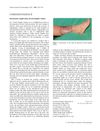 May 2002 in “British Journal of Dermatology”
 Hair loss caused by longer latent hair cycle and sudden miniaturization, not gradual follicle size reduction.
 1 citations
,
September 2021 in “Physiology News”
1 citations
,
September 2021 in “Physiology News” The authors suggest standardizing how the heart's electrical axis is calculated to improve precision and consistency in ECG analysis.
 66 citations
,
February 2009 in “British Journal of Dermatology”
66 citations
,
February 2009 in “British Journal of Dermatology” Chinese men have lower AGA rates than Caucasians, with type III vertex most common; family history is important.
January 2022 in “Journal of Pharmaceutical Negative Results” The VGG-SVM method accurately identifies and classifies stages of Alopecia Areata and other hair loss conditions.
 1 citations
,
August 2008 in “Dermatologic Surgery”
1 citations
,
August 2008 in “Dermatologic Surgery” High-density hair transplants can have high survival rates with improved techniques, but lower densities might also give good results.
 125 citations
,
May 2007 in “Journal of The American Academy of Dermatology”
125 citations
,
May 2007 in “Journal of The American Academy of Dermatology” The BASP classification is a detailed and accurate way to categorize hair loss in both men and women.
 1 citations
,
August 2024 in “Journal of Cutaneous and Aesthetic Surgery”
1 citations
,
August 2024 in “Journal of Cutaneous and Aesthetic Surgery” Hair density decreases with age, especially in the 60s.
 126 citations
,
January 2010 in “British Journal of Dermatology”
126 citations
,
January 2010 in “British Journal of Dermatology” Baldness is more common in Chinese men than women, increasing with age, and is influenced by genetics.
 2 citations
,
July 2011 in “AFRICAN JOURNAL OF BIOTECHNOLOGY”
2 citations
,
July 2011 in “AFRICAN JOURNAL OF BIOTECHNOLOGY” Seven genetic variations in sheep's DSG4 gene are linked and affect wool traits.
 May 2026 in “Physical review. D/Physical review. D.”
 Soft hair on black holes affects their images, but detecting this is difficult with current technology.
 28 citations
,
March 2007 in “Journal of The European Academy of Dermatology and Venereology”
28 citations
,
March 2007 in “Journal of The European Academy of Dermatology and Venereology” At least 87% of Indian men experience hair loss, with type II being most common and severity increasing with age.
 February 2023 in “EAS Journal of Medicine and Surgery”
 Most Idoma people have a curved hairline due to genetics.
 5 citations
,
January 2020 in “Journal of Dermatology”
5 citations
,
January 2020 in “Journal of Dermatology” Temporal hair loss relates to overall scalp hair loss in women.
November 2024 in “Journal of Investigative Dermatology” The research aims to better understand hair follicle regulation and find new treatments for hair loss.
 10 citations
,
March 2019 in “Human Genetics”
10 citations
,
March 2019 in “Human Genetics” A genetic mutation in the SGK3 gene causes hairlessness in Scottish Deerhounds and may relate to human hair loss.
January 2010 in “The Chinese Journal of Dermatovenereology” Androgenetic alopecia is more common in Chinese Han than in Chinese Yi in Liangshan.
July 2009 in “International Journal of Cosmetic Science” Japanese women's curved hair has an uneven internal structure and varied amino acid composition.