March 2026 in “Wound Repair and Regeneration” MARCKSL1 is important for wound healing and could be a target to reduce scarring.
 11 citations
,
August 2019 in “Journal of Molecular Histology”
11 citations
,
August 2019 in “Journal of Molecular Histology” NFIC helps rat dental cells grow and turn into bone-like cells.
 October 2015 in “Regenerative Medicine”
 Two growth factors, PDGF and FGF2, can potentially be used together to grow enough cells for a hair loss treatment, but their exact function on human cells needs further confirmation.
 15 citations
,
December 2015 in “PLoS ONE”
15 citations
,
December 2015 in “PLoS ONE” Fibroblasts can be mistaken for neural cells, so functional validation is needed.
April 2021 in “Journal of Investigative Dermatology” Blocking DPP4 can help prevent fat loss and skin fibrosis.
April 2012 in “Cancer Research” EGFR deficiency in skin causes hair follicle issues and inflammation.
36 citations
,
April 2016 in “Biochimie” A substance called epidermal growth factor helps increase the growth of important hair follicle cells by activating a specific cell communication route.
321 citations
,
January 2012 in “Cell stem cell” TGF-β2 helps activate hair follicle stem cells by counteracting BMP signals.
252 citations
,
November 1995 in “The EMBO Journal” Blocking EGFR in mice causes hair loss and skin changes.
5 citations
,
July 2022 in “Genes” Increasing EGR1 levels makes hair root cells grow faster.
 32 citations
,
March 2014 in “PLOS ONE”
32 citations
,
March 2014 in “PLOS ONE” Mice lacking fibromodulin have disrupted healing patterns, leading to abnormal skin repair and scarring.
305 citations
,
December 2000 in “The EMBO Journal” Inhibiting Bmp signaling disrupts hair growth and differentiation.
 March 2026 in “bioRxiv (Cold Spring Harbor Laboratory)”
 The Enriched-GF method efficiently produces high-yield growth factors for tissue repair.
 150 citations
,
August 1992 in “Genes & Development”
150 citations
,
August 1992 in “Genes & Development” TNF alpha in skin cells causes weight loss, hair and fat issues, and skin inflammation in mice.
 59 citations
,
April 2016 in “Cell Reports”
59 citations
,
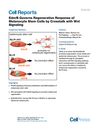
April 2016 in “Cell Reports” EdnrB signaling helps melanocyte stem cells regenerate and could be targeted to treat pigmentation issues.
 November 2022 in “The journal of investigative dermatology/Journal of investigative dermatology”
 Deleting the CD271 gene in mouse skin cells leads to disorganized skin and increased hair growth, suggesting CD271 is important for skin health.
Higher TGF-β signaling may increase skin cancer risk in organ transplant recipients.
 60 citations
,
July 2011 in “Stem Cells and Development”
60 citations
,
July 2011 in “Stem Cells and Development” Certain signals and genes play a key role in hair growth and regeneration, and understanding these could lead to new treatments for skin regeneration.
Hedgehog signaling can create new hair follicles but may also cause tumors.
37 citations
,
May 2021 in “Frontiers in Cell and Developmental Biology” Ng2+ perivascular cells in mouse skin come from specific fibroblast types and help in tissue repair.
 113 citations
,
June 2015 in “Stem Cell Research & Therapy”
113 citations
,
June 2015 in “Stem Cell Research & Therapy” Wnt and Notch signaling help wound healing by promoting cell growth and regulating cell differentiation.
 68 citations
,
November 2012 in “Journal of Investigative Dermatology”
68 citations
,
November 2012 in “Journal of Investigative Dermatology” Prostaglandin D2 blocks new hair growth after skin injury through the Gpr44 receptor.
 May 2025 in “The FASEB Journal”
 Targeting the TNFRSF1B gene may help treat hair loss.
39 citations
,
November 2007 in “Journal of Histochemistry & Cytochemistry” NG2 is crucial for normal skin and hair development in mice.
69 citations
,
October 2014 in “Stem Cells” PDGF-D boosts stem cell growth and movement, enhancing hair regeneration.
 October 2024 in “SPIRE - Sciences Po Institutional REpository”
 Glypicans help hair follicle stem cells differentiate by interacting with specific receptors, influencing hair growth.
 11 citations
,
June 2012 in “Acta histochemica”
11 citations
,
June 2012 in “Acta histochemica” Mice with a Gsdma3 gene mutation have thicker skin and longer hair follicle openings due to increased β-catenin levels.
 September 2021 in “bioRxiv (Cold Spring Harbor Laboratory)”
 Special gut cells help stem cells move to and fix injured areas by activating a specific signaling pathway.
July 2025 in “Journal of Investigative Dermatology” Wnt signaling helps regenerate hair follicles in wounds by reducing skin cell sensitivity to mechanical stress.
 13 citations
,
March 2020 in “Genes”
13 citations
,
March 2020 in “Genes” Disrupting the FGF5 gene in rabbits leads to longer hair by extending the hair growth phase.