5 citations
,
July 2019 in “Research Square (Research Square)” Yak hair growth is influenced by genes and hormones, helping them adapt to alpine environments.
 5 citations
,
September 2013 in “The Journal of Dermatology”
5 citations
,
September 2013 in “The Journal of Dermatology” Researchers found a new mutation in the HR gene causing hair loss and skin bumps in a Pakistani family.
 4 citations
,
January 2020 in “Cells”
4 citations
,
January 2020 in “Cells” The research found that the gene activity in mouse skin stem cells changes significantly as they age.
 3 citations
,
January 2023 in “Science advances”
3 citations
,
January 2023 in “Science advances” The enzymes Tet2 and Tet3 are important for skin cell development and hair growth.
 3 citations
,
September 2022 in “Frontiers in veterinary science”
3 citations
,
September 2022 in “Frontiers in veterinary science” Melatonin affects cashmere growth in goats by influencing stem cell and certain signaling pathways.
 3 citations
,
May 2022 in “Oncogene”
3 citations
,
May 2022 in “Oncogene” Vav2 and Vav3 proteins help control skin stem cell numbers and activity in both healthy and cancerous cells.
 3 citations
,
September 2024 in “Frontiers in Bioscience-Scholar”
3 citations
,
September 2024 in “Frontiers in Bioscience-Scholar” Pantaneiro sheep have more genetic diversity than Texel sheep, with potential for future research in Brazilian farming.
 2 citations
,
August 2022 in “Emergency medicine international”
2 citations
,
August 2022 in “Emergency medicine international” Keloid skin disorder involves abnormal fibroblast activation and immune response, linked to a group of genes including FGF11.
1 citations
,
September 2023 in “Animals” A new goat gene affects cashmere fiber thickness; certain variations can make the fibers coarser.
 1 citations
,
December 2025 in “Scientific Reports”
1 citations
,
December 2025 in “Scientific Reports” A machine learning model can predict alopecia areata early using specific gene markers.
1 citations
,
April 2023 in “Animals” Deleting the EDAR gene in Cashmere goats affects genes and proteins related to hair growth.
 1 citations
,
November 2022 in “Frontiers in medicine”
1 citations
,
November 2022 in “Frontiers in medicine” The study found that giant pandas have more melanin in black hair follicles than white, with gene expression differences that could affect hair color and skin health.
1 citations
,
September 2021 in “Frontiers in genetics” A genetic mutation in the DCAF17 gene caused Woodhouse-Sakati syndrome in a Chinese patient from a related family.
 May 2026 in “The EMBO Journal”
 Skin aging can be slowed by targeting cells, hormones, and the microbiome.
 May 2026 in “Research Square”
 The polyG fragment in Hoxc13 protein helps evolve mammalian skin and hair by enhancing gene interactions.
 March 2026 in “Aging Research”
 Personalized anti-aging strategies are important, considering genetics and lifestyle.

The study found that different genes are active in cashmere goats' hair growth stages, which can help improve cashmere production.

The GG genotype of the KRT71 gene leads to longer wool in Gansu alpine fine-wool sheep.
July 2025 in “Genome biology” HT-scCAT-seq helps understand gene regulation in embryonic skin development.
Wasabi leaf extract affects gene expression in skin cells.
 January 2025 in “bioRxiv (Cold Spring Harbor Laboratory)”
 Rhamnose may help hair growth and pigmentation, making it a potential treatment for hair loss.
 April 2024 in “bioRxiv (Cold Spring Harbor Laboratory)”
 A gene network led by RSL4 is crucial for early root hair growth in response to cold in Arabidopsis thaliana.
 September 2023 in “Frontiers in cell and developmental biology”
 Vav2 changes how hair follicle stem cells' genes work as they age, which might improve regeneration but also raise cancer risk.
 July 2023 in “Frontiers in veterinary science”
 Certain long non-coding RNAs are important for controlling hair growth cycles in sheep.
 June 2023 in “Frontiers in Genetics”
 Genes related to calcium signaling and lipid metabolism are important for curly hair in Mangalitza pigs.
 April 2023 in “bioRxiv (Cold Spring Harbor Laboratory)”
 Sweat gland development involves two unique skin cell programs and a temporary skin environment.
 August 2020 in “Pakistan Journal of Zoology”
 A new mutation in the Hairless gene causes hair loss in two Pakistani families.
 January 2023 in “Indian dermatology online journal”
 A child with ectodermal dysplasia-syndactyly syndrome has a new mutation in the NECTIN4 gene.
 September 2019 in “Journal of Investigative Dermatology”
 Targeted therapy with Ustekinumab significantly improved a skin condition called ILVEN, which is caused by mutations in the CARD14 gene.
 July 2019 in “Journal der Deutschen Dermatologischen Gesellschaft”
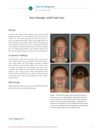
 A mother and daughter have a rare genetic hair loss disorder with no effective treatment.