2 citations
,
March 2020 in “Developmental cell” Stress can cause hair to turn gray by depleting pigment-producing cells through the release of a stress hormone.
June 2026 in “International Journal of Drug Delivery Technology” Polymeric micelles offer a promising new way to treat hair loss with fewer side effects.
 April 2021 in “Journal of Investigative Dermatology”
 Stem cells control their future role by changing ERK signal timing, affecting tissue regeneration and cancer.
 June 2020 in “Italian journal of gynaecology & obstetrics”
 The document concludes that PCOS in teenagers is hard to diagnose, influenced by various factors, and should be managed with lifestyle changes and medication.
 January 2020 in “Archives of Medicine and Health Sciences”
 Certain immune molecules and stress affect hair loss, and while genes play a role, more research is needed to fully understand and treat it.
 July 2023 in “bioRxiv (Cold Spring Harbor Laboratory)”
 The study developed a 3D model that closely imitates remaining ovarian cancer after treatment and identified a potential drug targeting resistant cancer cells.
1 citations
,
October 2018 in “Journal of Mind and Medical Sciences” Switching to generic drugs is necessary but faces communication and information challenges.

Trichotillomania treatment is improving with behavior therapy and new drug approaches, but challenges like stigma and underdiagnosis remain.
 3 citations
,
January 2010 in “Ghent University Academic Bibliography (Ghent University)”
3 citations
,
January 2010 in “Ghent University Academic Bibliography (Ghent University)” The revised European Patent Convention may limit generic drug use, affecting healthcare professionals' treatment choices.

Trichotillomania involves hair-pulling due to brain and genetic factors, with behavior therapy and new drugs showing promise, but challenges like stigma and underdiagnosis persist.
 November 2023 in “Frontiers in pharmacology”
 Drug repositioning offers hope for new, affordable treatments for a genetic skin disorder called ARCI.
Any medication can cause skin reactions, some due to allergies and others due to dosage or genetic factors.
82 citations
,
September 2020 in “Briefings in Bioinformatics” SARS-CoV-2 may worsen IPF due to shared genes and pathways, suggesting potential drug targets.
 11 citations
,
June 2011 in “Expert Review of Dermatology”
11 citations
,
June 2011 in “Expert Review of Dermatology” Skin reactions to drugs are common and can be deadly, usually requiring stopping the drug and may be better prevented with genetic testing in the future.
September 2025 in “Cosmetics” Genetic profiling can improve androgenetic alopecia treatment by predicting drug response and minimizing side effects.
 November 2016 in “Hair transplant forum international”
 The conclusion is that more research is needed to understand if the drug finasteride causes Post-Finasteride Syndrome or if it's due to individual genetic makeup.
 124 citations
,
June 2002 in “Best Practice & Research Clinical Endocrinology & Metabolism”
124 citations
,
June 2002 in “Best Practice & Research Clinical Endocrinology & Metabolism” Polycystic Ovary Syndrome likely starts in childhood and may be genetic and influenced by early hormone exposure.
21 citations
,
December 2023 in “Journal of Investigative Dermatology” Hair graying is caused by damage and cell depletion but might be temporarily reversible with drugs and hormones.
 23 citations
,
June 2003 in “Journal of Investigative Dermatology Symposium Proceedings”
23 citations
,
June 2003 in “Journal of Investigative Dermatology Symposium Proceedings” Alopecia Areata is an autoimmune disease affecting hair follicles, influenced by genetic and environmental factors, with rodent models being essential for research.

Genetics and hormones cause hair loss in women, treatable with drugs and new therapies.
 May 2026 in “Zenodo (CERN European Organization for Nuclear Research)”
 Genetics and hormones cause hair loss in women, treatable with drugs and new therapies.
June 2018 in “CRC Press eBooks” Foals can have various skin issues, some genetic, immune-related, or due to infections and allergies.
 25 citations
,
June 2012 in “Endocrine”
25 citations
,
June 2012 in “Endocrine” PCOS may start before birth, involves metabolic issues, and can be treated with drugs like metformin and lifestyle changes.
5 citations
,
March 2020 in “Aids Reviews” Hair antiretroviral concentration is affected by hair type, segment position, housing, drug use, sexual behavior, kidney function, and genetics.
 1 citations
,
January 2021 in “Skin appendage disorders”
1 citations
,
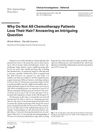
January 2021 in “Skin appendage disorders” Chemotherapy patients don't all lose their hair due to factors like hair growth rates, age, genetics, and the type of drugs used.
November 2025 in “Free Radical Biology and Medicine” SOD1 and KL are promising targets for new hair loss treatments.
 June 2008 in “British Journal of Dermatology”
 UK medical students lack dermatology education, liver biopsy patients with risk factors show more fibrosis, and certain fungi resist drugs due to melanin; genetics may influence female hair loss.
April 2025 in “International Journal of Clinical & Medical Case Studies” Dextroamphetamine may help treat alopecia areata.
 June 2023 in “British journal of dermatology/British journal of dermatology, Supplement”
 Some multiple sclerosis treatments may trigger hair loss conditions like alopecia areata.
 November 2021 in “Revista Ibero-Americana de Humanidades, Ciências e Educação”
 The document does not give specific results for hair loss treatment effectiveness.