56 citations
,
August 2011 in “Best Practice & Research Clinical Gastroenterology” Cancer prevention has progressed with successful drugs and vaccines, but challenges remain in understanding genetic changes and improving strategies.
 34 citations
,
December 1991 in “Annals of the New York Academy of Sciences”
34 citations
,
December 1991 in “Annals of the New York Academy of Sciences” The conclusion is that small hair follicles cause baldness in macaques, and treatments like antiandrogens and minoxidil can prevent hair loss and promote regrowth.
8 citations
,
November 2024 in “EMBO Molecular Medicine” Targeting JAK-STAT1 can reduce inflammation and promote hair growth in conditions linked to EGFR deficiency.
 6 citations
,
July 2013 in “Acta Clinica Belgica”
6 citations
,
July 2013 in “Acta Clinica Belgica” The document concludes that combination therapy is most effective for treating excessive hair growth in women with idiopathic hirsutism, and more research is needed to understand the condition.
5 citations
,
January 2017 in “Nevrologiâ, nejropsihiatriâ, psihosomatika” Sustained-release sodium valproate is effective in treating epilepsy, with some side effects influenced by genetics.
 1 citations
,
January 2019 in “Springer eBooks”
1 citations
,
January 2019 in “Springer eBooks” Hidradenitis Suppurativa is a chronic skin condition best treated early with surgery for better outcomes and less recurrence.
 1 citations
,
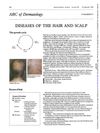
February 1988 in “The BMJ”
1 citations
,
February 1988 in “The BMJ” The document explains different hair and scalp conditions, including common hair loss after pregnancy or illness, drug-induced hair loss, hereditary excessive hair growth, patterned baldness, autoimmune hair loss, and permanent loss due to skin disease, with generally limited treatment options.
 1 citations
,
May 1965 in “Medical Clinics of North America”
1 citations
,
May 1965 in “Medical Clinics of North America” Hair growth dysfunction involves various conditions with limited treatment options.
 January 2023 in “Brazilian Journals Editora eBooks”
 Passiflora incarnata may help with anxiety but has risks and drug interactions.
There's a genetic link between Fragile X Syndrome and Autism Spectrum Disorder.
6.7% of urine cultures showed hospital-acquired urinary tract infections.
Children used screens more during COVID-19, causing various health complaints.
Autism Spectrum Disorder is often underdiagnosed in females.
Dissociative disorders in childhood sexual abuse victims are more common in males.
Most pregnant teenagers are not dissatisfied with their body image but worry about weight.
Diagnosing tuberculosis after knee surgery is challenging due to non-specific symptoms.
Post-COVID-19 syndrome is more common in older, severely affected patients.
Psychiatrists should be part of pain management teams due to the psychological aspects of pain.
 August 2022 in “Gene Reports”
 New hair loss treatments could be improved by using combined biological markers.
 May 2006 in “Women's Health Medicine”
 Excessive hair growth in women, often from high androgen levels, is usually caused by PCOS, and can be treated with hair removal, medication, and possibly weight loss.
 68 citations
,
March 2002 in “Journal of pharmaceutical sciences”
68 citations
,
March 2002 in “Journal of pharmaceutical sciences” Nonionic liposomes are the best for delivering genes to skin cells.
54 citations
,
February 2012 in “Pediatrics in Review” Pediatric systemic lupus erythematosus is a severe autoimmune disease in children requiring early diagnosis and comprehensive management.
 22 citations
,
January 2018 in “Experimental Dermatology”
22 citations
,
January 2018 in “Experimental Dermatology” The meeting focused on understanding, diagnosing, and finding treatments for irreversible hair loss diseases.
December 2025 in “Journal of Cell Communication and Signaling” Vitamin D receptor is crucial for hair health and may help treat hair loss.
 December 2024 in “Dermatological Reviews”
 New treatments for Alopecia Areata, like JAK inhibitors, are effective, and future research is exploring advanced therapies.
 3 citations
,
November 2021 in “Journal of The American Academy of Dermatology”
3 citations
,
November 2021 in “Journal of The American Academy of Dermatology” Androgenetic alopecia, a genetic disorder affecting up to 50% of adults, is caused by an excessive response to androgens leading to hair follicle shrinkage. Treatments include FDA-approved drugs, other therapies like low-dose oral minoxidil, and hair transplantation.
 1 citations
,
May 2021 in “BMC Proceedings”
1 citations
,
May 2021 in “BMC Proceedings” The document concludes that more research is needed to reduce frequent hospital visits, addiction medicine education improves with specific training, early breast cancer surgery findings are emerging, nipple smears are not very accurate, surgery for older melanoma patients doesn't extend life, a genetic condition in infants can often be treated with one drug, doctors are inconsistent with blood clot medication, a certain gene may protect against cell damage, muscle gene overexpression affects many other genes, and some mitochondrial genes are less active in mice with tumors.
9 citations
,
August 2024 in “International Journal of Molecular Sciences” Promising treatments for EBS include anti-inflammatory drugs, antibiotics, creams, mTOR inhibitors, and gene editing, but more trials are needed.
 November 2025 in “International Journal of Molecular Sciences”
 Combining different drugs can improve hair loss treatment.
September 2022 in “Frontiers in Medicine” New treatments and drugs show promise for improving skin pigmentation and regeneration.
 February 2013 in “Social Science Research Network”
 Some people pay $240 for medication that costs $9 due to drug industry tactics and complicated healthcare policies.
 14 citations
,
April 2006 in “Expert Review of Dermatology”
14 citations
,
April 2006 in “Expert Review of Dermatology” Antiandrogen therapy helps treat genetic hair loss.
 October 2020 in “Journal of Pharmaceutical Sciences”
 Topical finasteride with EGCG or TA improves drug release and dermal uptake, potentially treating hair loss effectively.
 15 citations
,
January 2014 in “Anais Brasileiros de Dermatologia”
15 citations
,
January 2014 in “Anais Brasileiros de Dermatologia” Lupus treatment requires a combination of drugs and therapies, with research needed for new options.
3 citations
,
October 2024 in “All Life” New treatments targeting genetic mutations in lung cancer are needed for better outcomes.
3 citations
,
July 2022 in “Indian Journal of Dermatology” ALEP is a drug-triggered skin reaction with pustules that clears up in a week after stopping the drug.
39 citations
,
September 2018 in “American Journal of Medical Genetics Part A” A new genetic mutation in the ODC1 gene causes developmental delay and other symptoms in a young girl.
 January 2024 in “Journal of Biosciences and Medicines”
 Future treatments for androgenic alopecia may focus on reactivating hair follicle stem cells and improving drug delivery.
December 2023 in “Indian Journal of Endocrinology and Metabolism” Early diagnosis, genetic testing, and innovative treatments are crucial for managing complex medical conditions.