77 citations
,
June 2002 in “Journal of Investigative Dermatology” CD44 variant changes start alopecia areata, but don't maintain it.
 74 citations
,
July 2008 in “Journal of Dermatological Case Reports”
74 citations
,
July 2008 in “Journal of Dermatological Case Reports” Trichoscopy is a quick and easy way to diagnose most genetic hair problems without invasive methods.
 68 citations
,
May 2016 in “Experimental dermatology”
68 citations
,
May 2016 in “Experimental dermatology” FFA's causes may include environmental triggers and genetic factors.
 41 citations
,
November 2011 in “The Journal of Dermatology”
41 citations
,
November 2011 in “The Journal of Dermatology” Some hair loss disorders are caused by genetic mutations affecting hair growth.
 29 citations
,
December 2012 in “Current Opinion in Endocrinology, Diabetes and Obesity”
29 citations
,
December 2012 in “Current Opinion in Endocrinology, Diabetes and Obesity” With careful management, people with congenital adrenal hyperplasia can have successful pregnancies and become parents.
 29 citations
,
September 1989 in “Journal of The American Academy of Dermatology”
29 citations
,
September 1989 in “Journal of The American Academy of Dermatology” Abnormal scalp whorls can indicate brain development issues but may also be seen in neurologically normal people.
 23 citations
,
April 2021 in “Journal of Clinical Medicine”
23 citations
,
April 2021 in “Journal of Clinical Medicine” Frontal Fibrosing Alopecia's cause is unclear, affects mainly postmenopausal women, and current treatments focus on stopping hair loss rather than regrowth.
 19 citations
,
April 2015 in “Developmental Dynamics”
19 citations
,
April 2015 in “Developmental Dynamics” The conclusion is that skin and hair patterns are formed by a mix of cell activities, molecular signals, and environmental factors.
 15 citations
,
December 2017 in “Journal of The European Academy of Dermatology and Venereology”
15 citations
,
December 2017 in “Journal of The European Academy of Dermatology and Venereology” Frontal fibrosing alopecia and androgenetic alopecia may be related, with a possible shared cause.
 15 citations
,
October 2011 in “Gynecological Endocrinology”
15 citations
,
October 2011 in “Gynecological Endocrinology” Obesity changes androgen levels in women with PCOS, leading to higher testosterone relative to androstenedione.
14 citations
,
January 1977 in “PubMed” The hair keratin variant is mostly found in Caucasians.
12 citations
,
July 2015 in “Tissue Antigens” The A allele of the C2 gene increases the risk of lupus, while the G allele may protect against it.
12 citations
,
July 2004 in “Molecular genetics and genomics” A new mouse mutation causes skin and hair defects due to a gene change.
 6 citations
,
May 2006 in “Skinmed”
6 citations
,
May 2006 in “Skinmed” Androgens contribute to common male hair loss; more research needed for hair growth medication.
 2 citations
,
December 2020 in “Endocrinology, diabetes & metabolism case reports”
2 citations
,
December 2020 in “Endocrinology, diabetes & metabolism case reports” A man with hypoparathyroidism had other health issues that led to a diagnosis of a rare autoimmune disorder, APS-1.
 2 citations
,
January 2017 in “Journal of Pigmentary Disorders”
2 citations
,
January 2017 in “Journal of Pigmentary Disorders” Genetics, stress, and health issues can cause early hair greying, which affects self-esteem, and there's no cure, only hair dye.
1 citations
,
April 2024 in “Metabolites” Activated protein C helps protect mice from long-term radiation damage.
 1 citations
,
April 2024 in “Science Advances”
1 citations
,
April 2024 in “Science Advances” Female cuckoo color differences are linked to their unique genes and help avoid male harassment.
 1 citations
,
March 2021 in “Dermatological reviews”
1 citations
,
March 2021 in “Dermatological reviews” AGA, a common hair loss, is caused by genetics, hormones, age, and environmental factors.
 July 2026 in “Journal of Cutaneous and Aesthetic Surgery”
 Male hair loss is mainly due to androgens, while female hair loss involves hormones, vitamins, and genetics.
Recognizing mild or atypical cases of ectodermal dysplasia is crucial for better treatment and future planning.
 May 2024 in “International Seven Journal of Multidisciplinary”
 More research is needed to better understand and treat Fibrosing Frontal Alopecia.
March 2024 in “Preprints.org” Activated protein C helps protect mice from radiation damage.

Doctors should consider Netherton syndrome in patients with chronic skin and hair issues to avoid misdiagnosis.
 March 2024 in “Frontiers in endocrinology”
 A new MTX2 gene mutation caused a severe genetic disorder in a young Chinese girl.
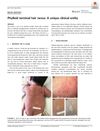 August 2018 in “Pediatric Dermatology”
 A baby had a unique skin condition with a pale patch and surrounding dark hairs, not linked to other health issues.
 November 2011 in “Pediatric dermatology”
 Marie-Unna Hereditary Hypotrichosis is a rare genetic condition causing sparse hair growth, requiring specific recognition for proper care.
 19 citations
,
November 2010 in “PubMed”
19 citations
,
November 2010 in “PubMed” New genetic insights have improved understanding of hair loss, leading to a new test and treatments, but more research is needed on the test and laser comb effectiveness.
 March 2026 in “Archives of Dermatological Research”
 People with androgenetic alopecia may have a higher genetic risk for cardiovascular diseases.
 September 2016 in “British Journal of Dermatology”
 The document discusses new cosmetic dermatology technologies, safety, robotic hair restoration, and upcoming courses on genomics and skin cancer management.