Gray hair affects hair's movement and appearance, making it less bouncy and more wavy.
2 citations
,
January 2017 in “Elsevier eBooks” 6 citations
,
January 2013 in “Korean Journal of Pharmacognosy” Wheat bran can boost hair growth by affecting cell cycle proteins and signaling pathways.
January 2026 in “AppliedMath” Pattern mode isolation improves the reliability and predictability of Turing patterns.
June 1992 in “The Journal of dermatologic surgery and oncology”  3 citations
,
April 2022 in “Dermatologic Surgery”
3 citations
,
April 2022 in “Dermatologic Surgery” Light therapy with various colors helps treat hair loss.
The method effectively measures hair elasticity and could be useful in forensics.
May 2023 in “Cytotherapy” 210 citations
,
February 2008 in “Nature genetics” Mutations in the P2RY5 gene cause autosomal recessive woolly hair.
 8 citations
,
January 2009 in “Transactions of the Materials Research Society of Japan”
8 citations
,
January 2009 in “Transactions of the Materials Research Society of Japan” Water-soluble wool keratin can protect human hair from damage during treatments.
 1 citations
,
September 2016 in “Journal of Dermatological Science”
1 citations
,
September 2016 in “Journal of Dermatological Science” FGF18 treatment during hair's resting phase can protect against hair loss from radiation.

Hair properties change under electromagnetic fields and are influenced by individual characteristics and the environment.
 January 2026 in “American Journal of Medical and Clinical Research & Reviews”
 Different wavelengths of LED light are needed to treat different types of hair loss effectively.

Consciousness Energy Healing Treatment may significantly increase hair cell growth.
 109 citations
,
December 1998 in “The Journal of Dermatology”
109 citations
,
December 1998 in “The Journal of Dermatology” Manipulating the catagen and telogen phases of hair growth could lead to treatments for hair disorders.
 May 1999 in “Dermatologic Surgery”
 Using an ultrasonic liposuction machine with different cannula sizes and power settings does not change water temperature.
May 2013 in “Faculty Opinions – Post-Publication Peer Review of the Biomedical Literature” A balance between BMP and Wnt signals is crucial for hair follicle stem cell function and hair growth.
 2 citations
,
July 2020 in “Electromagnetic Biology and Medicine”
2 citations
,
July 2020 in “Electromagnetic Biology and Medicine” Low-frequency electromagnetic fields help regenerate hair follicles using a mix of skin cells.
April 2023 in “Journal of Investigative Dermatology” 3D ultrasound can detect hair follicle changes and disease phases in alopecia areata.
7 citations
,
August 2024 in “Skin Research and Technology” The study's findings are unreliable due to retraction.
 21 citations
,
January 2016 in “Skin appendage disorders”
21 citations
,
January 2016 in “Skin appendage disorders” Alfredo Rebora suggested a new, easier way to classify hair loss in Telogen Effluvium, adding a type possibly related to autoimmune diseases.
 92 citations
,
September 2019 in “ACS nano”
92 citations
,
September 2019 in “ACS nano” A wearable device using electric stimulation can significantly improve hair growth.
January 2024 in “Indian Journal of Psychiatry” Precision neuromodulation may improve schizophrenia symptoms.
 April 2018 in “Radiotherapy and Oncology”
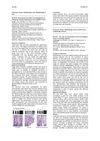
 Prostaglandin helps regenerate hair follicles after radiation damage.
 1 citations
,
March 2017 in “Archives of Plastic Surgery”
1 citations
,
March 2017 in “Archives of Plastic Surgery” A new method using gentian violet dye makes it easier to see and work with white hair in hair transplant surgeries.
January 2014 in “프로그램북(구 초록집)” Laser and light treatments show promise for hair growth but need more research.
 7 citations
,
January 2020 in “International Journal of Molecular Sciences”
7 citations
,
January 2020 in “International Journal of Molecular Sciences” Low-frequency electromagnetic fields can boost molecules related to hair growth in human skin cells.
10 citations
,
November 2018 in “bioRxiv (Cold Spring Harbor Laboratory)” New laser particles can track thousands of cells in 3D models, improving single-cell analysis.
July 2026 in “Clinical Cosmetic and Investigational Dermatology” Combining concentrated growth factor with intense pulsed light is more effective and safer for sensitive skin than using intense pulsed light alone.
January 2011 in “Junshi yixue” Longer exposure to high-power millimeter wave radiation causes more severe skin damage in mice.