 24 citations
,
July 1994 in “Molecular Endocrinology”
24 citations
,
July 1994 in “Molecular Endocrinology” Researchers found an RNA transcript that might help control a growth factor linked to tumor development.
 15 citations
,
May 2003 in “The Laryngoscope”
15 citations
,
May 2003 in “The Laryngoscope” FGF-1 causes spiral ganglion neurites to branch more.
September 2021 in “Eureka: Health Sciences” Androgenetic alopecia in women may be improved by targeting oxidative stress, inflammation, and fibrosis.
12 citations
,
February 2023 in “Stem Cell Research & Therapy” HGF-modified hair follicle stem cells help brain recovery after injury in rats.
August 2020 in “Research Square (Research Square)” Enhanced stem cells can reduce fat buildup in eye tissue for Graves' disease.
 1 citations
,
July 2018 in “Elsevier eBooks”
1 citations
,
July 2018 in “Elsevier eBooks” FAPD and possibly CCCA may be AGA subtypes, and treatments combining antiandrogens, hair growth agents, hair transplants, and anti-inflammatories could be effective.
 July 2025 in “Chinese Journal of Dermatology”
 Certain N-glycans may help assess hair loss severity in men with female-pattern hair loss.
 15 citations
,
December 2017 in “Journal of The European Academy of Dermatology and Venereology”
15 citations
,
December 2017 in “Journal of The European Academy of Dermatology and Venereology” Frontal fibrosing alopecia and androgenetic alopecia may be related, with a possible shared cause.
 10 citations
,
June 2005 in “The journal of investigative dermatology/Journal of investigative dermatology”
10 citations
,
June 2005 in “The journal of investigative dermatology/Journal of investigative dermatology” FP-1 is a key protein in rat hair growth, active only during the growth phase.
 36 citations
,
January 2018 in “Scientific reports”
36 citations
,
January 2018 in “Scientific reports” Eating glucoraphanin can help prevent psychosis in offspring whose mothers had immune system activation.
288 citations
,
January 2001 in “Journal of Biological Chemistry” Tgm2 helps stabilize dying cells and aids fibroblast attachment to the extracellular matrix.
 January 2024 in “The Egyptian Journal of Hospital Medicine”
 Men with male pattern baldness have higher levels of A-FABP, which might help in early detection.
September 2020 in “Research Square (Research Square)” Enhanced stem cells from the placenta can reduce fat buildup in eye tissue for Graves' disease.
 September 2013 in “Science”
 The document concludes that human astrocytes aid stroke recovery, research confidence affects student career aspirations, collagen affects cancer spread, a microRNA suppresses brain cancer growth, calmodulin regulates water channels, and small magnesium pieces deform differently.
31 citations
,
November 1991 in “Brain Research” Aδ-LTMRs have complex synapses with glycine, while Aβ-LTMRs have simpler ones.

Enhanced stem cells from the placenta can reduce fat cell formation in eye disease.
1 citations
,
January 2020 in “Indian journal of dermatology, venereology, and leprology” CD117 and platelet-derived growth factor receptor α may play a role in alopecia areata.
 15 citations
,
April 2017 in “Cell Stem Cell”
15 citations
,
April 2017 in “Cell Stem Cell” Some brain cancer cells avoid immune system detection, and certain treatments could target this to slow their growth; also, certain fat cell precursors help regenerate hair and skin after injury.
20 citations
,
November 2020 in “Stem Cell Research & Therapy” Enhanced stem cells from the placenta can help treat Graves' eye disease by stopping fat cell growth.
2 citations
,
May 2022 in “bioRxiv (Cold Spring Harbor Laboratory)” Rare Gli1+ fibroblasts are crucial for skin wound healing.
August 2020 in “Benha Journal of Applied Sciences” Higher FABP4 levels may help diagnose androgenetic alopecia early.
GPC1 is important for blood vessel growth in hair follicles and could help treat hair loss.
 16 citations
,
February 2010 in “Journal of the European Academy of Dermatology and Venereology”
16 citations
,
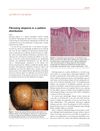
February 2010 in “Journal of the European Academy of Dermatology and Venereology” Fibrosing alopecia in a pattern distribution is a unique hair loss condition that may respond to antiandrogen therapy.
42 citations
,
September 2002 in “The Journal of Comparative Neurology” Glycine likely affects dendrites connected to hair follicle terminals in rats.
 44 citations
,
March 2015 in “PLOS ONE”
44 citations
,
March 2015 in “PLOS ONE” Fibroblast Growth Factor-9 (FGF-9) can help improve heart function in diabetic mice after a heart attack by reducing inflammation and harmful changes to the heart's structure.
 11 citations
,
May 2023 in “Journal of Cutaneous Medicine and Surgery”
11 citations
,
May 2023 in “Journal of Cutaneous Medicine and Surgery” Plasma Rich in Growth Factors may help reduce hair loss in Frontal Fibrosing Alopecia.
28 citations
,
September 2002 in “The Journal of Comparative Neurology” Presynaptic inhibition of certain nerve fibers in cats is mainly controlled by GABA and glycine.
 10 citations
,
November 2015 in “Experimental Dermatology”
10 citations
,
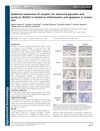
November 2015 in “Experimental Dermatology” Skin RAGE levels are linked to inflammation and cell death.
 1 citations
,
March 2023 in “Science Translational Medicine”
1 citations
,
March 2023 in “Science Translational Medicine” Blocking a certain signal in the gp130 receptor can improve tissue healing and lessen osteoarthritis symptoms.
 2 citations
,
April 2018 in “Journal of Investigative Dermatology”
2 citations
,
April 2018 in “Journal of Investigative Dermatology” Frontal fibrosing alopecia shows increased inflammation and JAK-STAT pathway activity without reduced hair proteins.