 238 citations
,
February 2007 in “Journal of Neuroscience”
238 citations
,
February 2007 in “Journal of Neuroscience” Ovarian and stress hormones can change GABA A receptors through neurosteroids.
 April 2016 in “The journal of investigative dermatology/Journal of investigative dermatology”
 The back of the scalp has more nerve fibers than the front, which may explain why some people feel more sensitivity there.
 8 citations
,
October 2023 in “Folia Histochemica et Cytobiologica”
8 citations
,
October 2023 in “Folia Histochemica et Cytobiologica” Exosomes from modified stem cells may help treat liver injury.
January 2020 in “JAAD case reports” Hair loss condition FFA was seen before the appearance of skin depigmentation vitiligo in a patient.
15 citations
,
September 2009 in “European Journal of Histochemistry” CD90 is abundantly present on stem-like cells in dog hair follicles.
2 citations
,
September 2014 in “Nature reviews. Drug discover/Nature reviews. Drug discovery” Specific immune cells cause alopecia areata and blocking certain proteins can prevent it.
3 citations
,
October 2024 in “Experimental Dermatology” Higher CRHR1 levels in AA patients lead to increased inflammation.
5 citations
,
March 1993 in “The Journal of Cell Biology” A soluble factor in developing mouse whisker pads boosts nerve growth factor mRNA production.
December 2022 in “Plastic and Reconstructive Surgery” PRPF is a safer and more effective treatment for hair loss than PRP.
Fgf20 is crucial for hair follicle formation by influencing cell movement and growth.

Tofacitinib significantly improved hair loss and lesions in a patient with overlapping autoimmune disorders.
 2 citations
,
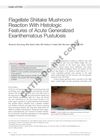
September 2021 in “Cutis”
2 citations
,
September 2021 in “Cutis” Eating shiitake mushrooms caused a man to develop a rash similar to a skin condition known as AGEP.
 April 2018 in “Journal of Investigative Dermatology”
 Fgf20 is important for the development and regulation of the cells that form the base of hair follicles.
November 2025 in “Cancer Cell International” Cancer-associated fibroblasts promote tumor growth in skin cancer.
5 citations
,
January 2015 in “Molecular Genetics and Metabolism”  29 citations
,
December 2016 in “The EMBO Journal”
29 citations
,
December 2016 in “The EMBO Journal” Gata6 is important for protecting hair growth cells from DNA damage and keeping normal hair growth.
 January 2023 in “Frontiers in bioscience”
 Artemis protein may help control hair growth and health by influencing cell processes.
 4 citations
,
May 2025 in “npj Parkinson s Disease”
4 citations
,
May 2025 in “npj Parkinson s Disease” PINK1 is important for controlling gut immune responses linked to early Parkinson's disease.
19 citations
,
August 1996 in “British Journal of Dermatology” Alopecia areata affects hair follicle structure, even in non-balding areas.
 15 citations
,
August 2019 in “Dermatologic Therapy”
15 citations
,
August 2019 in “Dermatologic Therapy” Platelet-rich plasma (PRP) may help treat hair loss in patients with frontal fibrosing alopecia who don't respond to other treatments.
 21 citations
,
March 2019 in “Experimental Dermatology”
21 citations
,
March 2019 in “Experimental Dermatology” Immune cells around hair follicles help control hair growth and could be targets for treating hair disorders.
 2 citations
,
October 2015 in “Human Gene Therapy”
2 citations
,
October 2015 in “Human Gene Therapy” The congress highlighted new gene therapy techniques and cell transplantation methods for treating diseases.
2 citations
,
April 2022 in “Genes” The study found that the hair loss condition in Cesky Fousek dogs is influenced by multiple genes affecting skin and muscle structure, fat metabolism, and immunity.
1 citations
,
July 2024 in “Journal of Investigative Dermatology” Immune cells boost stem cell activity in hairy moles, causing more hair growth.
April 2023 in “Journal of Investigative Dermatology” New drug targets for hair loss treatment were identified by studying cell interactions in hair follicles.
24 citations
,
February 2002 in “The journal of investigative dermatology/Journal of investigative dermatology” Two new proteins, hKAP1.6 and hKAP1.7, are found in the hair follicle cortex.
 May 2025 in “The FASEB Journal”
 Targeting the TNFRSF1B gene may help treat hair loss.
31 citations
,
September 2020 in “Stem Cell Research & Therapy” Hair follicle stem cells may help repair the brain after a stroke.
328 citations
,
November 2020 in “Nature Materials” Hydrogel scaffolds can help wounds heal better and grow hair.
August 2018 in “Journal of the American Academy of Dermatology”