 18 citations
,
January 2008 in “Journal of The American Academy of Dermatology”
18 citations
,
January 2008 in “Journal of The American Academy of Dermatology” Certain proteins and their receptors are more active during the growth phase of human hair and could be targeted to treat hair disorders.
 2 citations
,
January 2022 in “Experimental Dermatology”
2 citations
,
January 2022 in “Experimental Dermatology” GDNF signaling helps in hair growth and skin healing after a wound.
 October 2024 in “World Journal of Psychiatry”
 Stress worsens hair loss in androgenetic alopecia.
 10 citations
,
January 2014 in “BioMed research international”
10 citations
,
January 2014 in “BioMed research international” Rat whisker cells can help turn other cells into nerve cells and might be used to treat brain injuries or diseases.
7 citations
,
June 2020 in “npj regenerative medicine” GDNF helps grow hair and heal skin wounds by acting on hair stem cells.
 5 citations
,
January 2023 in “Cell proliferation”
5 citations
,
January 2023 in “Cell proliferation” Chick embryo extract helps rat hair follicle stem cells potentially turn into Schwann cells, important for the nervous system.
2 citations
,
June 2016 in “International journal of experimental pathology” Human skin has less GDNF and its receptor with age.
 1 citations
,
April 2022 in “Regenerative Therapy”
1 citations
,
April 2022 in “Regenerative Therapy” Activating the GDNF-GFRα1-RET signaling pathway could potentially promote skin and limb regeneration in humans and could be used to treat hair loss and promote wound healing.
 June 2026 in “Scientific Reports”
 Nestin-expressing hair follicle cells may be useful for nerve repair and regeneration.
Keratin gel may help repair damaged nerves.
 March 2025 in “Anatomy & Cell Biology”
 Hair follicle stem cell secretions may help protect brain cells and improve stroke recovery.
3 citations
,
December 2007 in “Journal of Otology” Guinea pig fat stem cells can become hair cell-like cells in a lab.
 10 citations
,
July 2011 in “British Journal of Dermatology”
10 citations
,
July 2011 in “British Journal of Dermatology” Lower growth factors linked to balding in androgenetic alopecia.
 64 citations
,
March 2005 in “Journal of Investigative Dermatology”
64 citations
,
March 2005 in “Journal of Investigative Dermatology” Brain-Derived Neurotrophic Factor (BDNF) slows down hair growth and promotes hair follicle regression.
 6 citations
,
September 2020 in “Advanced Biology”
6 citations
,
September 2020 in “Advanced Biology” Blue-light activation of TrkA improves hair-follicle stem cells' ability to become neurons and glial cells.
 271 citations
,
May 2019 in “Cells”
271 citations
,
May 2019 in “Cells” The secretome from mesenchymal stem cells is a promising treatment that may repair tissue and avoid side effects of stem cell transplantation.
 298 citations
,
January 2014 in “BioMed Research International”
298 citations
,
January 2014 in “BioMed Research International” Stem cell-derived conditioned medium shows promise for treating various medical conditions but requires standardized production and further validation.
 25 citations
,
April 2012 in “Acta Biomaterialia”
25 citations
,
April 2012 in “Acta Biomaterialia” Using certain small proteins with a growth factor and specific materials can increase the creation of neurons from stem cells.
 220 citations
,
March 2020 in “Advanced functional materials”
220 citations
,
March 2020 in “Advanced functional materials” Biomaterials with MSC-derived substances could improve tissue repair and have advantages over direct cell therapy.
 51 citations
,
March 2019 in “Journal of cellular physiology”
51 citations
,
March 2019 in “Journal of cellular physiology” Platelet lysate is a promising, cost-effective option for regenerative medicine with potential clinical applications.
 8 citations
,
July 2022 in “BMC neuroscience”
8 citations
,
July 2022 in “BMC neuroscience” Transplanted hair follicle stem cells improved brain function and reduced damage after a stroke in rats.
 September 2024 in “Advanced Biomedical Research”
 Chick embryo extract helps rat hair follicle stem cells become more like neurons.
4 citations
,
February 2023 in “Stem Cell Research & Therapy” Mouse skin cells can become sperm-like cells in the lab.
 July 2022 in “Biomedicines”
 4-Aminopyridine improves skin wound healing and tissue regeneration by increasing cell growth and promoting nerve repair.
 71 citations
,
February 2020 in “Journal of Translational Medicine”
71 citations
,
February 2020 in “Journal of Translational Medicine” Progress has been made in skin and nerve regeneration, but more research is needed to improve methods and ensure safety.
17 citations
,
May 2025 in “MedComm” Organoid technology is improving personalized medicine by better predicting drug responses and treatments.
11 citations
,
February 2019 in “Stem cells international” Skin-derived stem cells grow faster and are easier to obtain than hair follicle stem cells, but both can become various cell types.
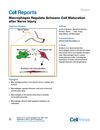 130 citations
,
September 2018 in “Cell Reports”
130 citations
,
September 2018 in “Cell Reports” Macrophages help heal nerves by aiding the maturation of Schwann cells and are important for nerve repair.
 320 citations
,
December 2018 in “Frontiers in Immunology”
320 citations
,
December 2018 in “Frontiers in Immunology” Changing how mesenchymal stromal cells are grown can improve their healing abilities.
44 citations
,
September 2016 in “American Journal Of Pathology” Neural crest-derived progenitor cells in the cornea could help treat corneal issues without transplants.