 June 2006 in “British Journal of Dermatology”
 The document reports unique growth lines in a child after Stevens-Johnson syndrome, skin reaction from parsnips and sun in a girl, and itchy skin with xanthomas in a boy with Alagille syndrome.
 3 citations
,
March 2017 in “International journal of women’s dermatology”
3 citations
,
March 2017 in “International journal of women’s dermatology” Some domesticated animals have the same genetic skin diseases as humans, which can help doctors understand human genetic mutations.
 September 2017 in “Journal of Investigative Dermatology Symposium Proceedings”
 Some people with the skin color loss condition, vitiligo, also develop the skin inflammation condition, lichen planus, possibly due to local trauma, sun damage, or genetic factors.
 1 citations
,
September 2013 in “The Journal of Dermatology”
1 citations
,
September 2013 in “The Journal of Dermatology” An 8-year-old girl developed a rare skin condition in a linear pattern on one side of her body after a lung infection, which improved with treatment.
 February 2018 in “BMJ case reports”
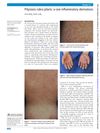
 An 18-year-old woman was diagnosed with a rare skin condition called Pityriasis rubra pilaris.
April 2005 in “Journal of Investigative Dermatology” Vitamin D helps protect skin, PSORS1 gene's risk interval for psoriasis is expanded, hair follicles can be generated from mouse cells, and interferon-γ may cause pigmented skin lesions.
17 citations
,
November 2000 in “Journal of Investigative Dermatology” ZPK helps skin cells mature and may affect skin health.
 January 2017 in “Clinical approaches and procedures in cosmetic dermatology”
 Anti-glycation treatments might slow skin aging, but more research is needed.
January 2025 in “Dermatology Research and Practice” Higher activity in lichen planopilaris is linked to certain immune and tissue genes.
3 citations
,
January 2016 in “Dermatology online journal” Some people with lichen planus pigmentosus might later develop frontal fibrosing alopecia.
8 citations
,
February 2002 in “Journal of Medical Genetics” Skin changes can indicate a risk for breast cancer.
138 citations
,
June 2023 in “Molecules” Skin pigmentation varies due to genetics, UV exposure, and drugs, with treatments available but requiring medical advice.
February 2026 in “International Journal of Clinical Dermatology” Certain probiotics can help improve skin conditions like atopic dermatitis, but more research is needed.
Carbohydrates are crucial for skin development and may help understand skin conditions.
 May 2026 in “Scientific Reports”
 Overexpression of LRIG3 in skin causes hair loss.
January 2013 in “Refubium (Universitätsbibliothek der Freien Universität Berlin)” Lichen planopilaris is more common in older women and may be linked to hormone therapy and autoimmune diseases.
 3 citations
,
August 2018 in “Deleted Journal”
3 citations
,
August 2018 in “Deleted Journal” Guasha changed rat skin appearance and blood vessels temporarily without affecting certain nerve proteins or fiber structure.
 June 2014 in “British Journal of Dermatology”
 Eczema patients have a lower skin lipid to protein ratio, older and longer-staying hospital patients are more likely to get pressure ulcers, hair loss in AGA is linked to muscle degeneration, vitamin D deficiency is common in alopecia areata and linked to its severity, standard liver tests don't effectively detect fibrosis in psoriasis patients on methotrexate, and bullous pemphigoid patients have a higher death risk but combination therapy may reduce it.
 2 citations
,
January 2025 in “Cutis”
2 citations
,
January 2025 in “Cutis” Glycemic control medications for Type 2 diabetes can affect skin conditions like psoriasis.
11 citations
,
June 1994 in “Journal of Investigative Dermatology”  18 citations
,
October 2014 in “Experimental Dermatology”
18 citations
,
October 2014 in “Experimental Dermatology” Local skin glucocorticoid production is crucial for healthy skin, and its disruption can lead to skin diseases.
July 2026 in “Facial Plastic Surgery Clinics of North America”  April 2024 in “Oral Surgery Oral Medicine Oral Pathology and Oral Radiology”
 The patient was diagnosed with oral lichen sclerosus and needs long-term monitoring.
 April 2023 in “Journal of Investigative Dermatology”
 The research mapped gene activity in developing mouse skin and found key markers for skin cell types and changes from fetal to early postnatal stages.
1 citations
,
December 2016 in “Revista română de medicină de laborator” The NIPAL4 mutation c.527C>A is common in Romanian patients with autosomal recessive congenital ichthyosis.
 11 citations
,
August 2016 in “Journal of dermatological treatment”
11 citations
,
August 2016 in “Journal of dermatological treatment” Tip cryotherapy effectively treats idiopathic guttate hypomelanosis with minimal side effects.
July 2024 in “Skin Appendage Disorders” Early detection of scalp signs can prevent permanent scarring in Lichen Planopilaris.
June 2016 in “Annals of the Rheumatic Diseases” Long-term glucocorticoid use can cause skin problems like easy bruising and poor wound healing, especially at higher doses.
 1 citations
,
July 2022 in “PLOS ONE”
1 citations
,
July 2022 in “PLOS ONE” The study concluded that people with Lichen Planopilaris have a more diverse scalp bacteria and different metabolic pathways compared to healthy individuals.