75 citations
,
July 2016 in “New phytologist” The protein RSL4 is crucial for making root hairs longer by controlling genes related to cell growth.
May 2026 in “Journal of Medicinal Chemistry” dAR-6–1 is a promising new treatment for hair loss that works better than minoxidil.
117 citations
,
April 2008 in “Developmental biology” Ectodysplasin inhibits Wnt signaling to help form hair follicles.
 April 2016 in “Journal of Investigative Dermatology”
 Blocking Oncostatin M's role in the JAK-STAT pathway can stimulate hair growth in mice.
11 citations
,
February 2011 in “International Journal of Molecular Sciences” Different sPLA2 enzymes have unique roles in phospholipid metabolism and biological processes.
 February 2026 in “International Journal of Molecular Sciences”
 Removing Lrig1-positive cells in mice leads to temporary loss of sebaceous glands.
 128 citations
,
March 2006 in “American Journal of Pathology”
128 citations
,
March 2006 in “American Journal of Pathology” Prolactin contributes to hair loss by promoting hair follicle shrinkage and cell death.
November 2025 in “Phytomedicine” L-rhamnose may promote hair growth by boosting energy production in cells.
29 citations
,
March 2016 in “Dermatologic therapy” Platelet-rich plasma may successfully treat lichen planopillaris, as shown by one patient's symptom regression.
128 citations
,
March 1996 in “Journal of Investigative Dermatology” Increased IGF-1R expression is linked to thicker skin growth.
5 citations
,
February 2022 in “Stem cell reports” Thymic stromal lymphopoietin (TSLP) promotes hair growth, especially after skin injury.
 December 2023 in “PubMed”
 Metformin and liraglutide improved symptoms of HAIR-AN syndrome in a child.
9 citations
,
August 2021 in “International journal of molecular sciences” PPARγ is essential for maintaining healthy skin, controlling inflammation, and ensuring proper skin barrier function.
April 2021 in “Journal of Investigative Dermatology” Blocking DPP4 can help prevent fat loss and skin fibrosis.

Glycyrrhizic acid and licorice extract can significantly reduce unwanted hair growth.
 105 citations
,
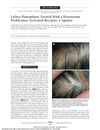
December 2009 in “Archives of dermatology”
105 citations
,
December 2009 in “Archives of dermatology” A specific drug can help treat Lichen Planopilaris, a condition causing permanent hair loss.
 1 citations
,
August 2023 in “Biomolecules & therapeutics”
1 citations
,
August 2023 in “Biomolecules & therapeutics” HAPLN1 can promote hair growth and may help treat hair loss.
 4 citations
,
November 2017 in “PubMed”
4 citations
,
November 2017 in “PubMed” Your genes, especially IL-1a, can predict how well a hair growth treatment with platelet rich plasma will work for you.
TLR2 is crucial for hair growth and regeneration, and boosting it can help prevent hair loss.
 41 citations
,
November 2013 in “Experimental Dermatology”
41 citations
,
November 2013 in “Experimental Dermatology” Leptin, a hormone, is important for starting hair growth.
January 2026 in “JPRAS Open” PDLLA scalp injections improved hair regrowth in most patients with non-scarring alopecia.
44 citations
,
January 2013 in “BMC Dermatology” TGFβ signaling prevents sebaceous gland cells from producing fats.
July 2024 in “Journal of Investigative Dermatology” Inhibiting PDE8A may help treat hair loss by boosting fat cell growth and hair regeneration.
GPC1 is important for blood vessel growth in hair follicles and could help treat hair loss.
 7 citations
,
March 2021 in “Journal of animal science/Journal of animal science ... and ASAS reference compendium”
7 citations
,
March 2021 in “Journal of animal science/Journal of animal science ... and ASAS reference compendium” Blocking prolactin increases the activity of secondary hair follicles in cashmere goats.
19 citations
,
May 2018 in “Molecular Medicine Reports” miR‑339‑5p can slow down hair follicle stem cell differentiation by targeting DLX5.
Par3–mInsc and Gαi3 work together to ensure proper cell division orientation in skin development.
24 citations
,
December 2018 in “Inflammation and Regeneration” Phospholipase A2 enzymes play key roles in skin health and disease.
2 citations
,
February 2012 in “PubMed” Gp₄G promotes hair growth and improves skin health.
Mechanical stress causes ligament thickening through WISP-1 and Hedgehog signaling.