 4 citations
,
October 2000 in “Contraception”
4 citations
,
October 2000 in “Contraception” The right dosage of CPA and TB can work as a safe and reversible male contraceptive in monkeys.
2 citations
,
June 2016 in “International journal of experimental pathology” Human skin has less GDNF and its receptor with age.
 1 citations
,
November 2018 in “bioRxiv (Cold Spring Harbor Laboratory)”
1 citations
,
November 2018 in “bioRxiv (Cold Spring Harbor Laboratory)” Signals from skin cells controlled by Rac proteins help turn certain precursor cells into white fat cells.
 April 2017 in “The journal of investigative dermatology/Journal of investigative dermatology”
 Most patients experienced mild to moderate skin problems during a trial for a desmoid tumor treatment.
 1 citations
,
May 2023 in “European Journal of Human Genetics”
1 citations
,
May 2023 in “European Journal of Human Genetics” Rare ULBP3 gene changes may raise the risk of Alopecia areata, a certain FAS gene deletion could cause a dysfunctional protein in an immune disorder, and having one copy of a specific genetic deletion is okay, but two copies cause sickle cell disease.
Androgens increase norepinephrine release, promoting smooth muscle growth in male sex organs, which may contribute to benign prostatic hypertrophy.
June 2025 in “Healthy-Mu Journal” The optimized Cinchonine gel effectively fights acne bacteria and is safe for twice-daily use.
 January 2019 in “Advances in Environmental Biology”
 Propionibacterium acnes contributes to acne and antibiotic resistance, needing new treatments.
 February 2026 in “International Journal of Molecular Sciences”
 New biological pathways and potential treatment targets for male pattern baldness were identified.
 April 2018 in “Journal of Investigative Dermatology”
 Finasteride helps female-pattern hair loss.
25 citations
,
June 2017 in “Neuropharmacology” Increasing TSPO in the brain reduces anxiety and depression.
80 citations
,
June 1997 in “The American Journal of Human Genetics”  31 citations
,
July 2004 in “Molecular Medicine”
31 citations
,
July 2004 in “Molecular Medicine” Certain defective glucocorticoid receptor mutants move faster inside cell nuclei and work less effectively.
9 citations
,
July 2014 in “PubMed” Different S100 proteins have specific roles in various parts of the hair follicle.
 12 citations
,
August 2011 in “Asian-Australasian Journal of Animal Sciences”
12 citations
,
August 2011 in “Asian-Australasian Journal of Animal Sciences” KAP8.1 gene variations affect cashmere weight in Inner Mongolian goats.
9 citations
,
February 2012 in “Clinical Neurology and Neurosurgery” Dystonia may be part of PAS-4 and linked to immune issues.
 17 citations
,
February 2015 in “Cell Death and Disease”
17 citations
,
February 2015 in “Cell Death and Disease” Inhibiting AP1 in mice skin causes structural changes and weakens the skin barrier.
 6 citations
,
January 2020 in “International journal of biological sciences”
6 citations
,
January 2020 in “International journal of biological sciences” Removing the ROBO4 gene in mice reduces skin inflammation and hair loss by affecting certain inflammation pathways and gene expression.
April 2024 in “Anais Brasileiros de Dermatologia”  August 2015 in “MOJ proteomics & bioinformatics”
 ePUKs could be valuable for regenerative medicine due to their wound healing abilities.

Pangenome analysis reveals key genes for pig adaptation and traits, aiding genetic improvement.
January 2026 in “Indian Journal of Paediatric Dermatology” A rare case shows a possible link between Neurofibromatosis type 1 and Becker nevus due to genetic mutations.
 3 citations
,
January 2019 in “Journal of Dermatology”
3 citations
,
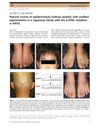
January 2019 in “Journal of Dermatology” The p.P25L mutation in the KRT5 gene causes a rare skin condition that worsens over time and may lead to hair loss starting in young adulthood.
 195 citations
,
February 2005 in “Journal of biological chemistry/The Journal of biological chemistry”
195 citations
,
February 2005 in “Journal of biological chemistry/The Journal of biological chemistry” The ZIP7 gene helps control zinc levels in cells by moving zinc from the Golgi apparatus to the cytoplasm.
22 citations
,
May 2007 in “Molecular Biotechnology”  December 2015 in “Vascular Pharmacology”
 Prasugrel is better than clopidogrel at preventing heart damage and improving blood flow in small heart vessels during heart artery procedures.
April 1996 in “Journal of Dermatological Science”  50 citations
,
September 2014 in “Stem cell reports”
50 citations
,
September 2014 in “Stem cell reports” BLIMP1 is essential for skin maintenance but not for defining sebaceous gland progenitors.
July 2026 in “Journal of Medicinal Chemistry” A new drug strategy improves hair loss treatment with better results and safety.
 April 2023 in “Journal of Investigative Dermatology”
 Sweating can potentially be controlled through olfactory receptors, with β-ionone playing a key role, and responses may vary between genders.