 1 citations
,
May 2011 in “Molecular Medicine Reports”
1 citations
,
May 2011 in “Molecular Medicine Reports” The -866G/A polymorphism in the UCP2 gene is not linked to polycystic ovary syndrome.
November 2020 in “Journal of animal science/Journal of animal science ... and ASAS reference compendium” Certain genetic variants in PRLR and PCCA genes may lead to shorter hair in cattle, which could help with heat tolerance.
1 citations
,
January 2012 The CRABP I gene in cashmere goats is highly conserved but has unique features at specific amino sites.
96 citations
,
October 1987 in “The Journal of Clinical Endocrinology & Metabolism” Chronic GnRHa treatment can help manage endometrial hyperplasia and reduce ovarian androgen excess in PCO patients.
 15 citations
,
January 2010 in “Reproduction, Fertility and Development”
15 citations
,
January 2010 in “Reproduction, Fertility and Development” A certain gene variant may increase the risk of polycystic ovary syndrome in Chinese women.
March 2026 in “Journal of Enzyme Inhibition and Medicinal Chemistry” PROTACs show promise in cancer treatment by effectively degrading specific harmful proteins.

The project improved provider knowledge about PCOS but didn't significantly change diagnosis and management practices.
June 2026 in “Frontiers in Nutrition” GLP-1 receptor agonists can help manage PCOS metabolism but need careful use before conception.
 1 citations
,
January 2023 in “Journal of Drugs in Dermatology”
1 citations
,
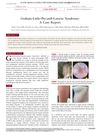
January 2023 in “Journal of Drugs in Dermatology” Early detection of Graham-Little-Piccardi-Lasseur syndrome is key for better management.
July 2005 in “TSpace (University of Toronto)” Ghrelin and its receptors likely aren't risk factors for PCOS.
 1 citations
,
January 2017 in “Indian Journal of Pharmaceutical Sciences”
1 citations
,
January 2017 in “Indian Journal of Pharmaceutical Sciences” Women with PCOS often have different clinical signs, hormone levels, and gynecological issues compared to those without the condition.
 11 citations
,
August 2010 in “Developmental neurobiology”
11 citations
,
August 2010 in “Developmental neurobiology” Ptprq has multiple forms that change during inner ear development.
 September 2015 in “University of Southern Denmark Research Portal (University of Southern Denmark)”
 The guideline offers recommendations for diagnosing and managing PCOS and its complications.
4 citations
,
January 2023 in “bioRxiv (Cold Spring Harbor Laboratory)” PrrH sRNA controls pyochelin gene expression in Pseudomonas aeruginosa based on heme levels.
 11 citations
,
April 2019 in “Bioscience Reports”
11 citations
,
April 2019 in “Bioscience Reports” Certain genetic variations in the RAB5B gene are linked to a higher risk of polycystic ovary syndrome in Chinese Han women.
 November 2025 in “International Journal of Clinical Obstetrics and Gynaecology”
 PCOS is likely inherited in families, increasing risk for first-degree relatives.
58 citations
,
February 2013 in “Journal of Biological Chemistry” LGR5 mainly stays inside cells, moving to the trans-Golgi network, and this process is important for its role in cell signaling.
9 citations
,
January 1997 in “Horticultura: Revista de industria, distribución y socioeconomía hortícola: frutas, hortalizas, flores, plantas, árboles ornamentales y viveros” PRC2 is not essential for hair follicle stem cell maintenance or hair growth.
August 2015 in “Han'gug dongmul jawon gwahag hoeji/Han-guk dongmul jawon gwahak hoeji/Journal of animal science and technology” TRα and CRABPII genes change their activity levels during goat fetal skin development.
 37 citations
,
January 2008 in “Gynecological Endocrinology”
37 citations
,
January 2008 in “Gynecological Endocrinology” Shorter CAG repeats in a specific gene may increase male hormone activity and symptoms like acne and excess hair in women with PCOS.
 September 2024 in “Genes”
 CRABP1 boosts hair cell growth in Hu sheep by affecting key genes.
6 citations
,
August 2025 in “Frontiers in Bioengineering and Biotechnology” Platelet-derived exosomes offer better regenerative therapy but face challenges in isolation and regulation.
 22 citations
,
January 2018 in “Experimental Dermatology”
22 citations
,
January 2018 in “Experimental Dermatology” The meeting focused on understanding, diagnosing, and finding treatments for irreversible hair loss diseases.
8 citations
,
January 2018 in “Journal of Analytical Methods in Chemistry” A new method accurately measures a drug in skin for cancer therapy research.
33 citations
,
May 2017 in “Journal of Clinical Oncology” ETC-159 was safe up to 30 mg, but no tumor shrinkage was seen.
 2 citations
,
February 2014 in “Animal Biotechnology”
2 citations
,
February 2014 in “Animal Biotechnology” The PTGER2 gene is highly active in Cashmere goat skin and its activity changes with the hair growth cycle.
January 1992 in “Filosofia oggi” PRP gel is a safe, affordable treatment needing trained staff and proper facilities.
June 2026 in “Journal of Cosmetic Dermatology” CGF-PF may improve hair loss treatment by targeting hair follicle stem cells more effectively.
RNA-based treatments show promise for managing Hutchinson-Gilford Progeria Syndrome.
May 2005 in “Molecular Carcinogenesis” mrp/plf-mRNA can indicate tumor-promoting effects in skin.