58 citations
,
July 2005 in “Molecular and Cellular Biology” A specific gene segment can make mouse skin cells glow, helping study hair growth and gene effects.
11 citations
,
November 1998 in “Journal of dermatological science” Knocking out certain genes in mice helps understand skin and hair growth problems.
 11 citations
,
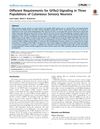
August 2014 in “PLoS ONE”
11 citations
,
August 2014 in “PLoS ONE” GFRα2 is essential for controlling neuron size but not for target innervation in certain sensory neurons.
 218 citations
,
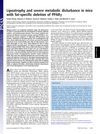
October 2013 in “Proceedings of the National Academy of Sciences of the United States of America”
218 citations
,
October 2013 in “Proceedings of the National Academy of Sciences of the United States of America” Mice lacking the PPARγ gene in their fat cells had almost no fat tissue, severe metabolic problems, and abnormal development of other fat-related tissues.
 13 citations
,
March 2020 in “Genes”
13 citations
,
March 2020 in “Genes” Disrupting the FGF5 gene in rabbits leads to longer hair by extending the hair growth phase.
151 citations
,
December 2004 in “Neuropharmacology” Progesterone reduces anxiety without needing progesterone receptors.
 2 citations
,
August 2023 in “Development”
2 citations
,
August 2023 in “Development” Hair follicles in the back of the rosette fancy mouse have reversed orientations due to a gene mutation.
17 citations
,
May 2013 in “Journal of Investigative Dermatology” Mutations in β1 integrins cause embryonic death but have milder effects on skin.
 45 citations
,
January 2010 in “Journal of Veterinary Medical Science”
45 citations
,
January 2010 in “Journal of Veterinary Medical Science” A gene mutation causes curly hair and hair loss in rats.
 April 2024 in “bioRxiv (Cold Spring Harbor Laboratory)”
 GRK2 is essential for healthy hair follicle function, and its absence can lead to hair loss and cysts.
17 citations
,
April 2011 in “Journal of Dermatological Science” The study created a mouse model that survives longer and shows fewer symptoms of pemphigus vulgaris.
114 citations
,
July 2003 in “PubMed” Lack of KSR1 stops certain skin tumors in mice.
 1 citations
,
November 2023 in “Rice”
1 citations
,
November 2023 in “Rice” PRX102 is essential for rice root hair growth by helping transport substances to the tips.
April 2012 in “Development” Rac1 is crucial for normal hair structure and pigmentation.
34 citations
,
August 2012 in “Calcified Tissue International” 6 citations
,
January 2004 in “DNA Research” A mutation in the Sgkl gene causes defective hair growth in mice.
Knocking out the FGF5 gene in sheep increased wool production and hair-follicle density.
 February 2019 in “bioRxiv (Cold Spring Harbor Laboratory)”
 The gene Prss53 affects hair shape and bone development in rabbits.
January 2008 in “HAL (Le Centre pour la Communication Scientifique Directe)” The mutant HR bmh protein affects hair follicle formation by failing to repress vitamin D receptor activity.
March 2026 in “Animal Models and Experimental Medicine” Gorab deficiency speeds up skin aging by disrupting protein regulation and reducing collagen.
6 citations
,
December 2023 in “Journal of Molecular Cell Biology” Removing Gsdma1/2/3 genes reduces skin cell overgrowth by blocking a specific cell pathway.
May 2009 in “OPAL (Open@LaTrobe) (La Trobe University)” Suppressing the HGPS mutation may improve symptoms and suggest reversibility.
 September 2023 in “HAL (Le Centre pour la Communication Scientifique Directe)”
 Peptide nanoparticles can effectively deliver CRISPR-Cas9 to target KRAS mutations in cancer.
 November 2022 in “The journal of investigative dermatology/Journal of investigative dermatology”
 Deleting the CD271 gene in mouse skin cells leads to disorganized skin and increased hair growth, suggesting CD271 is important for skin health.
18 citations
,
February 2006 in “Genomics” A new genetic mutation in mice causes permanent hair loss and skin wrinkling.
14 citations
,
August 2015 in “Endocrinology” The antibody 005-C04 blocks prolactin receptors, causing reversible infertility, impaired lactation, and hair regrowth in female mice.
Keratinocytes can reduce the survival of certain melanoma cells, suggesting new therapy paths.
November 2005 in “PubMed” The hairless gene in Kunming mice is important for hair and skin, and shows genetic variations.
30 citations
,
October 1999 in “Differentiation” Mutant MK6a transgenes in mice cause blistering, hair loss, and potential human alopecia.
 9 citations
,
October 2022 in “Nature Communications”
9 citations
,
October 2022 in “Nature Communications” The DiLiCre mouse model is an effective tool for precise genome editing using light.