 September 2024 in “Genes”
 CRABP1 boosts hair cell growth in Hu sheep by affecting key genes.
 11 citations
,
April 2019 in “Bioscience Reports”
11 citations
,
April 2019 in “Bioscience Reports” Certain genetic variations in the RAB5B gene are linked to a higher risk of polycystic ovary syndrome in Chinese Han women.
82 citations
,
July 2012 in “Brain pathology” High LGR5 levels in glioblastoma indicate poor prognosis and are essential for cancer stem cell survival.
 11 citations
,
August 2014 in “PLoS ONE”
11 citations
,
August 2014 in “PLoS ONE” GFRα2 is essential for controlling neuron size but not for target innervation in certain sensory neurons.
 4 citations
,
December 2013 in “The Journal of Dermatology”
4 citations
,
December 2013 in “The Journal of Dermatology” A new mutation in the K6b gene caused a girl's late-appearing nail condition.
January 2007 in “Journal of Inner Mongolia University” The research helps in creating genetically modified animals to study hair growth.
11 citations
,
October 2023 in “mSphere” PrrH sRNA controls pyochelin production in *Pseudomonas aeruginosa*.
 23 citations
,
December 2013 in “British Journal of Dermatology”
23 citations
,
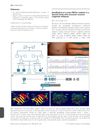
December 2013 in “British Journal of Dermatology” A new gene mutation linked to a skin condition was found in a Spanish family.
32 citations
,
July 2003 in “Histochemistry and Cell Biology” 1 citations
,
July 2019 in “Small ruminant research” Nerve growth factor helps cashmere goat hair cells grow by activating a specific protein.
 1 citations
,
September 2020 in “Journal of Dermatological Science”
1 citations
,
September 2020 in “Journal of Dermatological Science” The gene LRRC15 is more active in balding areas of the scalp compared to non-balding areas.
 24 citations
,
August 2017 in “Prostaglandins & Other Lipid Mediators”
24 citations
,
August 2017 in “Prostaglandins & Other Lipid Mediators” CRTH2 antagonists might be useful for treating many conditions because they play a role in immune and inflammation responses.
 March 2023 in “Biomedicine & Pharmacotherapy”
 GPR40 agonists help hair growth through the protein ANGPTL4.
August 2015 in “Han'gug dongmul jawon gwahag hoeji/Han-guk dongmul jawon gwahak hoeji/Journal of animal science and technology” TRα and CRABPII genes change their activity levels during goat fetal skin development.
 October 2024 in “SPIRE - Sciences Po Institutional REpository”
 Glypicans help hair follicle stem cells differentiate by interacting with specific receptors, influencing hair growth.
13 citations
,
July 2016 in “Indian Journal of Dermatology” DPR can show different hair characteristics, as seen in two brothers with normal hair.
 10 citations
,
June 2005 in “The journal of investigative dermatology/Journal of investigative dermatology”
10 citations
,
June 2005 in “The journal of investigative dermatology/Journal of investigative dermatology” FP-1 is a key protein in rat hair growth, active only during the growth phase.
 2 citations
,
February 2014 in “Animal Biotechnology”
2 citations
,
February 2014 in “Animal Biotechnology” The PTGER2 gene is highly active in Cashmere goat skin and its activity changes with the hair growth cycle.
April 2012 in “Development” Rac1 is crucial for normal hair structure and pigmentation.
4 citations
,
January 1994 in “Current Opinion in Endocrinology & Diabetes” PTHrP regulates various normal body functions, including bone development, skin, and muscle function.
Defective nuclear transport may cause gene expression changes in Progeria.
 11 citations
,
June 2017 in “Journal of cell science”
11 citations
,
June 2017 in “Journal of cell science” AGD1's PH domain is essential for its role in root hair growth and polarity.
 9 citations
,
September 2015 in “Reproductive Biomedicine Online”
9 citations
,
September 2015 in “Reproductive Biomedicine Online” Longer GGN repeats in the androgen receptor gene are linked to polycystic ovary syndrome.
10 citations
,
January 2004 in “Journal of Investigative Dermatology” Krt6a-Cre transgenic mice help study gene effects on hair follicle development and tumor suppression.
44 citations
,
May 1997 in “Journal of Biological Chemistry” The human keratin 6a gene's specific sequences trigger expression in skin layers after injury.
227 citations
,
February 1989 in “The Journal of Comparative Neurology” CGRP-IR axons may help maintain and renew tissues.
1 citations
,
January 2025 in “Proceedings of the National Academy of Sciences” LPAR6 has a unique way of binding and activating, which helps in designing treatments for hair loss and cancer.
 September 2022 in “Research Square (Research Square)”
 Increasing Rps14 helps grow more inner ear cells and repair hearing cells in baby mice.
 January 2020 in “bioRxiv (Cold Spring Harbor Laboratory)”
 Certain genetic variants in ERN1, TACR3, and SPPL2C are linked to when Alzheimer's disease starts.
 106 citations
,
March 2013 in “Nature Communications”
106 citations
,
March 2013 in “Nature Communications” A new genetic region, 17q21.31, is linked to higher ovarian cancer risk.