 12 citations
,
January 2010 in “Hair transplant forum international”
12 citations
,
January 2010 in “Hair transplant forum international” The survival rates of hair grafts are similar regardless of how they are trimmed.
 October 2020 in “Journal of Aesthetic Nursing”
 Platelet-rich plasma (PRP) injections effectively treat hair loss and thinning in both men and women, with high satisfaction and no major side effects.
The DNS FUE technique offers discreet hair transplants with high satisfaction and low damage rates.
 23 citations
,
September 2014 in “Journal of The American Academy of Dermatology”
23 citations
,
September 2014 in “Journal of The American Academy of Dermatology” The robotic hair restoration device had a high success rate and was faster than manual methods for Korean patients.
 13 citations
,
September 2018 in “Hair transplant forum international”
13 citations
,
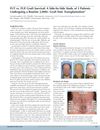
September 2018 in “Hair transplant forum international” FUE and FUT hair transplants have similar success rates, with FUE slightly better.
 13 citations
,
August 2016 in “Journal of Cosmetic Dermatology”
13 citations
,
August 2016 in “Journal of Cosmetic Dermatology” Using normal saline in vertical extraction for hair transplants reduces donor area injury more than acute extraction.
 11 citations
,
April 2016 in “Dermatologic Surgery”
11 citations
,
April 2016 in “Dermatologic Surgery” Expert surgeons have a lower rate of hidden damage to hair during hair transplant procedures than beginners.
 9 citations
,
September 2016 in “Plastic and reconstructive surgery. Global open”
9 citations
,
September 2016 in “Plastic and reconstructive surgery. Global open” The curved nonrotary punch is better for hair extraction in people with tightly curled hair.
 4 citations
,
November 2006 in “Dermatologic Surgery”
4 citations
,
November 2006 in “Dermatologic Surgery” Transplanted transected hair follicles can survive but grow at unsatisfactory rates and are thinner, suggesting limited potential for unlimited donor hair supply.
 3 citations
,
October 2017 in “Journal of Cosmetic Dermatology”
3 citations
,
October 2017 in “Journal of Cosmetic Dermatology” Dr. Muhammad Ahmad created a hair classification system to help improve hair restoration surgery outcomes.

Robotic-assisted hair transplant is effective and less painful, but needs more evaluation for long-term results.
 37 citations
,
August 2013 in “Facial Plastic Surgery Clinics of North America”
37 citations
,
August 2013 in “Facial Plastic Surgery Clinics of North America” Facial hair restoration is generally successful and satisfying for patients when done with quality techniques and realistic expectations.
 3 citations
,
January 2019 in “Journal of Cutaneous and Aesthetic Surgery”
3 citations
,
January 2019 in “Journal of Cutaneous and Aesthetic Surgery” Scalp and beard hair survive best in hair transplants, but the procedure needs high skill and takes longer.
 3 citations
,
July 2018 in “Journal of Cosmetic Dermatology”
3 citations
,
July 2018 in “Journal of Cosmetic Dermatology” Ahmad's sharp scissor technique reduces hair follicle damage without taking more time.
 9 citations
,
January 2005 in “Journal of Cosmetic and Laser Therapy”
9 citations
,
January 2005 in “Journal of Cosmetic and Laser Therapy” In 2005, hair transplants looked natural and worked best with realistic goals, medication to preserve hair, and depended on the amount of donor hair.
 May 1993 in “Medical Clinics of North America”
 Surgical hair replacement is a viable option for male pattern baldness when done with proper planning and realistic expectations.
 1 citations
,
August 2008 in “Dermatologic Surgery”
1 citations
,
August 2008 in “Dermatologic Surgery” High-density hair transplants can have high survival rates with improved techniques, but lower densities might also give good results.
 2 citations
,
May 2023 in “Frontiers in Bioengineering and Biotechnology”
2 citations
,
May 2023 in “Frontiers in Bioengineering and Biotechnology” The document concludes that more research is needed on making and understanding biomaterial scaffolds for wound healing.
June 2021 in “Cosmoderma” Hair transplantation techniques have improved, making the process safer and more effective with less visible scarring.
 June 2026 in “Journal of Cutaneous and Aesthetic Surgery”
 FUE is effective for improving hair regrowth and appearance in scarred areas.
 January 2024 in “Journal of cosmetic dermatology”
 Long-hair follicular unit excision improves hairline restoration results and patient satisfaction.
August 2017 in “Otolaryngology” Using a buffering solution and applying Platelet-Rich Plasma improves hair graft survival in hair restoration surgery.
 January 2015 in “D-Scholarship@Pitt (University of Pittsburgh)”
 Diabetic patients' stem cells make vascular grafts more prone to clots, but new methods may improve grafts.
 17 citations
,
January 2010 in “PubMed”
17 citations
,
January 2010 in “PubMed” Optimal storage solutions and effective additives are crucial for improving the survival of hair transplant grafts.
 19 citations
,
February 2008 in “Facial Plastic Surgery”
19 citations
,
February 2008 in “Facial Plastic Surgery” The article concludes that microvascular free flaps, especially the latissimus dorsi flap, are recommended for large scalp reconstructions, and hair transplantation offers high survival rates and excellent aesthetic results.
 July 1998 in “Dermatologic Surgery”
 Various techniques and tools for hair restoration were presented in 1998, including a mathematical model for donor area, use of lasers in surgery, methods for controlling grafted hair direction, and ways to increase graft yield. Satisfaction rates were around 39%, and studies showed trauma and dehydration can damage hair follicles.
 1 citations
,
October 2025 in “Nature Communications”
1 citations
,
October 2025 in “Nature Communications” Cell size controls when stem cells divide.
 September 2017 in “Springer eBooks”
 FUE hair transplants have improved to give more natural results with less scarring and pain.
 November 2006 in “Dermatologic Surgery”
 Cutting hair follicles into pieces for transplantation results in poor growth and thinner hair, and the technique is more invasive than previously thought.
 June 2002 in “Seminars in Cutaneous Medicine and Surgery”
 Hair transplantation has improved to more natural-looking results and is complemented by effective non-surgical treatments, with ongoing research into hair follicle cloning.