6 citations
,
June 2010 in “Dermatologica Sinica” Panfolliculoma is a rare, non-cancerous growth related to hair follicles.
12 citations
,
June 2006 in “Pediatric blood & cancer” A 16-year-old boy had pernicious anemia, autoimmune hemolytic anemia, and later developed alopecia areata.
9 citations
,
October 1947 in “The Lancet” 1 citations
,
November 1947 in “The Lancet” 2 citations
,
June 2024 in “Journal of Clinical Medicine” Alopecia Areata can affect nails, often improving on its own, but JAK inhibitors may help.
January 2015 in “프로그램북(구 초록집)” A 25-year-old man had an unusual case of benign skin tumors and hair loss.
 June 2023 in “JAAD Case Reports”
 A man had a rare skin cancer that looked like a bald spot.
 3 citations
,
January 2019 in “Annals of Dermatology”
3 citations
,
January 2019 in “Annals of Dermatology” The study concluded that careful examination is key to differentiate between lipidized fibrous histiocytoma and juvenile xanthogranuloma.
 30 citations
,
October 2013 in “Lupus”
30 citations
,
October 2013 in “Lupus” Hair loss in lupus is different from hair loss in alopecia areata and may indicate lupus activity.
2 citations
,
June 2017 in “Journal of Evidence Based Medicine and Healthcare” Skin and mucous symptoms are key for diagnosing autoimmune connective tissue diseases.
November 2024 in “Journal of Investigative Dermatology” Dermal IgA deposition without symptoms is rare in Dermatitis herpetiformis risk groups.
 July 2023 in “Deleted Journal”
 Alopecia areata is the most common type of baldness treated with corticosteroids and minoxidil.
 10 citations
,
August 1991 in “PubMed”
10 citations
,
August 1991 in “PubMed” Inflammation, possibly triggered by a specific bacteria and activated by UV radiation, may contribute to male pattern baldness.
January 2011 in “Repository KITopen (Karlsruhe Institute of Technology)” Blocking certain proteins on immune cells may help treat alopecia areata.
November 2024 in “Journal of Investigative Dermatology” γδT cells can protect hair follicles from alopecia areata and promote hair regrowth.
 37 citations
,
May 1999 in “Australasian Journal of Dermatology”
37 citations
,
May 1999 in “Australasian Journal of Dermatology” Early diagnosis and treatment are crucial for preventing permanent hair loss in various scalp conditions, and while new treatments are promising, more research is needed to evaluate their effectiveness.
January 2026 in “Experimental Dermatology” Skin-resident memory T cells may contribute to chronic alopecia areata and baricitinib could be a potential treatment.
6 citations
,
January 1999 in “Dermatology” Alopecia areata is linked to autoimmune antibodies.
 October 2021 in “The Egyptian Journal of Hospital Medicine”
 Alopecia areata causes patchy hair loss and involves immune system disruptions.
 June 2023 in “JAAD case reports”
 A rare scalp condition, cutis verticis gyrata, was found in a woman with primary scarring alopecia.
 November 2023 in “Journal of Investigative Dermatology”
 γδTregs can protect hair follicles from alopecia areata and may help regrow hair.
 March 2013 in “Hair transplant forum international”
 Inflammation linked to the immune response may play a role in causing various types of hair loss.
3 citations
,
January 2011 in “American Journal of Hematology” Immunochemotherapy successfully treated neutropenia in a patient with Waldenström's macroglobulinemia.
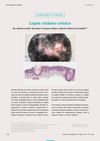 January 2024 in “Revista Dermatológica Centro Uraga”
 The patient has Chronic Cutaneous Lupus, a skin condition causing plaques and hair loss.
10 citations
,
April 2017 in “Journal of Investigative Dermatology” The gut microbiome affects the development of alopecia areata.
2 citations
,
September 2018 in “JAAD case reports” A rare type of skin cancer with mucosal involvement was partially treated but eventually relapsed.
2 citations
,
December 2023 in “International Journal of Dermatology” A unique type of hair loss mimics another condition but has minimal inflammation and specific immune cells present.
 September 2024 in “Journal of the American Academy of Dermatology”
 Regulatory γδ T cells help protect hair follicles from alopecia areata and promote hair regrowth.
May 2025 in “Preprints.org” Unique microRNA patterns can help diagnose and treat severe alopecia areata.
 68 citations
,
November 2015 in “The Journal of Allergy and Clinical Immunology”
68 citations
,
November 2015 in “The Journal of Allergy and Clinical Immunology” Blocking IL-12/IL-23p40 helped reverse severe hair loss in patients.