1 citations
,
September 2019 Laser and light therapies can help regrow hair but need more research for best results.
 11 citations
,
February 2020 in “Dermatology and therapy”
11 citations
,
February 2020 in “Dermatology and therapy” Low-Level Light Therapy significantly reduced inflammation and promoted hair regrowth in patients with Lichen planopilaris.
February 2016 in “Seoul National University Open Repository (Seoul National University)” Photodynamic therapy can temporarily remove nonpigmented hair but is less effective than lasers for black hair.
April 2025 in “Asian Journal of Surgery” 47 citations
,
November 2000 in “Archives of dermatology” Pulsed infrared laser can effectively reduce symptoms of pseudofolliculitis barbae.
 9 citations
,
May 2021 in “Archives of Dermatological Research”
9 citations
,
May 2021 in “Archives of Dermatological Research” Home-based skin care devices are generally safe and effective for hair removal, promoting hair growth, treating wrinkles and acne, but results for psoriasis treatment are mixed.
16 citations
,
April 2025 in “Journal of the American Academy of Dermatology” Photobiomodulation is safe and effective for treating certain conditions like nerve pain and hair loss.
August 2022 in “Dermatologic Therapy”  73 citations
,
April 1999 in “Dermatologic Clinics”
73 citations
,
April 1999 in “Dermatologic Clinics” Lasers and light sources can effectively remove hair, work best on fair skin with dark hair, and usually need multiple treatments.
 June 2020 in “Medicinskij alfavit”
 Laser and cell treatments effectively help hair regrowth in people with focal alopecia.
 20 citations
,
December 2003 in “Journal of Cosmetic and Laser Therapy”
20 citations
,
December 2003 in “Journal of Cosmetic and Laser Therapy” An 800nm diode laser safely and effectively reduces hair for about 8 months, with most patients satisfied and few side effects.
1 citations
,
June 2022 in “Zenodo (CERN European Organization for Nuclear Research)” Low-level laser therapy can effectively regrow hair in alopecia areata.
 July 2018 in “Journal of The American Academy of Dermatology”
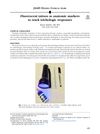
 Fluorescent tattoos are a good way to mark the scalp for hair treatments because they're accurate, invisible in normal light, and have low risk.
 April 2016 in “Journal of The American Academy of Dermatology”
 Daylight photodynamic therapy is effective and well-tolerated for treating actinic keratoses with minimal side effects.
January 2025 in “Dermatologic Therapy” CO₂ laser therapy improves skin and hair growth in localized scleroderma without severe side effects.
The treatment showed limited success in repigmenting hair for vitiligo-associated leukotrichia.
15 citations
,
January 2008 in “PubMed” Laser and IPL hair reduction is effective but requires multiple sessions and ongoing maintenance.
 April 2018 in “Journal of Investigative Dermatology”
 Finasteride helps female-pattern hair loss.
The 1540nm fractional erbium-glass laser helps treat hair loss caused by hormones.
December 2017 in “PubMed” Low-level laser therapy may help treat hair loss with fewer side effects.
 February 2023 in “Cosmoderma”
 Combining red LED therapy with beta-carotene is more effective for treating photoaging than red LED therapy alone.
 6 citations
,
September 2019 in “Journal of Cosmetic Dermatology”
6 citations
,
September 2019 in “Journal of Cosmetic Dermatology” Laser treatment effectively increases hair density and thickness in androgenic alopecia.
18 citations
,
January 2023 in “Nano Research” Red OLED therapy significantly boosts hair growth.
64 citations
,
June 2009 in “Photomedicine and Laser Surgery” Excimer light effectively treats various skin diseases, including psoriasis, vitiligo, and mycosis fungoides.
Low-level laser therapy may help uninfected cells but has different effects on coronavirus-infected cells.
1 citations
,
November 2021 in “IntechOpen eBooks” Red light therapy may help prevent memory loss as we age.
February 2024 in “Institutional Repository of the Federal Technological University of Paraná (RIUT) (Federal University of Technology – Paraná)” Photobiomodulation can influence gene and protein expression related to healing and inflammation.
The 1550 nm fractional Er:Glass laser improved hair regrowth in patients with androgenic alopecia, but didn't significantly change collagen type I, skin fibroblasts, or macrophages. More research is needed for optimal results.
 November 2022 in “Journal of Investigative Dermatology”
 The LED light therapy mask improved skin elasticity and reduced signs of aging in a test and in women aged 40-60.
 60 citations
,
November 2020 in “International Journal of Medical Sciences”
60 citations
,
November 2020 in “International Journal of Medical Sciences” NIR light therapy may effectively treat eye diseases and improve brain function without side effects.