 10 citations
,
January 2010 in “Indian journal of dermatology, venereology, and leprology”
10 citations
,
January 2010 in “Indian journal of dermatology, venereology, and leprology” Long pulsed Nd: YAG laser is safe and effective for long-term hair reduction in darker skin types.
 September 2025 in “International Journal of Innovative Technologies in Social Science”
 Red light therapy may help rejuvenate skin and regrow hair.
 March 2026 in “Research Square”
 Polymer dot nanozymes and exosomes, with laser stimulation, speed up wound healing.
 3 citations
,
June 1995 in “International Journal of Gynecology & Obstetrics”
3 citations
,
June 1995 in “International Journal of Gynecology & Obstetrics” Laser laparoscopy effectively reduces pelvic pain in women with mild to moderate endometriosis and is safe to use.
14 citations
,
May 2006 in “Clinical obstetrics and gynecology” Laser hair removal shows promising short-term results but isn't yet permanent.
20 citations
,
November 2014 in “JAMA dermatology” The 810-nm diode laser improves skin texture in keratosis pilaris but not redness.
 May 2025 in “Lasers in Medical Science”
 Erbium lasers improve hair growth in androgenetic alopecia with minimal side effects.
 3 citations
,
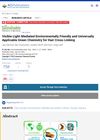
June 2023 in “ACS sustainable chemistry & engineering”
3 citations
,
June 2023 in “ACS sustainable chemistry & engineering” The study found a green method for strengthening hair works on all hair colors and is eco-friendly.
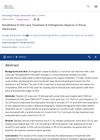 January 2025 in “Dermatologic Therapy”
 The laser treatment improved hair appearance and was safe and well-received by patients.
January 2005 in “Cosmetic Surgery Times” Infrared light therapy helps regrow hair.
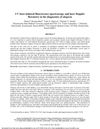 April 2016 in “Proceedings of SPIE”
 UV-induced autofluorescence is effective for identifying different types of alopecia.
5 citations
,
October 2020 in “Bioengineering & translational medicine” Researchers used a laser to create advanced skin models with hair-like structures.
 April 2026 in “Biosensors”
 Red light increases hair follicles and ATP in mouse skin.
 2 citations
,
June 2020 in “Dermatology and therapy”
2 citations
,
June 2020 in “Dermatology and therapy” Narrowband-UVB phototherapy successfully treated a rare case of Graham Little-Piccardi-Lassueur syndrome.
 26 citations
,
May 2015 in “Lasers in Surgery and Medicine”
26 citations
,
May 2015 in “Lasers in Surgery and Medicine” Laser treatment helped regrow hair in mice by activating a key growth pathway.
January 2019 in “Dermatologic Surgery” 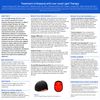 November 2025 in “SKIN The Journal of Cutaneous Medicine”
 Low-level light therapy safely increases hair growth in various types of hair loss.
24 citations
,
January 2013 in “Lasers in medical science” The fractional ultrapulse CO2 laser is a safe and effective non-surgical treatment for upper eyelid issues and brow lifting.
 3 citations
,
October 2022 in “Clinical, Cosmetic and Investigational Dermatology”
3 citations
,
October 2022 in “Clinical, Cosmetic and Investigational Dermatology” The 532 nm laser effectively reduces facial vascular and pigmented lesions, with the VISIA system reliably assessing treatment results.
 January 2019 in “The Review of Laser Engineering”
 Multiphoton excitation microscopy is a promising tool for deep tissue imaging and clinical applications.
 January 2026 in “Nature Communications”
 A wearable device using NIR light may help treat hair loss non-invasively.
January 2026 in “National Science Review” March 2003 in “International Society of Hair Restoration Surgery” Lasers are now less popular for hair restoration.
July 2025 in “Carolina Digital Repository (University of North Carolina at Chapel Hill)” Low-level laser therapy is the most supported non-drug treatment for hair loss, but combining it with other methods may be promising.
 April 2018 in “The journal of investigative dermatology/Journal of investigative dermatology”
 Higher fluence in hair removal damages hair follicles more, while lower fluence mimics natural hair regression, with long-term IPL treatments effectively reducing hair.
 16 citations
,
November 2016 in “Journal of Cosmetic and Laser Therapy”
16 citations
,
November 2016 in “Journal of Cosmetic and Laser Therapy” Laser and light therapies, especially the 308 nm excimer laser, are effective and safe for treating alopecia areata, but more research is needed.
1 citations
,
March 2024 in “PubMed” Surgery with a carbon-dioxide laser successfully treated a Labrador's tongue condition, but some hair regrew.
 4 citations
,
April 1999 in “Dermatologic Clinics”
4 citations
,
April 1999 in “Dermatologic Clinics” Long-pulsed ruby lasers effectively reduce hair for up to 2 years with minimal pain.
Lasers and light therapy are effective for treating skin conditions like hair loss, vitiligo, psoriasis, and molluscum contagiosum.
Phototherapy with red or blue light can safely improve hair growth and scalp health in androgenetic alopecia.