5 citations
,
September 2019 in “Journal of Biomedical Optics” 1319-nm laser radiation can cause skin damage, with severity depending on exposure time and beam size.
 June 2001 in “Proceedings of SPIE”
 Low energy laser therapy effectively treats certain skin conditions and improves recovery time without side effects.
 1 citations
,
November 2020 in “Journal of Cosmetic Dermatology”
1 citations
,
November 2020 in “Journal of Cosmetic Dermatology” A man got unusual crescent-shaped cuts from a laser tattoo removal due to a laser technical issue, but healed without scars.
 June 2021 in “Journal of Cosmetic Dermatology”
 Laser treatment shows promise for hair growth, but needs further research.
September 2025 in “Cuadernos de Educación y Desarrollo” Laser and light technologies are used in dermatology for skin treatments and improving outcomes.
4 citations
,
April 2014 in “Lasers in Surgery and Medicine” TRASER effectively targets blood vessels and hair follicles for potential use in vascular and hair removal treatments.
22 citations
,
September 2022 in “Medicina” Using two types of lasers together improves skin tone and collagen remodeling.
 1 citations
,
January 2019 in “Journal of Nuclear Technologyin Applied Science (JNTAS) (Print)”
1 citations
,
January 2019 in “Journal of Nuclear Technologyin Applied Science (JNTAS) (Print)” Low-level laser therapy speeds up skin healing and stimulates hair follicles in mice after radiation exposure.
 October 2024 in “Photodermatology Photoimmunology & Photomedicine”
 Red LED therapy is more effective than green LED for improving hair growth in androgenetic alopecia.
 December 2024 in “Journal of Biophotonics”
 Dual wavelength LEDs may help reduce hair loss by lowering DHT levels.
1 citations
,
January 1987 Low-output laser irradiation can stimulate or inhibit biological processes depending on the dose.
433 citations
,
April 2015 in “Photomedicine and laser surgery” Photobiomodulation Therapy (PBMT) is recommended as a more inclusive term and shows potential benefits in various treatments.
 April 2024 in “Lasers in medical science”
 Near-infrared LED light improves skin rejuvenation and hair growth better than white LED light.
 29 citations
,
April 2019 in “Lasers in Medical Science”
29 citations
,
April 2019 in “Lasers in Medical Science” Laser and minoxidil combo promotes better hair growth than minoxidil alone, safely.
4 citations
,
June 2025 in “Journal of Cosmetic Dermatology” The triple-wavelength diode laser effectively and safely reduces hair and improves skin appearance in people with darker skin.
 September 2024 in “Journal of the Pakistan Medical Association”
 A 589 nm laser increases IL-2 and IFN-y gene expression in human T-cells.
Laser diode light boosts hair follicle cell growth and certain gene expressions.
 July 1998 in “Proceedings of SPIE”
 Low-power laser therapy is an effective, side-effect-free treatment that speeds up hair regrowth and crural ulcer healing.
 January 2026 in “Forum Dermatologicum”
 LED therapy is safe and can help with acne, aging skin, and hair loss, but consumer devices may be less effective.
 15 citations
,
June 2015 in “Lasers in Medical Science”
15 citations
,
June 2015 in “Lasers in Medical Science” The 830-nm wavelength was most effective at promoting hair growth in rats using low-level laser therapy.
 September 2012 in “Dermatologic Surgery”
 Laser and light treatments might help hair growth and transplant success, but the findings could be outdated.
January 2024 in “International Journal of Physics and Applications” Low-level laser therapy can boost cell activity and energy production.
 February 2009 in “Journal of The American Academy of Dermatology”
 Fractional infrared technology is effective and safe for treating cervical laxity.
 15 citations
,
February 2014 in “BMC Research Notes”
15 citations
,
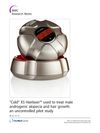
February 2014 in “BMC Research Notes” The X5 Hairlaser might help treat male hair loss, but more research is needed.
26 citations
,
January 2012 in “JEADV. Journal of the European Academy of Dermatology and Venereology/Journal of the European Academy of Dermatology and Venereology” The ESLD recommends international safety guidelines and standards for home-use light-based hair removal devices.
 2 citations
,
September 2014 in “PubMed”
2 citations
,
September 2014 in “PubMed” Low-level laser or light devices could be a cheaper, side-effect free treatment for hair loss, but more research is needed to confirm their effectiveness.
1 citations
,
August 2019 in “Journal of Dentistry Indonesia” A 645-nm diode laser effectively penetrates swine soft tissues, suggesting predictable therapeutic effects.
 22 citations
,
June 2002 in “Seminars in cutaneous medicine and surgery”
22 citations
,
June 2002 in “Seminars in cutaneous medicine and surgery” Laser hair removal works well for people with dark hair and light skin, but it's less effective for light hair or dark skin; improvements are expected.

Low level laser or LED therapy combined with infiltrations may help hair growth.
 December 2020 in “Lasers in Surgery and Medicine”
 Laser safely and effectively removes unwanted scalp micropigmentation.