February 2023 in “Materials today bio” The treatment effectively promotes hair regrowth in androgenetic alopecia without causing skin irritation.
October 2022 in “Biomolecules” Allopregnanolone can reduce gut inflammation and normalize neurotransmitter levels after finasteride withdrawal.
2 citations
,
February 2025 in “Journal of Cosmetic Dermatology” The herbal lip hydrant is more effective than petroleum gel for improving lip hydration and reducing chapped lips.
 July 2025 in “Journal of Investigative Dermatology”
 5% ET-02 is a more effective and safe treatment for hair loss than current options.
January 2011 in “The Internet Journal of Pharmacology” Minoxidil is cost-effective for regrowing hair on the scalp's top but not the front, requiring ongoing use.
 29 citations
,
July 2012 in “The Journal of Sexual Medicine”
29 citations
,
July 2012 in “The Journal of Sexual Medicine” Rats had lasting erectile problems after stopping a certain medication.
9 citations
,
August 2024 in “Journal of Drugs in Dermatology” Low-dose oral minoxidil does not increase pericardial effusions in alopecia patients.
 1 citations
,
December 2015 in “The Egyptian Journal of Histology”
1 citations
,
December 2015 in “The Egyptian Journal of Histology” Hypothyroidism harms rat skin, but topical triiodothyronine may help improve it.
 April 2025 in “Archives of Dermatological Research”
 The combination of finasteride and minoxidil is as safe and effective as minoxidil alone for improving hair growth in men.
 January 2025 in “Journal of Bacha Khan Medical College.”
 Double-spin PRP is more effective for treating male pattern baldness.
May 2024 in “International journal of medicine and psychology.” Transcranial electrical stimulation with bisphosphonates helps maintain bone collagen better than bisphosphonates alone.
 December 2020 in “Nigerian journal of animal production”
 Dexamethasone can cause diabetes in rats, and Annona muricata bark extract may help lower blood sugar.
September 2014 in “Genes and Cells” Genetically modified umbilical cord blood cells improved skin wound healing in rats.
 36 citations
,
January 1998 in “Journal of Dermatological Treatment”
36 citations
,
January 1998 in “Journal of Dermatological Treatment” The questionnaire effectively measures men's perceived hair growth and can distinguish between different treatments and dosages.
 1 citations
,
August 2020 in “Journal of The American Academy of Dermatology”
1 citations
,
August 2020 in “Journal of The American Academy of Dermatology” The authors agree that standardizing how PRP methods are reported could help compare results, but note that the link between PRP's contents and hair growth is unclear, and recommend avoiding split-scalp designs in future trials.
July 2025 in “Al-Esraa University College journal for medical sciences.” Insulin resistance is linked to higher hormone levels in women with PCOS.
April 2023 in “Advances in Natural Sciences: Nanoscience and Nanotechnology” The new formulation with minoxidil, chitosan, and Aloe vera improves hair growth and reduces side effects.
88 citations
,
July 2001 in “British journal of dermatology/British journal of dermatology, Supplement” The method effectively measures lipid changes and drug effects on skin follicles.
 78 citations
,
April 1994 in “Archives of dermatology”
78 citations
,
April 1994 in “Archives of dermatology” The study found that Keratosis Pilaris Atrophicans is a genetic skin condition that starts in childhood, involves inflammation and scarring, and current treatments are only somewhat effective.
 32 citations
,
January 2012 in “Clinical & Developmental Immunology”
32 citations
,
January 2012 in “Clinical & Developmental Immunology” Targeting CD200 could be a new treatment for rheumatoid arthritis.
3 citations
,
May 2025 in “Carbohydrate Polymers” The new microneedle patch effectively treats alopecia areata with fewer side effects than oral medication.
 January 2026 in “Zenodo (CERN European Organization for Nuclear Research)”
 Prachhanna followed by Guñjā lepa is more effective for treating alopecia areata than PRP with Minoxidil.
 January 2026 in “Zenodo (CERN European Organization for Nuclear Research)”
 Prachhanna followed by Guñjā lepa is more effective for treating alopecia areata than PRP with Minoxidil.
May 2025 in “Biomedicine & Pharmacotherapy” Hyperbranched polymer dots significantly boost hair regrowth better than minoxidil.
 May 2025 in “Archives of Dermatological Research”
 Patient-reported hair improvements align with actual hair density changes, not hair width.

The patch effectively promotes hair growth for alopecia areata without pain.
August 2024 in “British Journal of Dermatology” Rezpegaldesleukin shows promise for treating severe alopecia areata.
 November 2023 in “Indian Dermatology Online Journal”
 Tofacitinib was effective for severe, treatment-resistant hair loss without side effects.
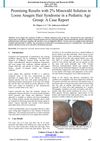 May 2023 in “International journal of science and research”
 2% minoxidil solution improved hair density and quality in children with Loose Anagen Hair Syndrome.
 January 2021 in “International Journal of Advanced Research in Medicine”
 Propranolol, flunarizine, and divalproex sodium are equally effective for preventing migraines, but have different side effects.