 130 citations
,
January 1994 in “Differentiation”
130 citations
,
January 1994 in “Differentiation” Mouse hair follicle cells briefly grow during the early hair growth phase, showing that these cells are important for starting the hair cycle.
 127 citations
,
January 2013 in “PLOS ONE”
127 citations
,
January 2013 in “PLOS ONE” Probiotic bacteria improved skin and hair health in aged mice.
 1 citations
,
August 2017
1 citations
,
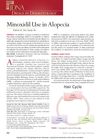
August 2017 Minoxidil helps stimulate hair growth and enlarge small follicles in common hair loss, but doesn't stop it, and its effects can be boosted when combined with finasteride.
 April 2019 in “Radiotherapy and oncology”
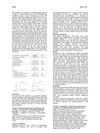
 HPV infection is linked to better survival in advanced anal cancer, higher radiation doses improve survival, especially in HPV-negative patients, and prostaglandin E₂ pretreatment can protect mouse hair follicles from radiation damage.
 7 citations
,
January 2019 in “Pharmaceutical Biology”
7 citations
,
January 2019 in “Pharmaceutical Biology” Eclipta prostrata helps hair growth and maintains the growth phase by affecting certain growth factors.
 January 2025 in “MEDS Public Health and Preventive Medicine”
 Spermidine supplements can help extend the hair growth phase and may be useful for treating hair loss.
 72 citations
,
October 2009 in “The FASEB journal”
72 citations
,
October 2009 in “The FASEB journal” TRH stimulates human hair growth and extends the hair growth phase.
 63 citations
,
May 2011 in “Clinical cancer research”
63 citations
,
May 2011 in “Clinical cancer research” The topical inhibitor CUR61414 was not effective in treating basal cell carcinoma in human trials.
16 citations
,
April 1998 in “Journal of Investigative Dermatology” ACTH promotes hair growth in mink, but α-MSH does not.
 2 citations
,
March 2023 in “Biomedicine & pharmacotherapy”
2 citations
,
March 2023 in “Biomedicine & pharmacotherapy” Platelet lysate effectively promotes hair growth and improves hair thickness in people with androgenetic alopecia.
 February 2024 in “Journal of medicinal food”
 The research found a way to develop hair growth materials by targeting a specific signaling pathway.

The treatment was ineffective in humans.
 May 2017 in “bioRxiv (Cold Spring Harbor Laboratory)”
 The peach gene pCTG134 helps control the interaction between auxin and ethylene hormones during fruit ripening.
 February 2009 in “Springer eBooks”
 Pregnancy can cause more body and scalp hair growth and make nails brittle, but these changes often revert after giving birth.
 64 citations
,
March 2005 in “Journal of Investigative Dermatology”
64 citations
,
March 2005 in “Journal of Investigative Dermatology” Brain-Derived Neurotrophic Factor (BDNF) slows down hair growth and promotes hair follicle regression.
 37 citations
,
October 2013 in “PLoS ONE”
37 citations
,
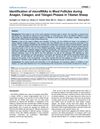
October 2013 in “PLoS ONE” MicroRNAs play a key role in wool growth in Tibetan sheep.
 February 2026 in “International Journal of Molecular Sciences”
 Muscarinic acetylcholine receptors in skin cells help regulate and promote hair growth.
 June 2025 in “Frontiers in Physiology”
 Prostaglandin F2α may help treat hair loss by promoting hair growth.
305 citations
,
December 2000 in “The EMBO Journal” Inhibiting Bmp signaling disrupts hair growth and differentiation.
24 citations
,
June 1999 in “Mechanisms of Development” Ornithine decarboxylase is crucial for hair growth and follicle development.
May 2025 in “Biomedicine & Pharmacotherapy” Hyperbranched polymer dots significantly boost hair regrowth better than minoxidil.
 1 citations
,
June 2017 in “Journal of The American Academy of Dermatology”
1 citations
,
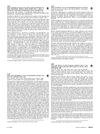
June 2017 in “Journal of The American Academy of Dermatology” Topical treatment SM04554 safely promotes hair growth in male baldness.
1 citations
,
July 2024 in “Journal of Investigative Dermatology” MPZL3 protein affects hair growth cycles and could help manage hair loss.
 April 2023 in “Journal of Investigative Dermatology”
 A protein called MPZL3 in mitochondria slows down hair growth and could be a target for treating hair growth disorders.
41 citations
,
December 2011 in “The journal of investigative dermatology/Journal of investigative dermatology” Deleting MED1 in skin cells causes hair loss and skin changes.
149 citations
,
June 2010 in “The FASEB journal” miR-31 regulates hair growth by controlling gene expression in hair follicles.
 1 citations
,
January 2016 in “Journal of stem cell research and medicine”
1 citations
,
January 2016 in “Journal of stem cell research and medicine” Fat-derived stem cell therapies can potentially increase hair growth and thickness in people with hair loss.
 1 citations
,
January 2016 in “Journal of stem cell research and medicine”
1 citations
,
January 2016 in “Journal of stem cell research and medicine” Fat-derived stem cell therapies can potentially increase hair growth and thickness in people with hair loss.
 October 2022 in “Frontiers in Genetics”
 The research found new potential mechanisms in mouse hair growth by studying RNA interactions.
 5 citations
,
February 2017 in “Biomolecules & Therapeutics”
5 citations
,
February 2017 in “Biomolecules & Therapeutics” 4-O-Methylhonokiol helps protect skin cells from growth-stopping effects of a protein by regulating growth-related pathways.