 November 2023 in “Aktualʹnì problemi sučasnoï medicini”
 The guidelines suggest using various treatments, including antidepressants and steroids, for alopecia areata and discuss the condition's genetic and immune aspects.
November 2023 in “Journal of Investigative Dermatology” Removing GRK2 in skin cells causes hair loss similar to immune-related alopecia.
 June 2023 in “Journal of cosmetic dermatology”
 Dermatologists should know hair prosthetic options to better help alopecia patients.
 May 2023 in “JAAD international”
 Minoxidil-dutasteride tattooing can potentially help regrow hair, especially in men who already have some thin hair.
 May 2023 in “Archives of dermatological research”
 Some factors like thyroid disease, diabetes treatment, hair dryers, natural hairstyles, and scalp conditions can affect the treatment results for a hair loss condition called CCCA.
 May 2023 in “Vestnik dermatologii i venerologii”
 Early-stage male pattern baldness shows two types of hair loss: one on the top of the head linked to hormonal changes, and another at the back of the head. The top hair loss responds well to specific treatment, while the back hair loss does not.
A new image-based method improves accuracy in measuring hair loss in mice.
3D-ultrasound can non-invasively detect and predict alopecia areata phases and outcomes.
 April 2023 in “The journal of investigative dermatology/Journal of investigative dermatology”
 A PTH-based treatment improved hair regrowth better than ruxolitinib in a mouse model of hair loss.
 April 2023 in “Journal of Investigative Dermatology”
 ALRN-6924 can protect hair follicles from chemotherapy damage by temporarily stopping cell division.
April 2023 in “Journal of Investigative Dermatology” 3D ultrasound can detect hair follicle changes and disease phases in alopecia areata.
April 2023 in “Journal of Investigative Dermatology” A new image-based method improves accuracy in measuring hair loss in mice.
 November 2022 in “The journal of investigative dermatology/Journal of investigative dermatology”
 Linalool in personal care products may contribute to hair loss by damaging hair follicle stem cells and triggering harmful immune responses.
Linalool in personal care products may worsen frontal fibrosing alopecia by damaging hair follicle stem cells and triggering harmful immune responses.
 August 2022 in “Dermatology Online Journal”
 Oral and topical tofacitinib can effectively treat severe hair loss with minimal side effects.
 August 2022 in “Contact dermatitis”
 Severe allergic reactions to hair dye can trigger hair loss and may be linked to multiple sclerosis.
January 2022 in “Journal of Pharmaceutical Negative Results” The VGG-SVM method accurately identifies and classifies stages of Alopecia Areata and other hair loss conditions.
August 2021 in “The journal of investigative dermatology/Journal of investigative dermatology” TAGX-0003 protected hair follicles and reversed alopecia areata in a mouse model.
 September 2019 in “The journal of investigative dermatology/Journal of investigative dermatology”
 Eyebrow hair transplants in patients with frontal fibrosing alopecia may look good at first but often lose the new hair after a few years.
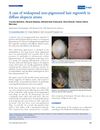 March 2019 in “Our Dermatology Online”
 A woman with severe hair loss regrew mostly white hair after treatment.
 April 2018 in “bioRxiv (Cold Spring Harbor Laboratory)”
 A gene variant causes patched hair loss in mice, similar to alopecia areata in humans.
Hair transplant worked for a patient with a specific scalp condition after breast cancer chemotherapy.
January 2016 in “Hair therapy & transplantation” Hair UpTM effectively and safely promotes hair regrowth, especially in minors.
 December 2015 in “Actas Dermo-Sifiliográficas”
 Hair transplantation for Frontal Fibrosing Alopecia may work if the disease is inactive for 2 years and with ongoing treatment to maintain results.
North American ginseng extract helped regrow hair in balding mice.
 January 2013 in “Juui rinshou hifuka”
 A Toy Poodle with hair loss regrew hair after being treated with melatonin and finasteride.
January 2013 in “Herald of Medicine” GHK-Cu liposome promotes hair growth in mice with alopecia.
Black sesame oil promotes hair growth and may prevent hair loss.
January 2010 in “Chinese Journal of Aesthetic Medicine” EGCG promotes hair growth in mice.
 November 2009 in “Actas dermo-sifiliográficas/Actas dermo-sifiliográficas”
 Hair transplantation effectively treated a bald patch in an 18-year-old woman with Temporal Triangular Alopecia.