 13 citations
,
September 2017 in “Oncotarget”
13 citations
,
September 2017 in “Oncotarget” A certain signaling pathway in mice, when increased, causes hair to gray by depleting the cells that give hair its color.
 10 citations
,
January 2012 in “Journal of biomedical optics”
10 citations
,
January 2012 in “Journal of biomedical optics” Melanin density affects hair color, and this method can help in cosmetic assessments and diagnosing hair diseases.
 3 citations
,
June 2017 in “International Journal of Radiation Biology”
3 citations
,
June 2017 in “International Journal of Radiation Biology” Gamma rays did not change hair follicle density but increased white and hypopigmented hairs in mice.
Hair can naturally regain color after greying, and this change may be linked to stress levels.

Different stem cells are key for hair growth and health, and understanding their regulation could help treat hair loss.
Hair can naturally regain color, and stress might influence greying and its reversal.
 May 2012 in “Nature Genetics”
 Blond hair in Solomon Islanders is due to a unique genetic variant, not European ancestry.
November 2021 in “CRC Press eBooks” Hair color is determined by melanin and can be affected by genetic conditions like albinism.
 8 citations
,
January 1986 in “The Journal of Dermatologic Surgery and Oncology”
8 citations
,
January 1986 in “The Journal of Dermatologic Surgery and Oncology” Hair loss surgeries like grafts, scalp reductions, and flap rotations can be effective for black men with proper technique adjustments.
 June 2023 in “Animal Bioscience”
 Vimentin and transthyretin proteins are linked to black coat color in sheep.
 130 citations
,
August 2015 in “Experimental Dermatology”
130 citations
,
August 2015 in “Experimental Dermatology” Human hair follicle organ culture is a useful model for hair research with potential for studying hair biology and testing treatments.
7 citations
,
January 2021 in “Frontiers in genetics” Inherited color dilution in rabbits is linked to DNA methylation changes.
 6 citations
,
August 2019 in “PLOS ONE”
6 citations
,
August 2019 in “PLOS ONE” Gambogic Amide helps maintain hair color and promotes hair growth.
 5 citations
,
November 2015 in “International Journal of Radiation Biology”
5 citations
,
November 2015 in “International Journal of Radiation Biology” Gamma-ray exposure can cause long-lasting damage to hair follicles, affecting hair structure and color.
 3 citations
,
January 2021 in “Skin appendage disorders”
3 citations
,
January 2021 in “Skin appendage disorders” Hair color is not a risk factor for developing alopecia areata.
 1 citations
,
January 2020 in “Research Square (Research Square)”
1 citations
,
January 2020 in “Research Square (Research Square)” Inherited color dilution in Rex rabbits is linked to DNA methylation changes in hair follicles.
April 2023 in “Medizinische Genetik” Male-pattern hair loss is largely influenced by genetics, with key genes identified.
 38 citations
,
June 2019 in “International Journal of Molecular Sciences”
38 citations
,
June 2019 in “International Journal of Molecular Sciences” Tiny particles called extracellular vesicles could help with skin healing and hair growth, but more research is needed.
 10 citations
,
March 2015 in “PubMed”
10 citations
,
March 2015 in “PubMed” Scalp micropigmentation, a cosmetic tattoo technique, is a promising non-surgical treatment for hair and scalp deformities, despite potential complications.
 9 citations
,
July 2022 in “Cell reports”
9 citations
,
July 2022 in “Cell reports” Sox2 controls hair color by affecting pigment production in hair follicles.
 28 citations
,
May 2017 in “Molecular ecology”
28 citations
,
May 2017 in “Molecular ecology” Researchers found genes that control hair color and growth change before the visible coat color changes in snowshoe hares.
 18 citations
,
January 2020 in “Ecology and evolution”
18 citations
,
January 2020 in “Ecology and evolution” Genes related to pigmentation, body rhythms, and behavior change during hares' seasonal coat color transition, with a common genetic mechanism in two hare species.
 56 citations
,
November 2010 in “Pigment Cell & Melanoma Research”
56 citations
,
November 2010 in “Pigment Cell & Melanoma Research” Brain hormones significantly affect hair color and could potentially be used to prevent or reverse grey hair.
 60 citations
,
January 2004 in “The journal of investigative dermatology/Journal of investigative dermatology”
60 citations
,
January 2004 in “The journal of investigative dermatology/Journal of investigative dermatology” Applying a specific inhibitor lightens skin and hair color.
April 2026 in “The FASEB Journal” Exosomal miR-199a-3p from dermal papilla cells helps control hair color by affecting melanocytes.
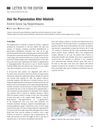 April 2025 in “Turkish Journal of Hematology”
 Nilotinib may cause gray hair to return to its original color.

Exosomes show promise for skin treatments but need more research and regulation in India.
 240 citations
,
April 2011 in “Pigment Cell & Melanoma Research”
240 citations
,
April 2011 in “Pigment Cell & Melanoma Research” Melanocyte stem cells in hair follicles are key for hair color and could help treat greying and pigment disorders.
 3 citations
,
January 2019 in “Advances in stem cells and their niches”
3 citations
,
January 2019 in “Advances in stem cells and their niches” Dermal papilla cells are key for hair growth and color, influencing hair type and size, and their interaction with stem cells could help treat hair loss and color disorders.
2 citations
,
November 2024 in “JAAD reviews.” Certain drugs can change hair color, either lightening or darkening it.