 7 citations
,
January 2020 in “Nature”
7 citations
,
January 2020 in “Nature” Stress turns hair white by depleting color-giving cells in hair follicles through a specific neurotransmitter related to the body's stress response.
 6 citations
,
October 2018 in “PLoS ONE”
6 citations
,
October 2018 in “PLoS ONE” Stress can slow hair growth and affect skin color by impacting the body's stress response system.
5 citations
,
January 2004 in “Journal of applied polymer science” Urea helps hair dye penetrate better and last longer.
3 citations
,
April 1997 in “Developmental Dynamics” Trypsin slows hair growth and affects color by causing cell death in hair follicles.
November 2025 in “Journal of Cosmetic Dermatology” Exosome therapy can safely and effectively restore color to gray hair.
 January 1990 in “Springer eBooks”
 Some chemicals can permanently or temporarily remove color from skin and hair, which can be distressing and is not well-regulated in cosmetics.
 240 citations
,
April 2011 in “Pigment Cell & Melanoma Research”
240 citations
,
April 2011 in “Pigment Cell & Melanoma Research” Melanocyte stem cells in hair follicles are key for hair color and could help treat greying and pigment disorders.
70 citations
,
December 2004 in “Proceedings of the National Academy of Sciences” BMP signaling affects hair color by interacting with the MC-1R pathway.
31 citations
,
October 1992 in “Journal of Clinical Pharmacy and Therapeutics” Some medications can change hair color, especially chloroquine and cancer treatments.
 28 citations
,
December 2006 in “Clinical lung cancer”
28 citations
,
December 2006 in “Clinical lung cancer” Early recognition and management of skin side effects from new cancer therapies can prevent treatment delays.
18 citations
,
April 1989 in “Archives of Dermatology” Iron deficiency can cause hair color changes, which can be reversed with iron supplements.
16 citations
,
November 2003 in “Journal of the American Academy of Dermatology” Iron therapy cured the boy's hair color issue.
 9 citations
,
June 1959 in “Archives of dermatology”
9 citations
,
June 1959 in “Archives of dermatology” Hair can darken after inflammation and then return to its original color.
6 citations
,
January 2019 in “Indian Journal of Pharmacology” Melitane 5% and hair supplements improved hair color in a 14-year-old with early graying.
4 citations
,
May 2023 in “Pigment Cell & Melanoma Research” BMI1 is essential for preventing hair greying and maintaining hair color.
2 citations
,
November 2024 in “JAAD reviews.” Certain drugs can change hair color, either lightening or darkening it.
2 citations
,
November 2024 in “JAAD Case Reports” Anti-PD-L1 immunotherapy can cause hair loss and unexpected hair color change, but treatment can restore hair growth and color.
1 citations
,
September 2024 in “Journal of Oncology Pharmacy Practice” Hydroxyurea treatment unexpectedly restored hair color from gray to dark brown in an older woman.
 1 citations
,
January 2013 in “Nasza Dermatologia Online”
1 citations
,
January 2013 in “Nasza Dermatologia Online” Vitamin B12 deficiency can cause reversible hair color loss in children.
 May 2026 in “Zenodo (CERN European Organization for Nuclear Research)”
 Natural hair dyes like henna and beetroot are safer but have limited colors and may fade easily.
April 2026 in “The FASEB Journal” Exosomal miR-199a-3p from dermal papilla cells helps control hair color by affecting melanocytes.
 March 2026 in “International Journal of Advanced Biochemistry Research”
 German shepherd hair varies in color and pattern but is flat with a consistent internal structure.
October 2025 in “International Journal of Homoeopathic Sciences” Homeopathy helped restore normal hair color in a 5-year-old with premature greying.
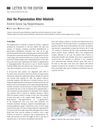 April 2025 in “Turkish Journal of Hematology”
 Nilotinib may cause gray hair to return to its original color.
 February 2024 in “bioRxiv (Cold Spring Harbor Laboratory)”
 Tandem repeats significantly influence hair color, especially darker shades, across different ancestries.
 November 2022 in “The journal of investigative dermatology/Journal of investigative dermatology”
 The study found markers indicating that cells responsible for hair color are differentiating in specific areas of the hair follicle.
 January 2000 in “Optics Letters”
 Laser treatment can inhibit hair growth and different hair colors reach different temperatures when lasered.
11 citations
,
May 2012 in “Genesis” Bmpr2 and Acvr2a receptors are crucial for hair retention and color.
 3 citations
,
January 2019 in “Advances in stem cells and their niches”
3 citations
,
January 2019 in “Advances in stem cells and their niches” Dermal papilla cells are key for hair growth and color, influencing hair type and size, and their interaction with stem cells could help treat hair loss and color disorders.
December 2025 in “International Journal of Advanced Biochemistry Research” Malvi cattle hair varies in color and pattern across different body regions.